
What happened
An options strategy proposes selling put options on Marvell Technology (MRVL) expiring 9/17/2027 at an $85 strike price, collecting roughly $845 in premium per contract and generating approximately 8.8% annualized yield on the $8,500 cash set aside, or roughly 13.8% total when combined with money-market earnings at ~5.0%.
Why it matters
The trade offers income upfront no matter what happens to the stock, while positioning buyers to acquire shares at an effective price of roughly $76.55 per share (a 64% discount to the current $211.02) if MRVL declines below $85 by expiration. Marvell is projecting revenue growth of approximately 40% in fiscal 2027 and approximately 45% in fiscal 2028, with data center revenue expected to accelerate to approximately 55% growth next year, but execution risk on custom chip programs and supply-chain constraints pose significant downside risks.
What to watch
The progress of Marvell's custom silicon business, which is on a trajectory to more than double in fiscal 2028; the company's ability to secure advanced manufacturing capacity, with approximately $1 billion in planned prepayments to suppliers this fiscal year, will be critical to whether the aggressive growth guidance can be delivered.
Summaries like this, in your inbox every morning.
Marvell Technology occupies a central position in the artificial intelligence infrastructure buildout, with multiple growth engines firing simultaneously. The company's data center business grew 46% last year and is projected to accelerate to approximately 50% growth this year and approximately 55% next year. Its interconnect business, which provides high-speed connectivity for AI data centers, is expected to grow more than 70% this year, while the custom silicon division—which designs bespoke chips for major cloud providers—is on track to more than double by fiscal 2028. This multi-year visibility, with revenue projected to grow approximately 40% in fiscal 2027 and accelerate to approximately 45% in fiscal 2028, positions Marvell as a core beneficiary of AI infrastructure spending.
However, the bull case carries meaningful execution risks. Analyst skepticism centers on concentration: the stunning growth forecast depends heavily on flawlessly ramping a few enormous custom chip programs for a handful of giant customers, and any delay or stumble with one of those key programs could create a significant hole in the forecast. The supply-chain dimension adds another layer of complexity. Marvell's ability to meet projected demand hinges on access to the world's most advanced and constrained manufacturing capacity. While management has signaled commitment through approximately $1 billion in planned prepayments to suppliers this fiscal year, this also underscores a critical dependency that could become a bottleneck if capacity tightens further.
The put-sale strategy sidesteps the need to predict whether Marvell can navigate these risks. Instead, it pays the seller for taking on that uncertainty: if the stock continues higher, the seller keeps the income; if execution worries cause the stock to fall, the seller becomes an owner at a price that already reflects a healthy dose of concern. The single most important test will be the progress of the custom silicon business ramp, as it is the clearest indicator of whether Marvell can deliver on its grand ambitions.
For example, today's edition would include:
AI-summarized, only the topics you pick: one digest a day via Email, LINE, or Slack.
Free · 30 seconds with Google · unsubscribe anytimeWhat is AIToday? →
Ask AI anything about this article. The AI reads this article, earlier AIToday articles, and Wikipedia, and cites its sources. Q&As are published on this page for other readers too.
NEAR, the token of the NEAR Protocol, has more than doubled in value over the past two weeks, helped by surgin…

Michael Burry wrote in a Substack chat that Trump's team knows the AI buildout is 'the only thing keeping this…

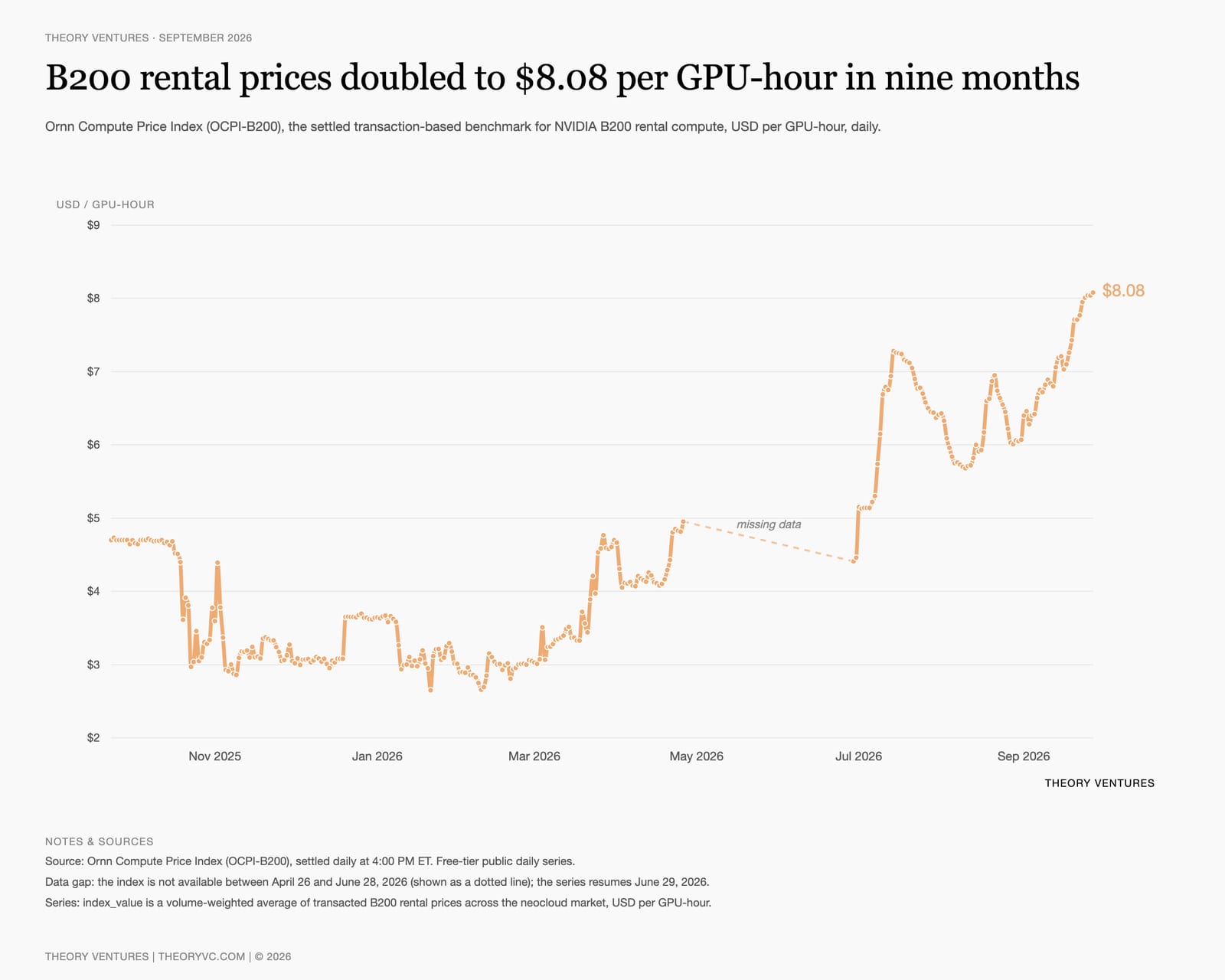
GPU rental prices doubled in six months, from $4.40 to $8.08 per GPU-hour, even as Claude Opus 5.5 costs 40% l…
In a Nikkei Money discussion, private investor Okeido said he sets his investing goal years out and basically…
Google Cloud revenue hit $24.77 billion, up 82%
Hera Hyeonseo Lee said workers are using their deferred wages to finance the AI designed to eliminate their jo…