AIToday

Wonder raises $650M at $9B valuation, plans early-2025 IPO

Fortune AI2h ago
Wonder raises $650M at $9B valuation, plans early-2025 IPO

Key takeaway

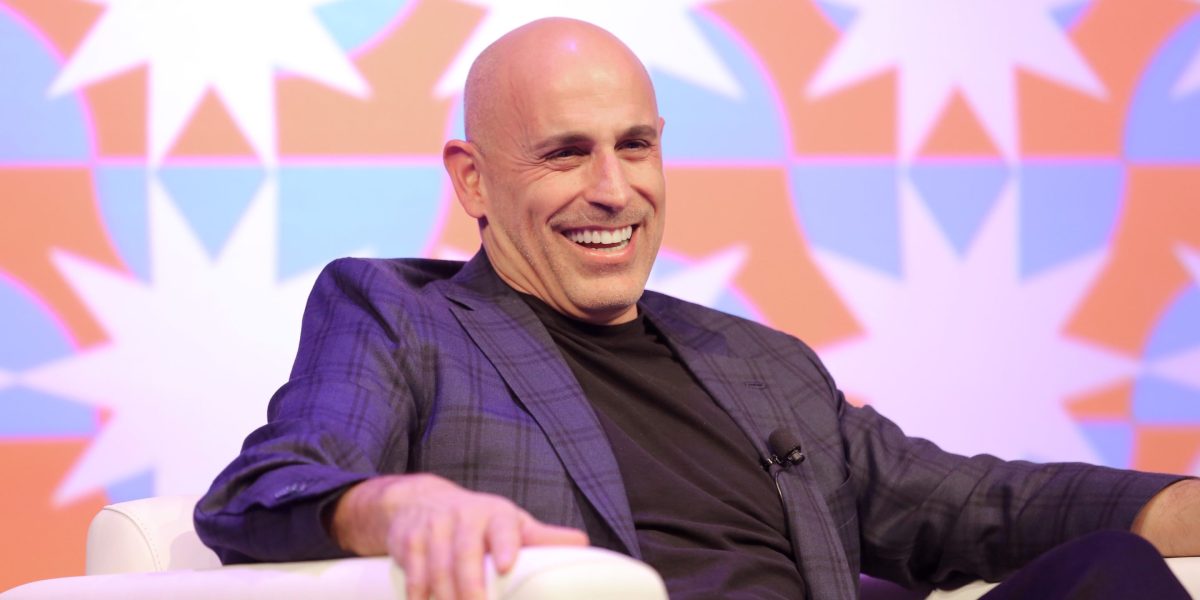
Marc Lore's Wonder, a food-delivery and kitchen-operations platform, raised more than $650 million(約1000億円) at a $9 billion(約1.4兆円) valuation and plans to go public in early 2025. The company operates 135 food halls across the East Coast, each running up to 30 restaurant concepts from a single kitchen, and plans to enter Texas next year and invest in robotics and AI. However, investor materials show Wonder projects significant cash burn—nearly $2.7 billion(約4300億円) through 2029—and expects to lose roughly $618 million(約990億円) on an adjusted EBITDA basis this year.

Summaries like this, in your inbox every morning.

Sign up free →

3 Key Points

  • What happened

    Marc Lore's food-delivery and kitchen platform Wonder closed a Series D funding round of more than $650 million(約1000億円) at a $9 billion(約1.4兆円) valuation, with returning backers Accel, Google Ventures, and NEA joined by new investors AllianceBernstein, ARK Invest, and Kayne Anderson. Lore told Fortune the company will be "ready and prepared to go public early next year."

  • Why it matters

    Wonder operates 135 food halls across 10 East Coast states, each running up to 30 restaurant concepts from a single kitchen. The funding will support expansion into Texas next year and investments in robotics and AI—but investor materials show Wonder projects burning nearly $2.7 billion(約4300億円) in cash through 2029 and losing roughly $618 million(約990億円) on an adjusted EBITDA basis this year alone, a trajectory that may face scrutiny from public markets.

  • What to watch

    The round includes an IPO ratchet clause that gives investors extra shares if Wonder's public debut prices below 1.5 times the current round's share price. The company also faces consumer trust questions on Reddit, with posts in New York, Philadelphia, and Washington, D.C. accusing it of misleading branding and misrepresenting allergen information—claims Lore disputes.

In Depth

Marc Lore, the serial entrepreneur who sold Jet.com to Walmart for $3.3 billion(約5300億円), is preparing Wonder for a public debut. Wonder, his food-delivery and kitchen-operations platform, closed a Series D funding round of more than $650 million(約1000億円) at a $9 billion(約1.4兆円) valuation on exclusive terms shared with Fortune. Returning investors Accel, Google Ventures, and NEA participated; new backers included AllianceBernstein, Cathie Wood's ARK Invest, and Kayne Anderson, with Goldman Sachs, Jefferies, and J.P. Morgan serving as placement agents. The round brings Wonder's total raised to approximately $3 billion(約4800億円) since its 2018 founding.

Wonder's operating model centers on 135 food halls across 10 East Coast states. Each location operates up to 30 restaurant concepts—including licensed names like Bobby Flay Steak and Tejas Barbeque—from a single kitchen. Customers order through Wonder's app, combining dishes from multiple concepts in one transaction; Wonder handles both cooking and last-mile delivery itself. The company owns Grubhub, acquired for $650 million(約1000億円) in early 2024 (including $500 million(約800億円) in assumed debt), and Blue Apron, bought in 2023 for $103 million(約160億円). Last November, Wonder paid $186.4 million(約300億円) for Sweetgreen's Spyce division and its Infinite Kitchen, which it describes as the only fully automated bowl-making system in commercial production. This week, it closed on Mighty Quinn's BBQ, its second full restaurant acquisition after Blue Ribbon Fried Chicken earlier this year.

Lore reframed Wonder's ambitions beyond the coasts in a Fortune interview: "Our mission is to make great food more accessible. That's really where we excel—in places where the food's not currently available, at price points that are currently not possible." The Series D funding will support expansion into Texas next year alongside investments in robotics and AI. However, Wonder's finances present hurdles. According to investor materials reviewed by The Information, Wonder projects burning nearly $2.7 billion(約4300億円) in cash through 2029 and is expected to lose roughly $618 million(約990億円) on an adjusted EBITDA basis this year alone, before reaching positive cash flow in 2030. Lore pushed back on concerns: "The economics are often misunderstood," he argued. "You do need to make substantial investment up front—the robotics, the ingredient library. All those suppress profitability in the short-term. But there's a big prize at the end of the day." He cited same-service-area sales growing roughly 20% year over year and said cost of goods sold is tracking better than planned.

The funding round includes an IPO ratchet clause that grants investors extra shares if Wonder's public debut prices below 1.5 times the current round's share price—a provision The Information first reported. The round also fell short of Wonder's initial $11 billion(約1.8兆円) target. Lore acknowledged the ratchet: "This is the least amount of protection we've ever offered, on a relative basis," he said. Consumer trust remains an open question: Reddit posters in New York, Philadelphia, and Washington, D.C. have accused Wonder of misleading branding, arguing it is effectively a ghost kitchen, inflating reviews, and misrepresenting "gluten free" menu items. Lore disputes these characterizations and has a personal stake in the allergen debate—"I have celiac," he said—and pushed back hard on the ghost-kitchen label: "We don't have microwaves. We don't reheat. We actually cook to order—and that's something people should know." Lore confirmed he personally invested in the round, though declined to confirm a $200 million(約320億円) figure reported by The Information. He has invested in every Wonder round to date.

Beyond food delivery, Lore is developing MEL, an AI platform that tracks blood biomarkers and body composition, then autonomously plans and orders every meal. He has been using it himself: "AI knows me better than myself," he said. "Never would have said that's what I'd pick to eat—but I love it." His longer-term vision is a single platform covering restaurant delivery, meal kits via Blue Apron, and soon oven-ready meals at grocery-store prices—all managed by an AI that becomes, as he put it, "a better version of yourself." The IPO, scheduled for early 2025, will test Wall Street's appetite for this model.

Context & Analysis

Wonder's funding round caps a rapid expansion for Lore's food-tech venture since its 2018 founding. The company has raised approximately $3 billion(約4800億円) to date and has assembled an operating footprint centered on the Northeast, where it runs vertically integrated ghost-kitchen operations under licensed brand names—Bobby Flay Steak, Tejas Barbeque, and others—all coordinated through a single app. Lore has also made strategic acquisitions: Grubhub for $650 million(約1000億円) (early last year, including $500 million(約800億円) in assumed debt), Blue Apron for $103 million(約160億円) in 2023, Sweetgreen's Spyce division and Infinite Kitchen for $186.4 million(約300億円) in November, and Mighty Quinn's BBQ this week. This patchwork reflects Lore's pitch that Wonder can serve food to customers at price points and locations where traditional restaurant economics fail.

However, the IPO ratchet clause—which grants investors extra shares if Wonder's public debut prices below 1.5 times the current round's valuation—signals some tension in fundraising. The round fell short of Wonder's initial $11 billion(約1.8兆円) target, a detail first reported by The Information. More critically, the company's path to profitability appears uncertain: projected cash burn of nearly $2.7 billion(約4300億円) through 2029 and an expected adjusted EBITDA loss of roughly $618 million(約990億円) this year suggest the business is still in heavy investment mode. Lore argues that robotics and ingredient-library buildout suppress near-term profitability, and cites same-service-area sales growth of roughly 20% year over year as proof of underlying strength. Yet consumer-trust issues on Reddit—accusations of ghost-kitchen misrepresentation and allergen-label inaccuracy—add a reputational risk heading into a public listing.

FAQ

When is Wonder planning to go public?
Marc Lore told Fortune that Wonder will be "ready and prepared to go public early next year"—referring to early 2025.
How many locations does Wonder currently operate?
Wonder operates 135 food halls across 10 East Coast states, each running up to 30 restaurant concepts from a single kitchen.
What is Wonder's financial trajectory?
According to investor materials reviewed by The Information, Wonder projects burning nearly $2.7 billion(約4300億円) in cash through 2029 and is expected to lose roughly $618 million(約990億円) on an adjusted EBITDA basis this year alone, before reaching positive cash flow in 2030.

Get the latest Robotics news every morning

AI-summarized, only the topics you pick — one digest a day via Email, Slack, or Discord.

Free · takes 30 seconds · unsubscribe anytime

Discussion

No comments yet. Be the first to share your thoughts!

Log in to join the discussion

Related Articles

Stay ahead with AI news

Get curated AI news from 200+ sources delivered daily to your inbox. Free to use.

Get Started Free

Free · takes 30 seconds · unsubscribe anytime

1 minute a day. The AI essentials.

200+ sources · Email / LINE / Slack

Get it free →