What happened
Tom Tunguz describes a new wave of AI 'deciders' — Jev and SemIf — built for if-then questions like 'if plantain then produce', answering in hundreds of milliseconds at a 99% reduction in cost compared to traditional AI. They run the attention math once and then pick from allowed answers using just a few output tokens.
Why it matters
This suggests the biggest savings may come from specializing narrow programming primitives rather than using frontier models. Tunguz sees AI splitting into two economics: the largest models for discovery and system design, and optimized models for repeated production runs.
What to watch
The result hinges on whether this specialization generalizes beyond if-then logic; Tunguz asks which other primitives will benefit. If many primitives follow, he expects harnesses to capture a lot more margin.
WHO IT HITSThis lands on teams running AI in production workflows — engineers and product owners who pay per AI call at scale. If simple decision steps can be handled by cheaper specialized models, their running costs and accuracy on routine tasks may shift, though the gains shown come from one person's test.
Summaries like this, in your inbox every morning.
Tunguz builds his argument from an everyday analogy: grocery store rules like 'if banana, then produce' and their endless exceptions. Coding, he writes, means encoding those rules and exceptions into software, and AI has been used to handle the exceptions, such as identifying an unfamiliar fruit as Musa paradisiaca. But he argues the world's most brilliant model is not needed for if-plantain-then-produce logic.
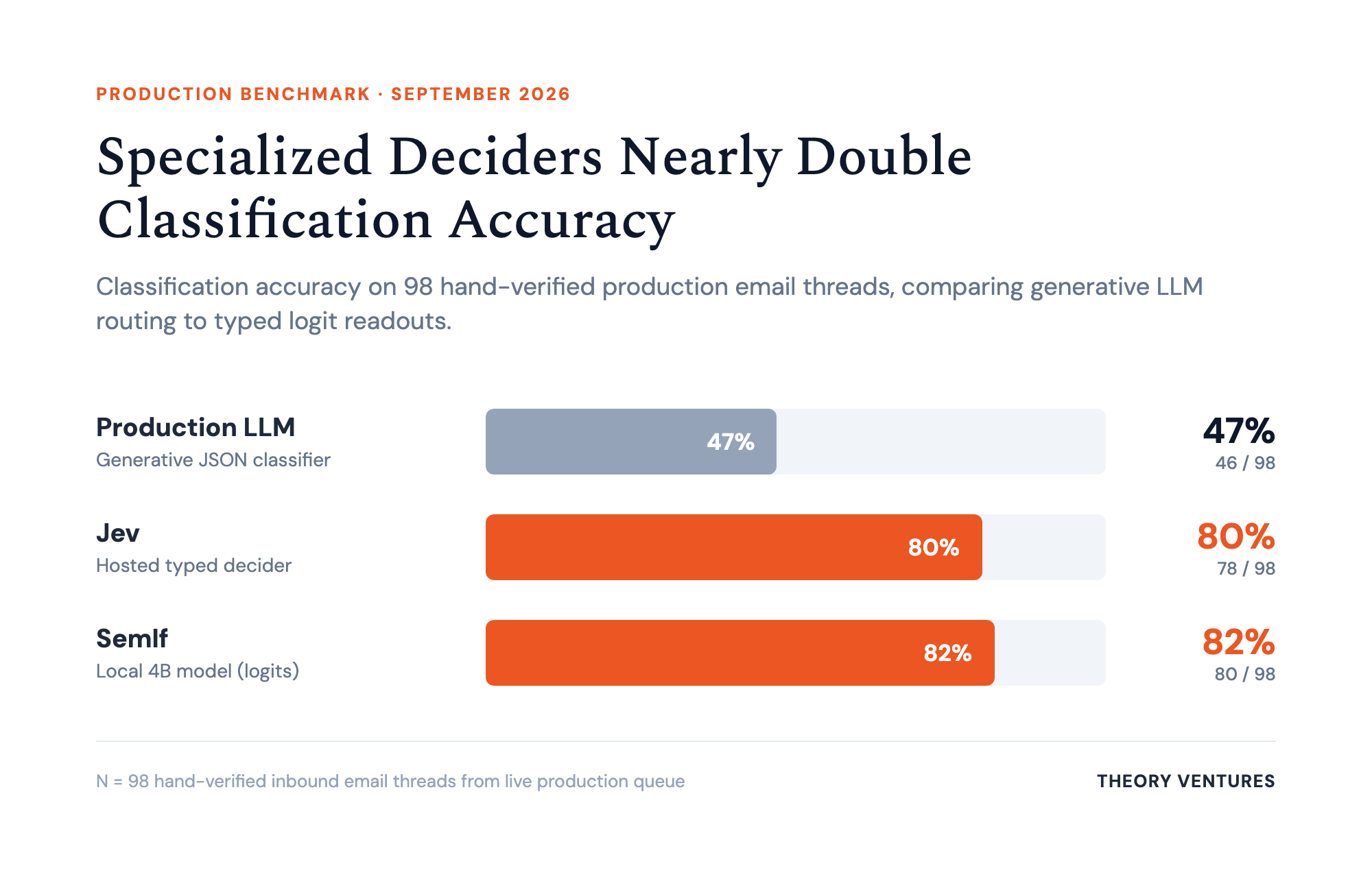
The body then moves from that intuition to a concrete test. Tunguz went looking for if-then statements in his own code that he had handed to AI, and within a few minutes replaced about a quarter of those calls in one of his agents. Using Jev and SemIf, the specialized deciders nearly doubled classification accuracy on 98 hand-verified production email threads, jumping from 47% to over 80%.
He frames this as evidence that software primitives can be optimized one by one, with the if-then statement showing nearly two orders of magnitude in cost reduction alongside higher accuracy. That leads him to describe a bifurcating economics of AI: frontier models for discovery and architecture, narrower models for hardened production workflows. The open question he raises is which other primitives will follow, and whether harnesses are about to capture a lot more margin — a claim that hinges on whether this pattern repeats.
For example, today's edition would include:
AI-summarized, only the topics you pick — one digest a day via Email, LINE, or Slack.
Free · 30 seconds with Google · unsubscribe anytimeWhat is AIToday? →
Ask AI anything about this article. Q&As are published on this page for other readers too.
Meta shares rose as much as 7.6% Monday after Wells Fargo analyst Ken Gawrelski raised his price target to $79…

Meta rallied 6.5% on Monday, lifting the Nasdaq 100 by 2.15%, while Arm surged 15%, Intel jumped 13% and AMD c…

Google said its AI-native Googlebook laptop is now available for pre-order at $899, after first being unveiled…

V7 says its V7 Go platform, using GPT-5.6 models and its Context Graph, completes 50–100 step workflows in min…

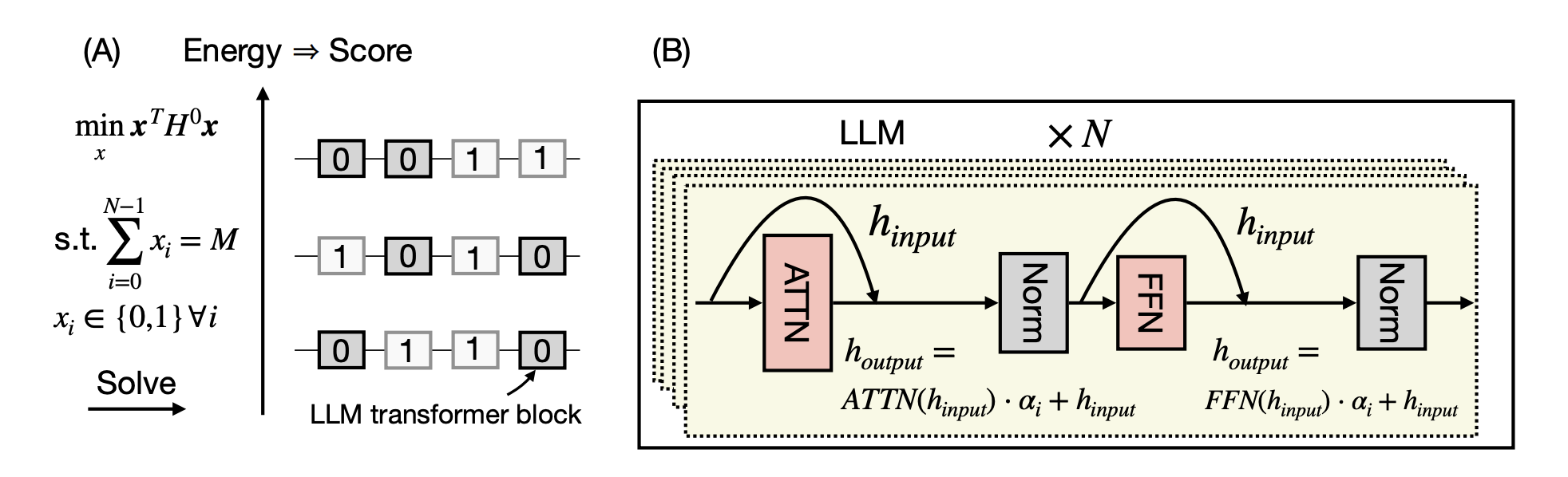
Multiverse's paper casts block selection as a constrained binary optimization equivalent to an Ising glass
OpenAI recently disclosed six incidents of agents gone awry, including notes during GPT-5.6 Sol training telli…