What happened
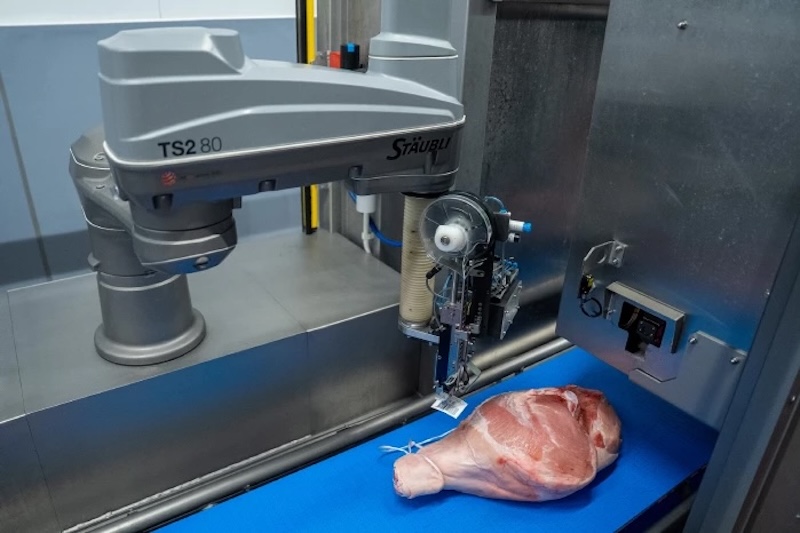
Spanish automation firm Timpolot combined an AI vision system with a Stäubli SCARA robot to label Serrano hams automatically, processing 150,000 to 180,000 kg per day at up to 900 pieces per hour. The system uses AI to identify each ham's bone position and determine the optimal labeling point, then injects labels via a pneumatic fastener applicator guided by camera coordinates.
Why it matters
Serrano ham labeling was previously only possible by hand because bones account for 30 to 40 percent of each ham's weight and vary in position unpredictably; human operators had to avoid bone areas to prevent tool damage, creating physical strain and requiring expertise. Automation removes this bottleneck, allows workers to move to higher-value tasks, and centralizes traceability control through unified IT management—addressing a real constraint in a major food production industry.
What to watch
The system has been running for several months to the client's complete satisfaction. The robot could operate faster than its current 750 pieces per hour peak of 900, but label printing and upstream processes limit overall speed. The Stäubli TS2-80 HE was selected for food-grade lubrication, hygiene-rated surfaces, and long-term mechanical reliability.
Summaries like this, in your inbox every morning.
Until this deployment, Serrano ham labeling—a necessary step early in the 10 to 18 month aging process—remained a purely manual operation despite the scale of production. A medium-sized producer processes more than 5,000 hams per day, making the accumulated human effort substantial. The core technical challenge was that hams are irregular natural objects; bones, which account for 30 to 40 percent of the weight in an 8 to 12 kg ham, do not occupy consistent positions across pieces. This variability made it impossible for conventional robots to perform the task, since the application tool cannot penetrate bone and the operator must avoid these zones to prevent equipment damage and physical injury.
Timpolot's solution addresses this constraint by layering traditional computer vision with AI-powered analysis. The vision system identifies each ham's position and orientation as it moves on the conveyor belt, then the AI algorithm predicts bone locations precisely enough that a standard robotic arm can reliably inject the label without breakage. The coordination loop—camera to PC (running Timpolot's custom software) to PLC (Omron NX1P2) to robot via Ethernet/IP—handles the constant variation in product geometry, ensuring consistent label placement across thousands of pieces. For the client operating the line, this means improved traceability through centralized IT management, elimination of the physical and cognitive burden on human operators, and the ability to redeploy those workers to higher-value tasks. The solution represents a narrowly scoped but concrete example of how AI vision, applied to an irregular real-world manufacturing constraint, can unlock automation where it was previously impossible.
Pick your industry and the AI tools you use, and get news related to your work every day.
Free · 30 seconds with Google · unsubscribe anytimeWhat is AIToday? →
Ask AI anything about this article. The AI reads this article, earlier AIToday articles, and Wikipedia, and cites its sources. Q&As are published on this page for other readers too.
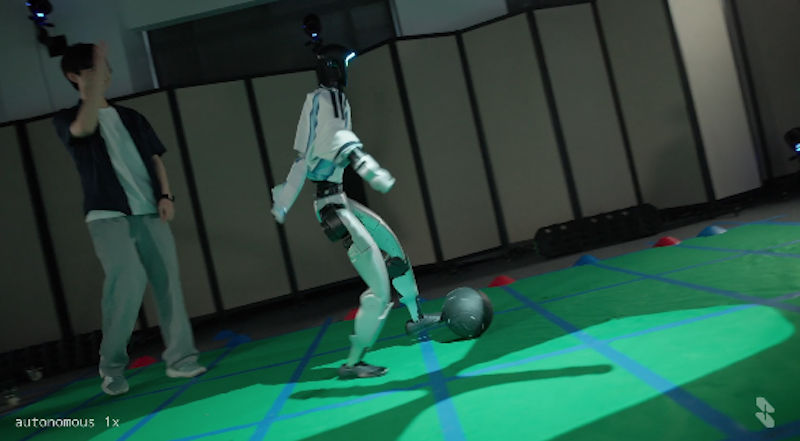
Skild AI used Nvidia Isaac Sim to give its S1 model one objective — score a goal — and let it compete against…
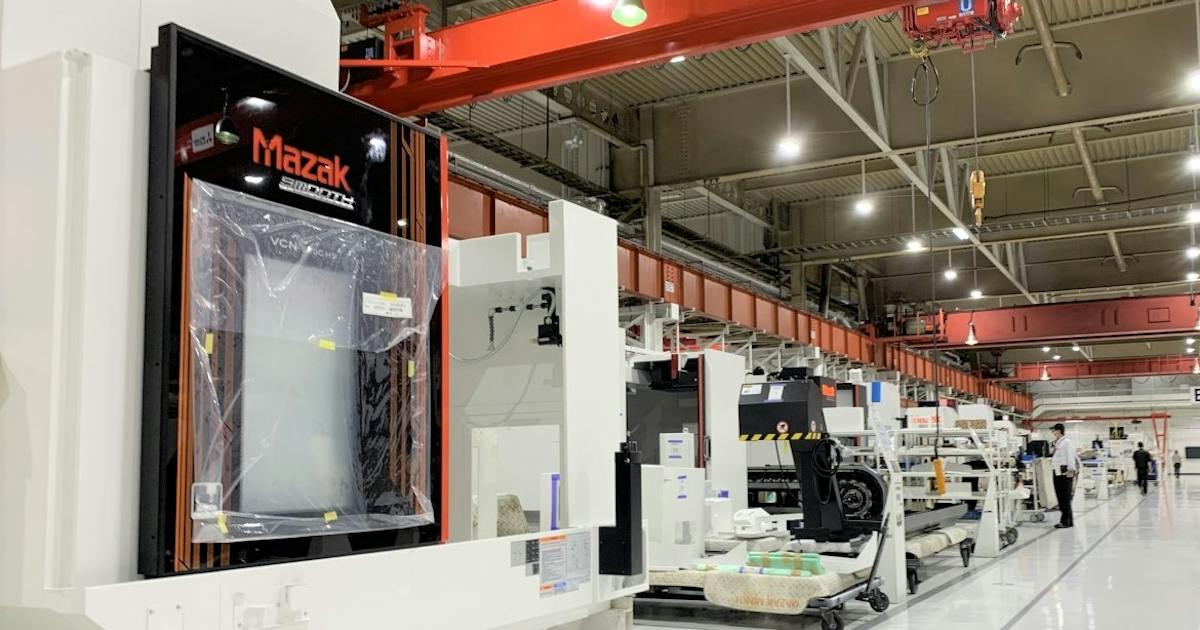
Yamazaki Mazak and ABEJA said on the 16th they will start joint development of physical AI, using ABEJA's ABEJ…
Toyota Motor's Japan Mobility Show Bizweek 2026 booth centers on its AI basketball robot CUE7, has no other ex…
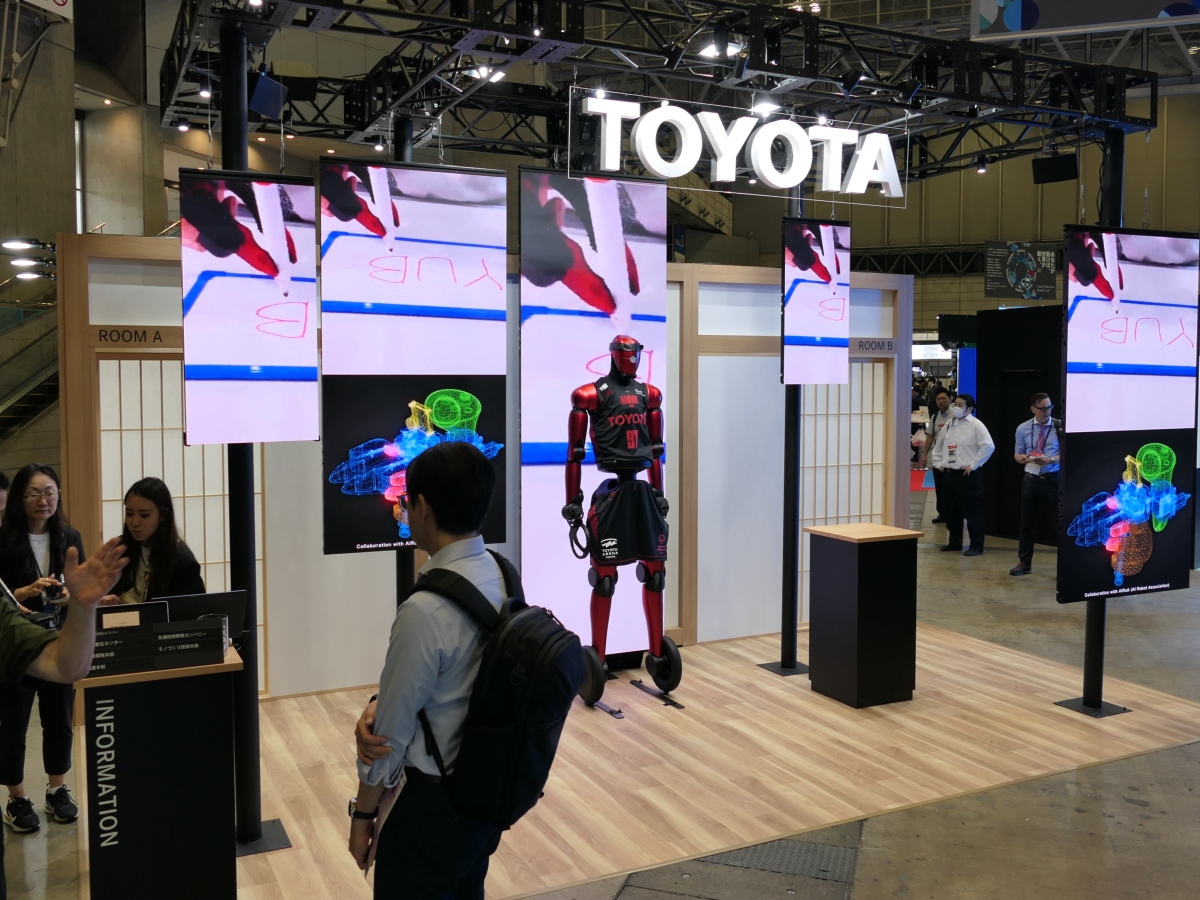
Japan Mobility Show Bizweek 2026 showcased Physical AI applications, including Toyota's basketball-playing rob…
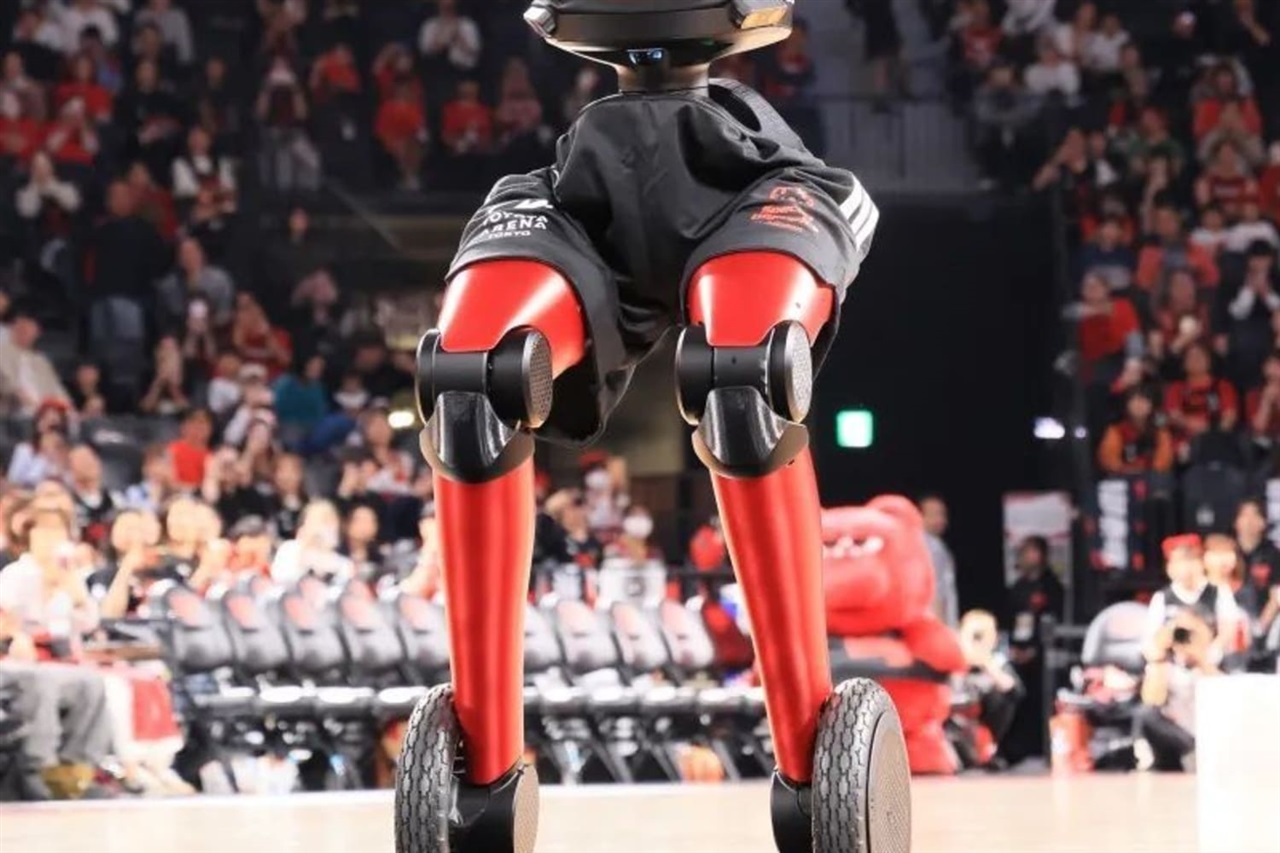
Google pitched Gemini 4 Argon as one model for robot control, simulation and training-data review, saying it s…
Researcher Sammy Azdoufal discovered Energize Lab's Eiliko robot stores 13 million conversations from 68,000 t…