What happened
Cisco raised its fiscal 2026 AI infrastructure order target to $9 billion (from $5 billion) after taking $1.9 billion in such orders in its fiscal third quarter, nearly triple the $600 million a year earlier. The company's fiscal third-quarter revenue hit a record $15.8 billion, up 12% year over year, and adjusted earnings per share came in at $1.06, up 10%.
Why it matters
AI orders are driving Cisco's growth acceleration—the company now guides for fiscal 2026 revenue growth of about 11%, a clear step up from 5% growth in the prior year. However, only about $4 billion of the $9 billion order target will convert to revenue in fiscal 2026, so AI orders alone cannot transform a $63 billion company into a pure AI supplier; the rest of Cisco's business (campus networking, cybersecurity, collaboration) still sets the base. At a stock price reflecting 26 times forward earnings, investors are betting that the AI order book will keep compounding well past fiscal 2026.
What to watch
Cisco's fiscal fourth-quarter results are due Wednesday, August 12. The company's fiscal year ended in late July, so the $9 billion target is no longer a forecast but a result waiting to be confirmed; investors will also be listening for fiscal 2027 guidance.
Summaries like this, in your inbox every morning.
Cisco's AI order surge reflects real, broad-based demand from hyperscalers building data center infrastructure. The company's Acacia optics business—which makes high-speed optical connections for data centers—posted its strongest quarter to date with more than $1 billion of orders in fiscal Q3 and is on track to grow more than 200% year over year in fiscal 2026. The timing is significant: fiscal Q3's $1.9 billion in AI orders already brought the year-to-date total to $5.3 billion, exceeding the original $5 billion full-year target before the final quarter closed, forcing management to raise the forecast to $9 billion. This upward revision is not speculative—the company has already booked most of the year's expected orders.
However, the conversion of orders into revenue tells a more modest story. While the $9 billion order target is eye-catching, only about $4 billion will translate to fiscal 2026 revenue, meaning the backlog will drive revenue recognition across multiple fiscal years. Against Cisco's guided fiscal 2026 revenue of $62.8 billion to $63.0 billion, this represents roughly 6% of total expected sales. The company's core business—campus networking, cybersecurity, collaboration, and service provider gear—still generates the vast majority of revenue and remains the engine of Cisco's mid-single-digit baseline growth. The AI orders are a growth accelerant that pushes full-year revenue growth to about 11%, a meaningful step up but not a transformation into a pure-play AI infrastructure company.
For example, today's edition would include:
AI-summarized, only the topics you pick: one digest a day via Email, LINE, or Slack.
Free · 30 seconds with Google · unsubscribe anytimeWhat is AIToday? →
Ask AI anything about this article. The AI reads this article, earlier AIToday articles, and Wikipedia, and cites its sources. Q&As are published on this page for other readers too.
NEAR, the token of the NEAR Protocol, has more than doubled in value over the past two weeks, helped by surgin…

Michael Burry wrote in a Substack chat that Trump's team knows the AI buildout is 'the only thing keeping this…

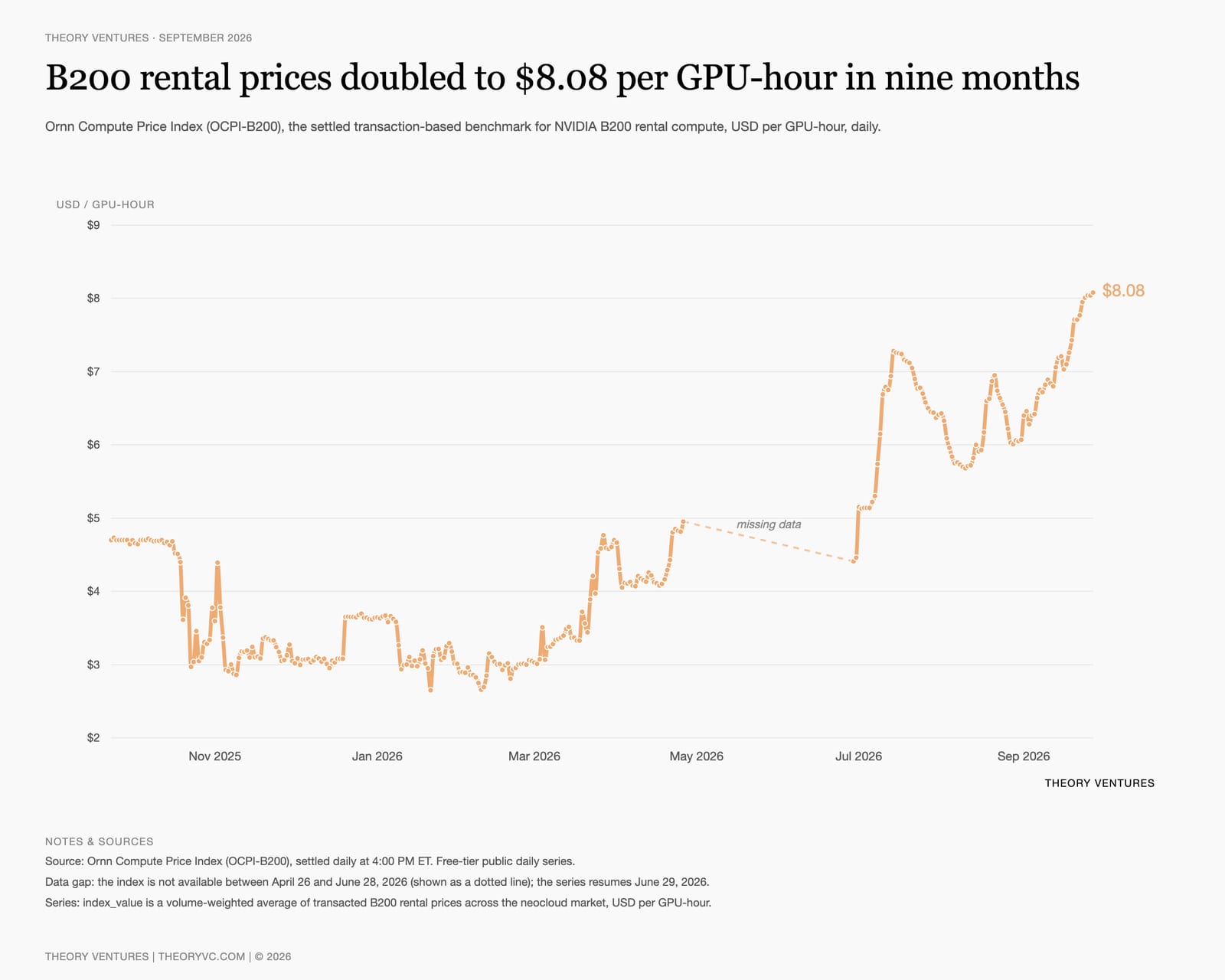
GPU rental prices doubled in six months, from $4.40 to $8.08 per GPU-hour, even as Claude Opus 5.5 costs 40% l…
The University of Florida found only 10-15% of its data was semantically defined; using NaviGator AI and Snowf…

In a Nikkei Money discussion, private investor Okeido said he sets his investing goal years out and basically…
Meta launched the Meta Enterprise Platform on Monday and hired MongoDB CEO Chirantan "CJ" Desai to lead it