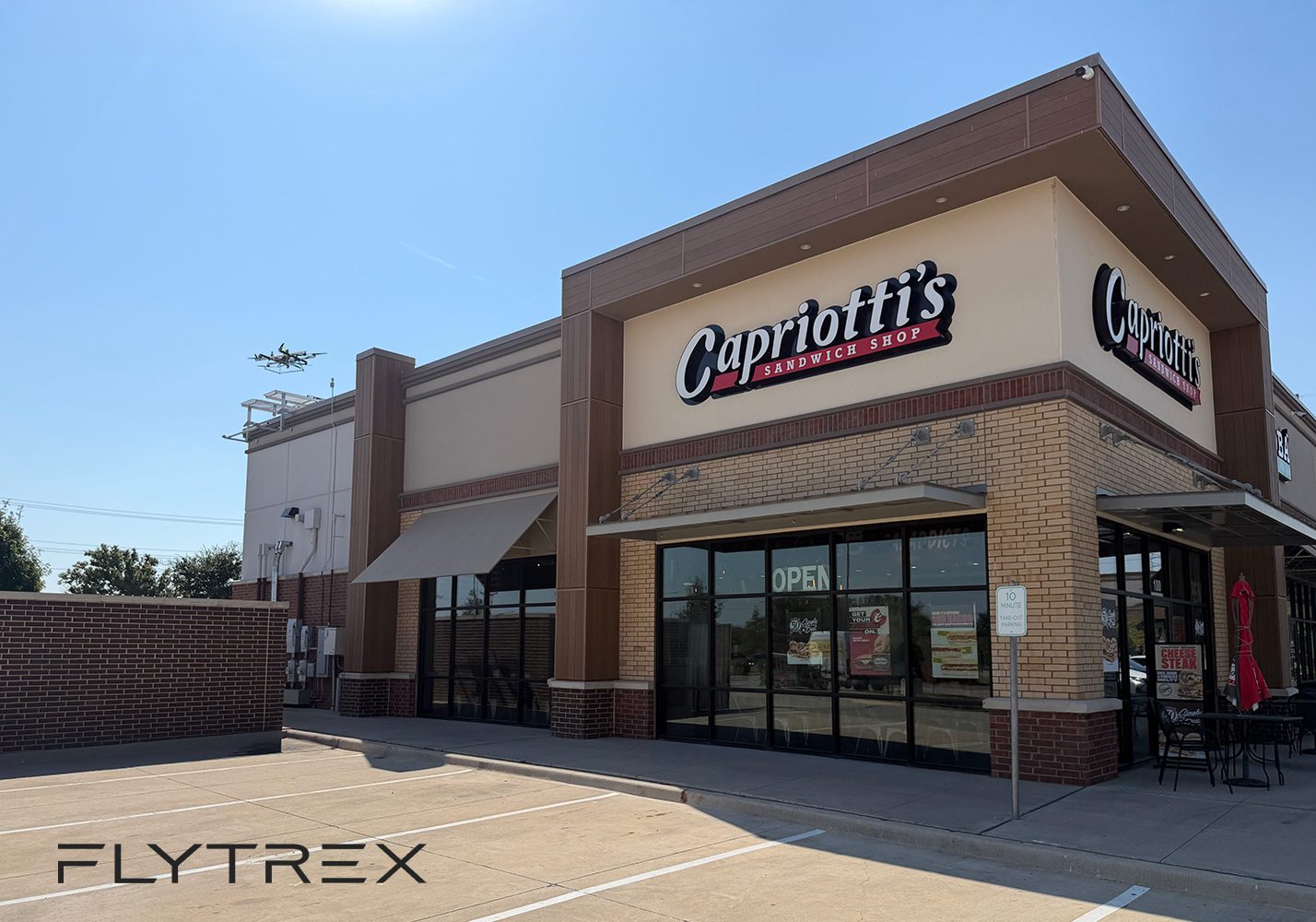
What happened
Flytrex introduced a rooftop docking system and AI-based fleet positioning in Dallas-Fort Worth and more than 100 additional sites, claiming 60% cost cuts and half the delivery time.
Why it matters
Placing drones at restaurants before orders arrive removes the pickup flight and runners, potentially letting each aircraft complete more deliveries, though the model depends on suitable sites and regulatory approval.
What to watch
The test is whether demand forecasting reliably positions drones across a wider network; the company says it has completed more than 250,000 U.S. deliveries, and its Pilot Point, Texas site can produce about 1,000 drones per year.
WHO IT HITSRestaurant operators in the Dallas-Fort Worth area—especially those already partnered with Uber Eats and DoorDash—could see streamlined order handoffs, while delivery fleet managers may need to adapt to fewer ground staff roles.
Ask the AI about this article →
Summaries like this, in your inbox every morning.
Flytrex has been building out its U.S. delivery network through partnerships, including an Uber investment in 2025 tied to Uber Eats orders and a DoorDash partnership in the Dallas-Fort Worth market. The company also received FAA approval for beyond visual line of sight operations, which supports longer routes and wider network growth. In April 2026, it introduced the Sky2 drone with Little Caesars, capable of carrying up to 8.8 pounds, and opened a manufacturing facility in Pilot Point, Texas, that it says can produce about 1,000 drones per year.
The rooftop docking system represents an operational shift: moving drones close to expected orders before they arrive. Traditionally, operators launch from a central location and fly to the restaurant before starting customer delivery. By eliminating that pickup flight and the need for runners, Flytrex aims to serve more merchants with the same fleet and fewer ground staff. The machine-learning models analyze past demand, location, time of day and other network data to predict which restaurants are most likely to receive orders.
Whether this works at scale may hinge on the availability of suitable rooftop sites and ongoing regulatory approval for planned operations. If demand forecasting proves accurate, the approach could allow each aircraft to complete more deliveries and offer faster, fresher service, though the model's dependence on suitable sites and regulations remains a factor.
For example, today's edition would include:
AI-summarized, only the topics you pick — one digest a day via Email, Slack, or Discord.
Free · 30 seconds with Google · unsubscribe anytimeWhat is AIToday? →
Ask AI anything about this article. Q&As are published on this page for other readers too.
At the All-In Summit 2026, Nvidia CEO Jensen Huang described China's approach to artificial intelligence as "m…

Calls to moderate frontier AI development have surfaced a financial dilemma alongside the safety debate, since…

A shareholder of more than 10 years says he won't sell a single Microsoft share, citing fiscal 2026 revenue of…

Mozilla and Mistral launched Firefox Smart Window (beta), an AI assistant that helps with complex searches, re…
OpenAI CEO Sam Altman said he deleted TikTok after his scrolling grew from a few minutes before bed to an hour…

Syensqo's Mike Finelli says AI is pushing semiconductors and data centers to their physical limits, requiring…