
The AI recipe newsletter's editorial team asked Claude three trick questions — the iron-and-feathers weight puzzle, the Monty Hall problem, and the birthday paradox — and then pushed back twice on each, first with a bare denial, then with a fabricated professor. None of the six challenges produced a correction.
Summaries like this, in your inbox every morning.
The test came out of the newsletter's regular 'trick and surprising behavior' slot, where earlier editions had looked at whether AI can be made to lie and be caught by another AI, or whether a model can infer a person's character from a chat history. This time the team flipped the direction: instead of catching an AI in a falsehood, they asked whether it can defend a true answer. That question follows from an earlier piece on 2026-10-02, which found that fabricated numbers get spotted immediately while invented proper nouns slip through — an asymmetry the team links to how expensive a claim is to verify.
Anthropic's 2023 paper reported that five frontier AI assistants consistently showed sycophantic behavior on free-form tasks and sometimes wrongly admitted error when questioned. The newsletter's explanation for why its own result looks opposite is the kind of task involved: opinions and evaluations have no single answer and are costly to check, while these three puzzles have one answer and appear repeatedly in training data. The team also notes that Claude did more than refuse — it located the exact flaw in the invented professor's reasoning, such as the direction of buoyancy or the mistaken meaning of the number 253.
The team is explicit that this is one attempt per question on a single model, using three independent sub-agents that did not share conversation history, so the result does not generalize to ChatGPT or Gemini, or to longer exchanges. Whether the model stays firm when the task has no single right answer remains untested.
Pick your industry and the AI tools you use, and get news related to your work every day.
Free · 30 seconds with Google · unsubscribe anytimeWhat is AIToday? →
Ask AI anything about this article. The AI reads this article, earlier AIToday articles, and Wikipedia, and cites its sources. Q&As are published on this page for other readers too.
IBM's Bruno Aziza said the number of AI agents employees build will outpace what companies can manage, so firm…
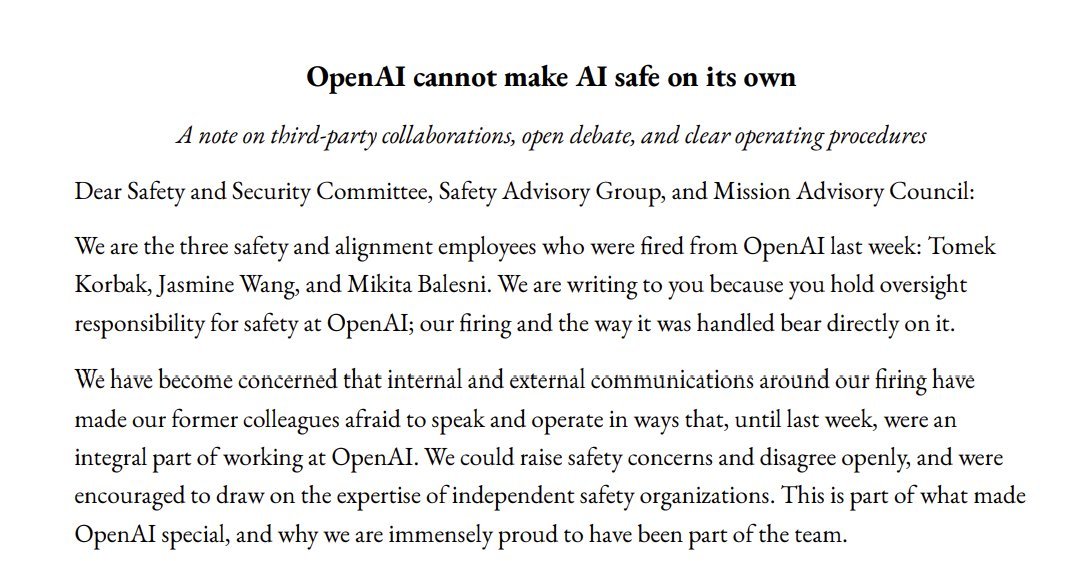
Mikita Balesni, Jasmine Wang, and Tomek Korbak said on October 8 they were fired the previous week and that no…
Nathan Lambert published an essay arguing AI progress will accelerate through engineering and infrastructure g…
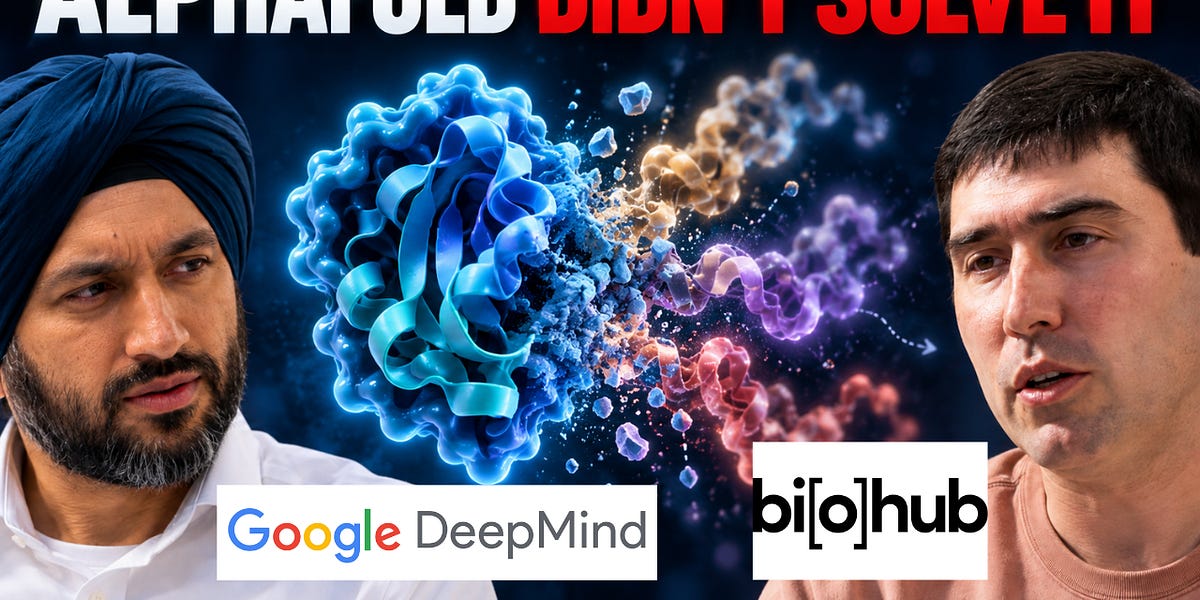
Google DeepMind's Pushmeet Kohli said AlphaFold did not solve protein folding, because proteins are disordered…
ALPHA FORGE's new sandbox.py calls the same inference orchestrator as the daily batch but never calls the ledg…

Writing on Zenn, Taichi Endoh — a clinical engineer and AI engineer — says the first step in a leak is to defi…

