What happened
YouTube has tightened rules on monetizing "inauthentic content" — including repetitive videos, template-based AI content, and AI personas discussing sensitive topics — and is focusing enforcement on accounts posting AI slop at scale rather than individual videos. According to video editing company Kapwing, more than 20% of videos YouTube's algorithm shows to new users are low-quality AI-generated content.
Why it matters
YouTube CEO Neal Mohan called combating AI slop a "top priority" in a public letter earlier this year, signaling that the platform sees low-quality AI video as a genuine threat to its brand. The company faces a familiar tension: during COVID-19, YouTube faced criticism both for allowing health misinformation and for removing it — accused of stifling free speech or playing politics. Balancing moderation of AI content, especially political deepfakes, without appearing to censor one ideology over another is a test of the platform's neutrality claims.
What to watch
YouTube has launched a likeness protection program that automatically detects videos featuring a public figure's face and lets them petition for removal. The company is also automatically applying labels to realistic AI content for transparency. Political content remains a small slice of AI slop today, but YouTube's approach to deepfakes and sensitive-topic AI personas will shape how platforms manage this risk going forward.
Summaries like this, in your inbox every morning.
YouTube's challenge with AI-generated content sits at the intersection of two platform pressures: maintaining brand quality and avoiding accusations of censorship. CEO Neal Mohan's public letter earlier this year naming AI slop a "top priority" reflects the scale of the problem — over 20% of new-user feeds now contain low-quality AI video. The company's strategy has shifted from policing individual videos to targeting accounts that post AI content at scale, a more efficient approach to cutting off the financial incentive (cheap ad revenue) that drives such spam.
The political dimension adds complexity. During COVID-19, YouTube faced contradictory criticism: it was faulted both for hosting health misinformation and for removing it. Any aggressive move against AI-generated political content risks renewing claims that the platform favors one ideology over another. YouTube's stated response — applying community guidelines "consistently, regardless of political ideology" and focusing on deepfakes that violate its privacy policy — is an attempt to frame moderation as technical and neutral rather than editorial. The likeness protection program and automatic labeling of realistic AI content are tools designed to do this work at scale, without human judgment calls that could appear partisan.
Pick your industry and the AI tools you use, and get news related to your work every day.
Free · 30 seconds with Google · unsubscribe anytimeWhat is AIToday? →
Ask AI anything about this article. The AI reads this article, earlier AIToday articles, and Wikipedia, and cites its sources. Q&As are published on this page for other readers too.
nFOX Lab launched the nFOX Platform for managing owned large language models and announced plans to open-sourc…
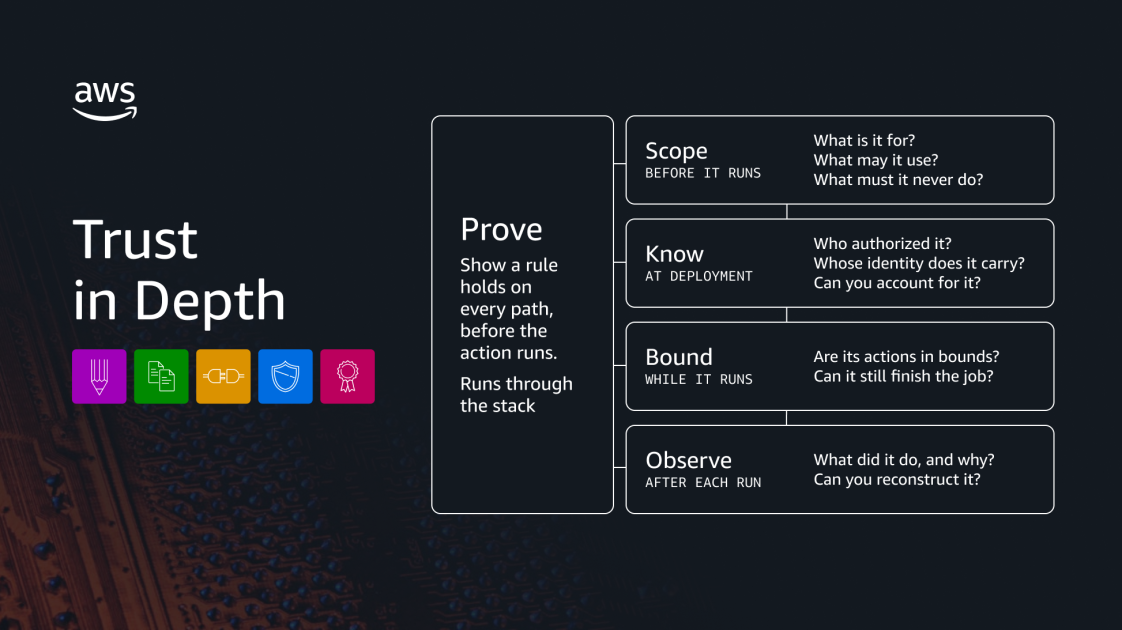
AWS introduced Trust in Depth, a four-layer approach — scope, know, bound, observe — that uses automated reaso…
ServiceNow announced AI Passport, a cryptographically signed credential defining an agent's identity, permitte…
Japan selected a GlobalFoundries-led project for its third round of U.S
Microsoft Research and the University of Illinois Urbana-Champaign released StudentSim, which builds virtual s…

Researcher Sammy Azdoufal discovered Energize Lab's Eiliko robot stores 13 million conversations from 68,000 t…