AIToday

Jibo's Successor Launches as AI Camera Wearable, Raises $29M

WIRED AI1h ago
Jibo's Successor Launches as AI Camera Wearable, Raises $29M

Key takeaway

Lingverse, a company with ties to the original Jibo robot, has raised $29 million(約46億円) to launch iKairos, a wearable AI device that captures moments throughout your day and generates AI-created memory images. The device can be worn as a pendant or mounted in your home, and will cost between $199 and $249 with an optional subscription. While Lingverse claims the product carries forward Jibo's legacy of a personal home assistant, iKairos is primarily pitched as an "AI journal" that turns real-life moments into generated images—a shift that raises questions about quality and privacy as it competes with existing AI wearables and smart home devices from major tech companies.

Summaries like this, in your inbox every morning.

Sign up free →

3 Key Points

  • What happened

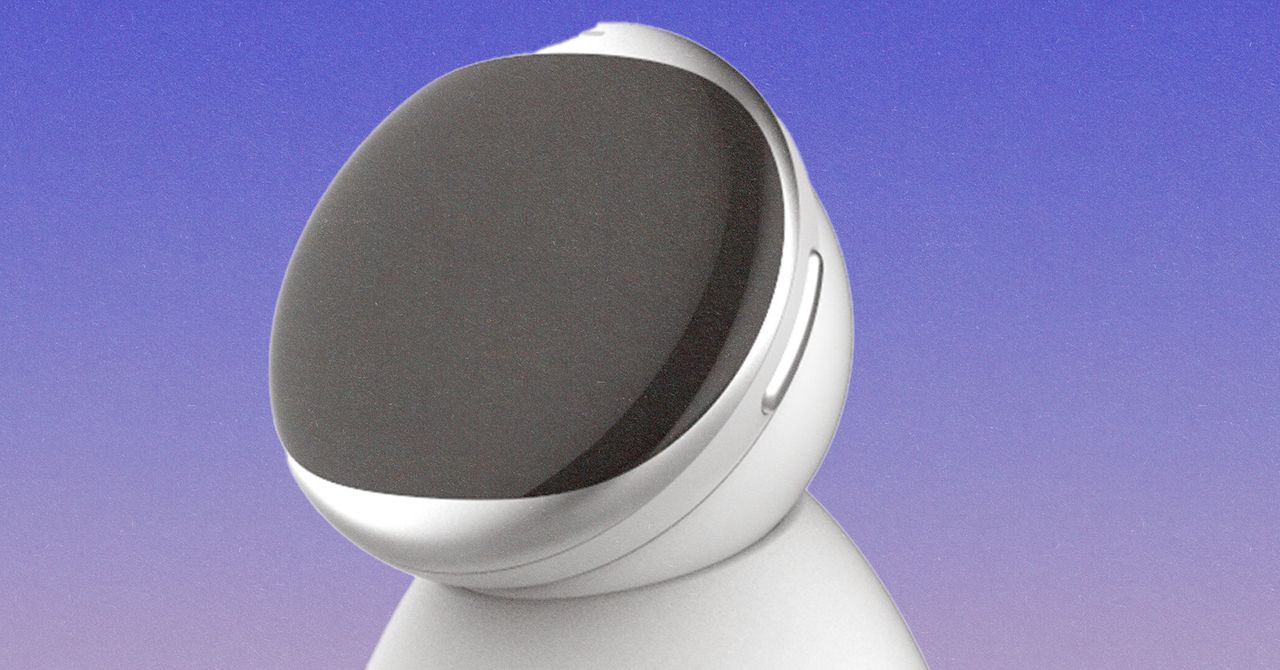
    Lingverse, a company led by former Jibo board member Jiawei Gu, raised $29 million(約46億円) to build iKairos, a wearable AI device that can be worn as a pendant, clipped to clothes, or mounted on a table. The device captures moments and transforms them into AI-generated images, functioning as an "AI journal" that observes the wearer and their surroundings.

  • Why it matters

    iKairos aims to revive Jibo's original vision of a home-based AI companion, but now focused on generating AI memory images rather than acting as a stationary conversational robot. The company says it holds several of Jibo's core patents and was built "with the blessing of Jibo's founding team," signaling an attempt to inherit loyalty from the original robot's user base even as the product concept has shifted.

  • What to watch

    Presales are planned to kick off later this year, with an expected price between $199 and $249 plus a subscription service. The device's ability to avoid producing low-quality AI outputs remains unclear—Lingverse says images pass a "quality gate" that cross-references visual scenes with audio context, but the company has not disclosed technical details on how this filtering works.

In Depth

Jibo, launched in 2014, was designed as a social home robot that could engage in conversation and respond to its environment, though it could not move or interact with physical objects. It arrived before the smart-home industry matured and ultimately could not sustain sufficient demand. Now, a company called Lingverse (formerly Ling AI) is attempting to resurrect the Jibo brand in a radically different form: a wearable AI camera called iKairos that captures moments and converts them into AI-generated images.

On Wednesday, Lingverse announced that it had raised $29 million(約46億円) in funding to develop iKairos. The device can be worn as a pendant, clipped to clothing, or placed in a table mount where it observes the surrounding environment Jibo-style. Jiawei Gu, Lingverse's CEO and a former Jibo board member, told WIRED that "it's the right time to combine all the stuff" and that "with iKairos, we are carrying forward Jibo's original dream." The company says iKairos was developed "with the blessing of Jibo's founding team" and that it holds several of Jibo's core patents, though it does not own Jibo's intellectual property rights.

The device's primary function is to act as an AI journal. According to Lingverse's website and statements to WIRED, iKairos captures moments throughout the day—either from the wearer's perspective or from a stationary position—and generates AI-created memory images from those observations. "Every image comes from real moments the device actually captured," a Lingverse representative wrote, adding that "before anything enters your journal, it passes a quality gate that cross-references the visual scene with the audio context of that moment — where you were, who was with you, what was said." The company describes this as helping users "understand [themselves] a little better, and make[s] it easy to look back on where you've been."

On privacy, Lingverse states that iKairos does not record video but instead uses the camera to take snapshots that are later deleted. Audio is recorded only when human speech is detected. The device will include a physical camera shutter, and data will be processed on-device or encrypted during transmission; the company says this data will not be used to train AI models. Lingverse expects the device to cost between $199 and $249, with an optional subscription service providing additional AI features. Presales are planned to begin later this year.

Lingverse is no stranger to AI-generated content. The company developed Luka AI Reading bot, which became popular, and at CES 2026 showed off its Luka AI cube, a camera-enabled device for children that can answer questions and turn artwork into animated AI videos. Despite these efforts and the Jibo connection, iKairos enters a crowded market. Tech giants Apple, Amazon, and Google are launching new AI-enabled smart speakers. OpenAI, partnering with designer Jony Ive, is developing a home assistant. Apple is rumored to be working on a home hub with an iPad-like screen. Existing AI wearables and journals—including the Bee AI wearable and Looki L1 AI bodycam—already serve similar purposes. Additionally, Google Photos already allows users to generate AI-enhanced versions of their photographs. Whether iKairos can differentiate itself through its combination of wearable and mounted form factors, or whether it will become yet another AI-generated image generator in an oversaturated market, remains to be seen.

Context & Analysis

Jibo was conceived in 2014 as a conversational home robot at a time before smart speakers became ubiquitous—it preceded Amazon's Echo by years but ultimately could not sustain commercial demand and ceased operation. Now, under new ownership and leadership, the Jibo name is being revived not as a robot but as an AI camera wearable called iKairos. The pivot is significant: whereas Jibo was meant to engage in dialogue and provide companionship from a fixed location, iKairos is designed to document daily life and generate AI memory images—a fundamentally different product despite the attempt to inherit Jibo's brand legacy.

Lingverse's framing of iKairos as an "AI journal" reflects the broader shift in AI assistant design toward multimodal capture and generation. By combining a wearable camera with a stationary mounted option, the device aims to gather context from both the wearer's perspective and the home environment, then convert those moments into generated imagery. However, the company has been vague about technical specifics, including how its promised "quality gate" actually prevents the generated images from resembling what users dismiss as "AI slop." The company's statement that images must "cross-reference the visual scene with the audio context" is the closest it has come to explaining the filtering mechanism, but implementation details remain proprietary.

The competitive landscape makes iKairos's path uncertain. Established tech giants—Apple, Amazon, and Google—are simultaneously investing in next-generation smart speakers and home devices with AI capabilities. OpenAI and Jony Ive are developing an AI home assistant. Existing AI wearables and journals (such as the Bee AI wearable and Looki L1 bodycam) already serve similar functions, and Google Photos already offers AI-powered photo generation. Lingverse's advantage appears to rest on the Jibo connection and the specific combination of wearable plus mounted form factors, but whether consumers will accept continuous environment capture and AI-generated memory images over time remains an open question.

FAQ

How much will iKairos cost and when can I buy it?
Lingverse expects the device to cost between $199 and $249, likely with an additional subscription service that offers AI features. Presales are planned to kick off later this year.
What exactly does iKairos do?
iKairos captures moments from the wearer's perspective (as a pendant or clip) or from a stationary mounted position, then transforms those captured moments into AI-generated images. Lingverse says it can also answer questions and offload some tasks like a standard voice assistant device.
Does iKairos record video or audio?
The device does not record video. It uses the camera to take snapshots that are later deleted. It only records audio when a human voice is detected. Data is processed on-device or encrypted in transit and will not be used to train AI models, according to Lingverse.

Get the latest Robotics news every morning

AI-summarized, only the topics you pick — one digest a day via Email, Slack, or Discord.

Free · takes 30 seconds · unsubscribe anytime

Discussion

No comments yet. Be the first to share your thoughts!

Log in to join the discussion

Related Articles

Stay ahead with AI news

Get curated AI news from 200+ sources delivered daily to your inbox. Free to use.

Get Started Free

Free · takes 30 seconds · unsubscribe anytime

1 minute a day. The AI essentials.

200+ sources · Email / LINE / Slack

Get it free →