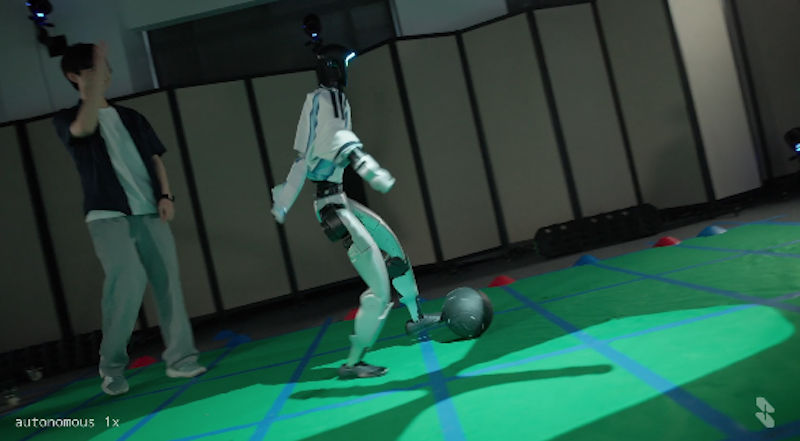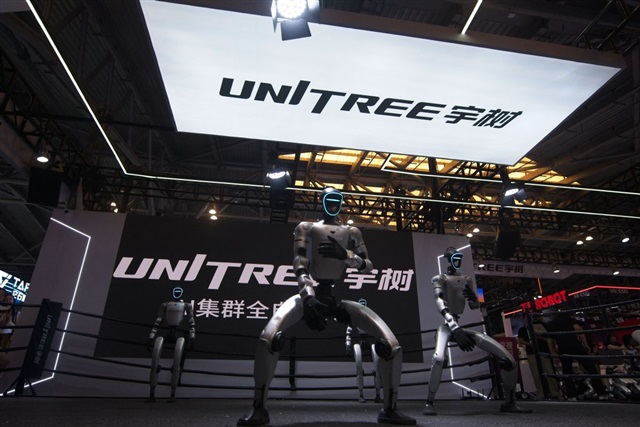
China's Unitree Technology, a leading maker of humanoid robots, expects first-half 2026 revenue to reach roughly US$155.8 million, representing growth of 35.6% to 45.4% year on year.
The company is benefiting from rising demand for embodied AI—robots equipped with artificial intelligence—indicating that this technology is moving into practical commercial deployment.
What happened
China's Unitree Technology expects first-half 2026 revenue of roughly CNY1.1 billion (US$155.8 million), a 35.6% to 45.4% increase year on year, driven by demand for embodied AI (physical robots with AI capabilities).
Why it matters
Humanoid robots are becoming a commercial product category rather than a research prototype. Unitree's growth signals that businesses and institutions are moving beyond experiments and buying these systems at scale, which suggests embodied AI is transitioning from niche to mainstream adoption.
What to watch
The first-half 2026 results will show whether Unitree can sustain this growth trajectory and how much of the demand is coming from domestic China versus international markets.
Ask the AI about this article →
Unitree's projected growth reflects a broader shift in the robotics industry: embodied AI—the integration of artificial intelligence into physical robotic systems—is moving from experimental prototypes toward commercial products with measurable revenue. The 35.6% to 45.4% year-on-year growth range suggests sustained and accelerating demand rather than a one-time spike, indicating that customers across different sectors (manufacturing, logistics, research, or service industries) are placing orders at meaningful scale. As China's leading humanoid robot maker, Unitree's performance serves as a barometer for the health of this emerging market segment globally.
For example, today's edition would include:
AI-summarized, only the topics you pick — one digest a day via Email, Slack, or Discord.
Free · takes 30 seconds · unsubscribe anytimeWhat is AIToday? →
Ask AI anything about this article. Q&As are published on this page for other readers too.
Skild AI has introduced S1, its flagship robot foundation model, which lets robots learn new, complex tasks by…

BHP, the world's largest mining company by market capitalization, has deployed AI across its operations

John Deere announced a three-year, $10 million research and development partnership with ag-tech company Reser…

On July 16, 2026, NVIDIA announced that 22 Japanese companies and organizations have expressed intent to join…

Panasonic HD has established a new AI and robotics research and development division, and CAIO Sakaba is leadi…

JFE Engineering's iGomi™ service, Japan's first to use AI to identify lithium-ion batteries for collection, tr…