
What happened
Oracle and Google Cloud are expanding their partnership to integrate Google's Gemini AI models—specifically Gemini 3.1 Flash Lite and Gemini 3.5 Flash—directly into Oracle's Fusion Applications, NetSuite, and AI Agent Studio, giving enterprise customers new options for building AI-powered workflows.
Why it matters
The deal shifts Oracle's AI narrative from selling only its own infrastructure toward becoming an 'AI aggregator' in enterprise software, curating third-party models for price-performance. This tightens the link between Oracle's application stack and its AI infrastructure strategy, which already centers on a large AI-related backlog and heavy data center buildout.
What to watch
The business case increasingly depends on how well Oracle converts its infrastructure investment and multimodel access into higher usage of its core applications—a potential execution risk for investors betting on the company's large AI capital spending.
Summaries like this, in your inbox every morning.
Oracle has long positioned itself as a provider of enterprise infrastructure and applications, with AI capabilities increasingly central to its strategy. The company's earlier narrative emphasized its own cloud infrastructure and proprietary AI tools, but this Gemini partnership signals a strategic shift. Rather than locking customers into Oracle-only AI models, the company is now opening its application stack to Google's best-in-class generative AI offerings. This move addresses a practical customer need: enterprises want to choose models based on cost and capability for specific workflows, not be forced into a single vendor's ecosystem.
For investors focused on Oracle's massive AI capital expenditure and data center buildout, this partnership is significant because it clarifies how those investments will translate into revenue. The company's ability to drive higher usage of its core applications—Fusion, NetSuite, and its AI Agent Studio—by offering customers multiple model choices at different price points may determine whether the capex strategy pays off. In other words, infrastructure and multimodel access are only valuable if they pull customers deeper into Oracle's application layer, where the company's traditional strengths and margins reside.
For example, today's edition would include:
AI-summarized, only the topics you pick: one digest a day via Email, LINE, or Slack.
Free · 30 seconds with Google · unsubscribe anytimeWhat is AIToday? →
Ask AI anything about this article. The AI reads this article, earlier AIToday articles, and Wikipedia, and cites its sources. Q&As are published on this page for other readers too.
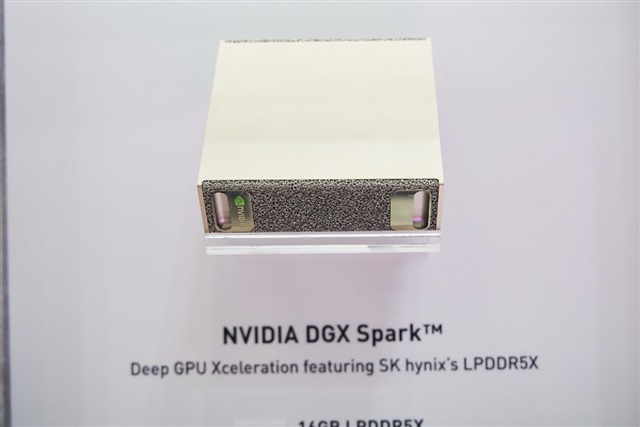
Nvidia's DGX Spark, launched at CES 2025 as Project DIGITS, began shipping in October, with VP Adel El Hallak…
Stagwell CEO and former Microsoft Chief Strategy Officer Mark Penn told Yahoo Finance that most modern digital…

Anthropic CEO Dario Amodei dined with President Donald Trump at the White House, even as the Pentagon continue…

Google said its Gemini 3.8 Live voice model now has a Live Avatar feature, and that Live Avatar-equipped Gemin…

Hera Hyeonseo Lee said workers are using their deferred wages to finance the AI designed to eliminate their jo…

On the 2,000-question typed-decisions benchmark, Supersonic Labs' free Julia 1 scored 73.15% vs