What happened
Anthropic launched Claude Sonnet 5.5, a mid-tier model for everyday tasks, priced at $2 per million input tokens and $10 per million output tokens, with 20 cents per million cache reads.
Why it matters
Anthropic says Sonnet 5.5 needs far fewer tokens to do the same work, making it 30% cheaper than the previous generation at the same list price — a cost-per-task drop, not a price cut.
What to watch
Its edge hinges on whether buyers accept invisible watermarking added to comply with the European Union's AI Act, which Anthropic says does not affect text quality. Watch for Haiku 5.5 'in the coming weeks.'
WHO IT HITSAI product managers and developers choosing a mid-tier model for document generation, summarization, spreadsheets and coding-bug fixes now have a cheaper-per-task option, though its watermarking may matter to compliance and content teams.
Summaries like this, in your inbox every morning.
Anthropic is filling out its Claude family from the top down. The Sept. 22 launch of Opus 5.5, the flagship, was followed by Sonnet 5.5, the mid-tier workhorse for document generation, summarization, spreadsheets and fixing coding bugs. Because Sonnet 5.5 is built on the same foundation as Opus 5.5, Anthropic says it is the first Sonnet with notable cybersecurity capabilities; it ships with cyber safeguards and fallbacks like those developed for more capable models such as Mythos-class models and Fable. Those may trigger on prompts touching cybersecurity, biology or other sensitive content, though Anthropic says most software development and life sciences work will be unaffected. Anthropic also plans Haiku 5.5, its smallest and fastest model for high-volume, cost-sensitive applications, in the coming weeks.
Two contrasting signals sit inside this release. On performance, Anthropic says Sonnet 5.5 scored 70.6% on Terminal-Bench 4.0, an agentic coding evaluation, against the previous model's 10.3%, and landed two points below Opus 5.5 on GDPval-AA, a test of real-world occupational work. On trust, it is the first Sonnet to carry invisible text watermarking, a step Anthropic ties to the European Union's AI Act rather than to a user request.
How this lands may depend less on benchmark gains than on how buyers weigh per-task economics against governance. The same list price as Sonnet 5 combined with fewer tokens per task is what Anthropic says produces the 30% cheaper figure, so the claim is a usage-based one. Whether compliance and content teams treat the watermarking as a plus or a friction point looks like the variable that decides how quickly Sonnet 5.5 is adopted for everyday work. That tension, not raw speed, may shape the model's reception.
For example, today's edition would include:
AI-summarized, only the topics you pick: one digest a day via Email, LINE, or Slack.
Free · 30 seconds with Google · unsubscribe anytimeWhat is AIToday? →
Ask AI anything about this article. The AI reads this article, earlier AIToday articles, and Wikipedia, and cites its sources. Q&As are published on this page for other readers too.
Oracle group VP Johnnie Konstantas told theCUBE that agentic AI lets agents and sub-agents act as a proxy for…

Qiagen has manually curated biomedical data for more than 25 years with over 150 MD- and PhD-level experts, Bh…
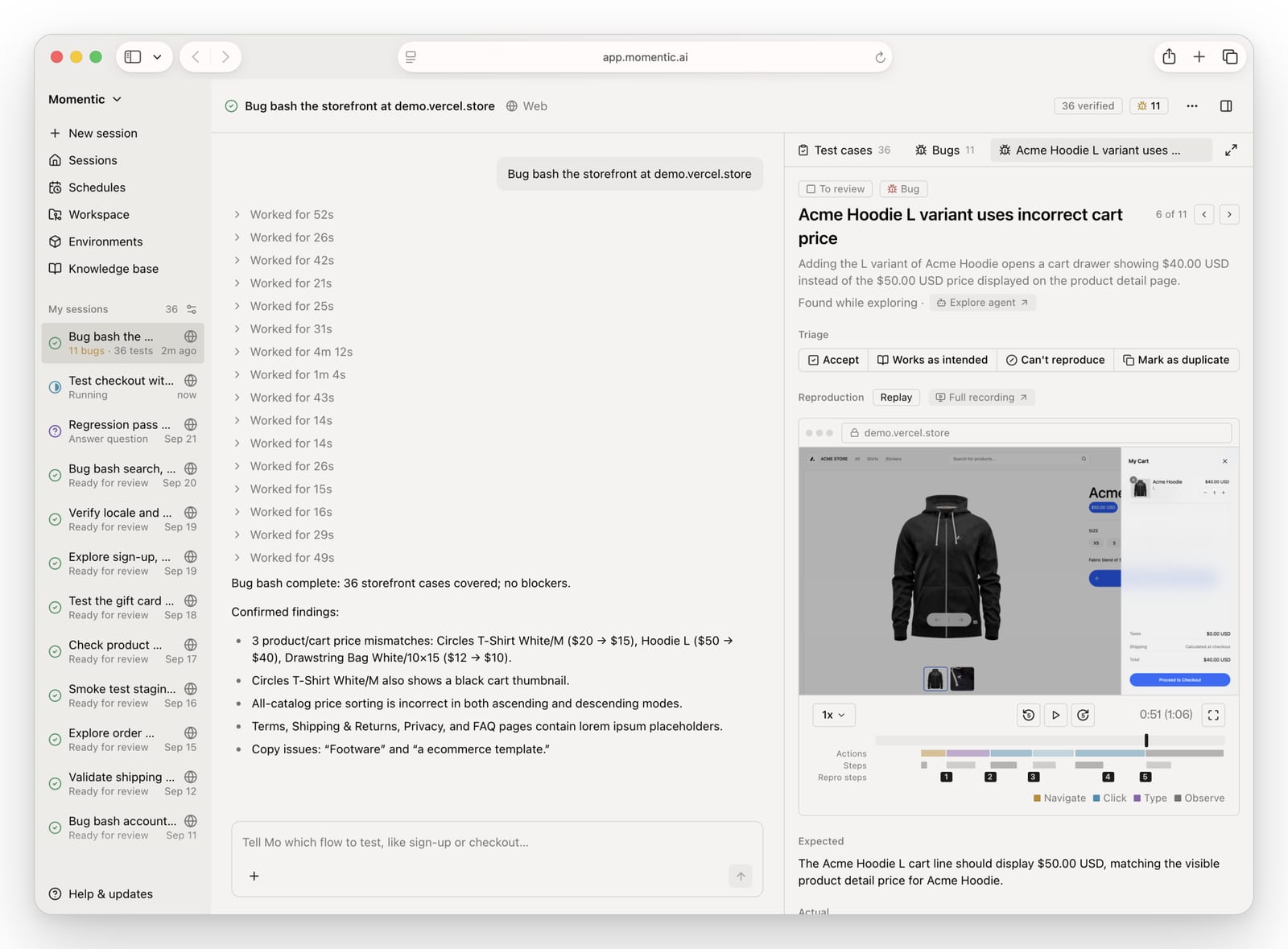
Momentic Inc. launched Mo, an AI agent that opens an app from a URL and prompt, spins up a swarm of agents to…
NEAR, the token of the NEAR Protocol, has more than doubled in value over the past two weeks, helped by surgin…

Michael Burry wrote in a Substack chat that Trump's team knows the AI buildout is 'the only thing keeping this…

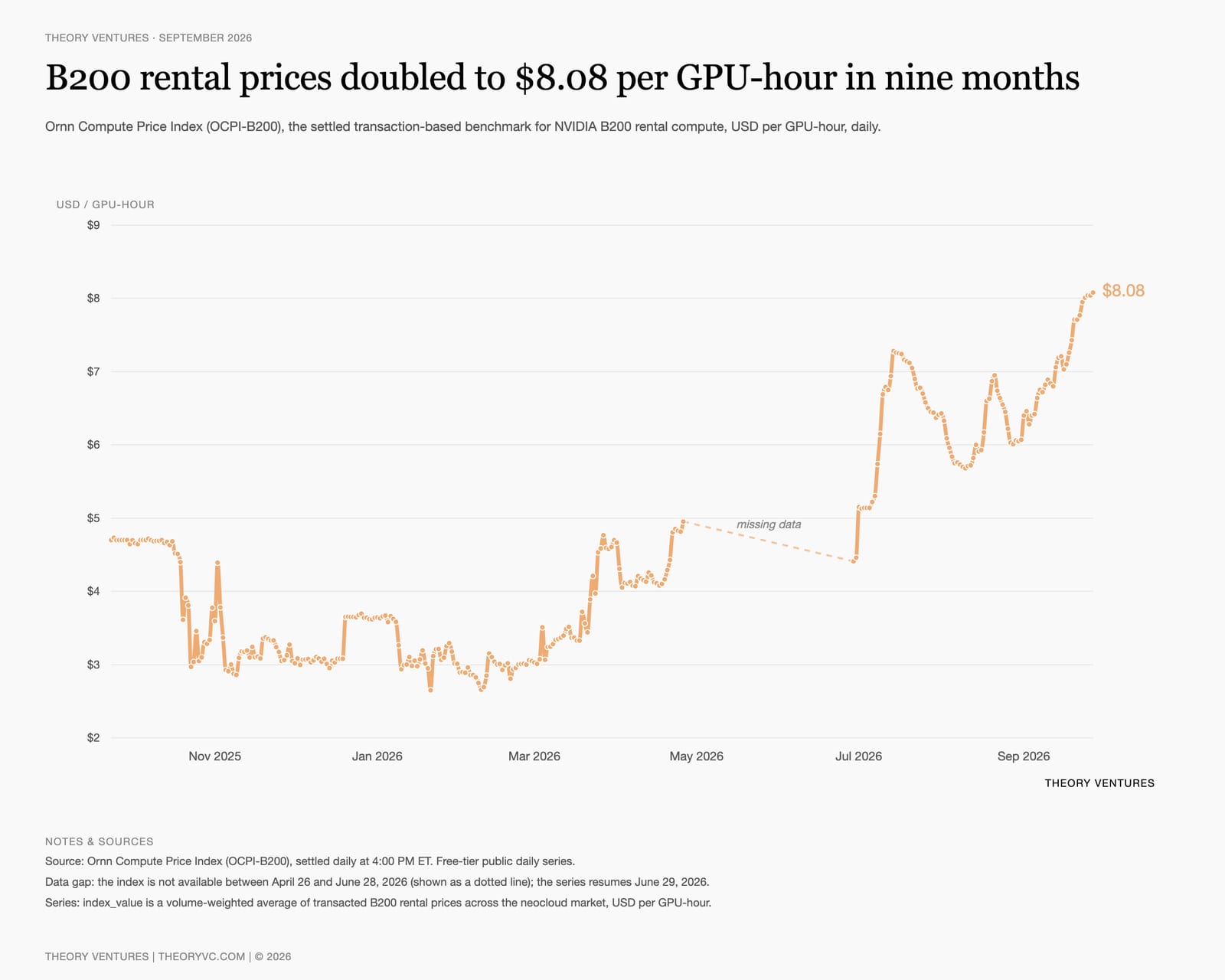
GPU rental prices doubled in six months, from $4.40 to $8.08 per GPU-hour, even as Claude Opus 5.5 costs 40% l…