
What happened
Anthropic released Claude Sonnet 5.5, which it says runs output more than 30 percent faster and costs up to 30 percent less per task than Sonnet 5. On Terminal-Bench 4.0, it jumped from 10.3 percent to 70.6 percent.
Why it matters
The company says the new model lands close to its top-tier option on everyday knowledge work at a fraction of the cost, so buyers may pick it over pricier alternatives. Independent testing still needs to confirm the claims.
What to watch
Whether the cost savings hold up, and how soon Anthropic's announced Claude Haiku 5.5 arrives for high-throughput, low-cost use cases.
WHO IT HITSEnterprise AI buyers and developers choosing which Claude model to deploy for everyday tasks like fixing bugs, writing docs, and building spreadsheets may find the cheaper Sonnet 5.5 close enough to the premium option to switch.
Summaries like this, in your inbox every morning.
Anthropic's Claude 5.5 family now has three named members: Fable, Opus, and the newly released Sonnet, with Haiku announced for the coming weeks. The company presents these as counterparts to OpenAI's GPT-6 Astra, Sol, and Luna, which kicked off the latest pricing battle. Roughly speaking, Opus sits a bit above Sol, Sonnet above Luna, and Fable above Astra, though Anthropic charges more across the board. Performance differences between matched tiers are small enough that cost may end up being the deciding factor.
The Sonnet 5.5 release leans heavily on that cost argument. On FrontierCode 1.1 at the "High" setting, Anthropic says the model scores ten points above Sonnet 5 at roughly one-fifteenth the cost per task. At low or medium effort settings, it already beats Sonnet 5's best scores on several benchmarks at about one-tenth the per-task cost. The catch is that finding the right effort level for each task is still more art than science, and the highest "Max" setting actually scores worse on FrontierCode than "Xhigh" because the model more often triggers a code-review function that splits work across sub-agents, sometimes causing timeouts or out-of-scope changes.
Anthropic is also adding safeguards to a Sonnet model for the first time because of the model's cybersecurity capability, and it has added classifiers against distillation attacks. Whether those measures work should become clear over the coming months. If Chinese labs have been benefiting from such attacks, closing that vector could widen the gap with Western labs again. The near-term question is whether independent testing confirms the speed and cost claims, and whether Haiku 5.5 arrives soon enough to help Anthropic close the price gap with OpenAI.
For example, today's edition would include:
AI-summarized, only the topics you pick: one digest a day via Email, LINE, or Slack.
Free · 30 seconds with Google · unsubscribe anytimeWhat is AIToday? →
Ask AI anything about this article. The AI reads this article, earlier AIToday articles, and Wikipedia, and cites its sources. Q&As are published on this page for other readers too.
Oracle group VP Johnnie Konstantas told theCUBE that agentic AI lets agents and sub-agents act as a proxy for…

Qiagen has manually curated biomedical data for more than 25 years with over 150 MD- and PhD-level experts, Bh…
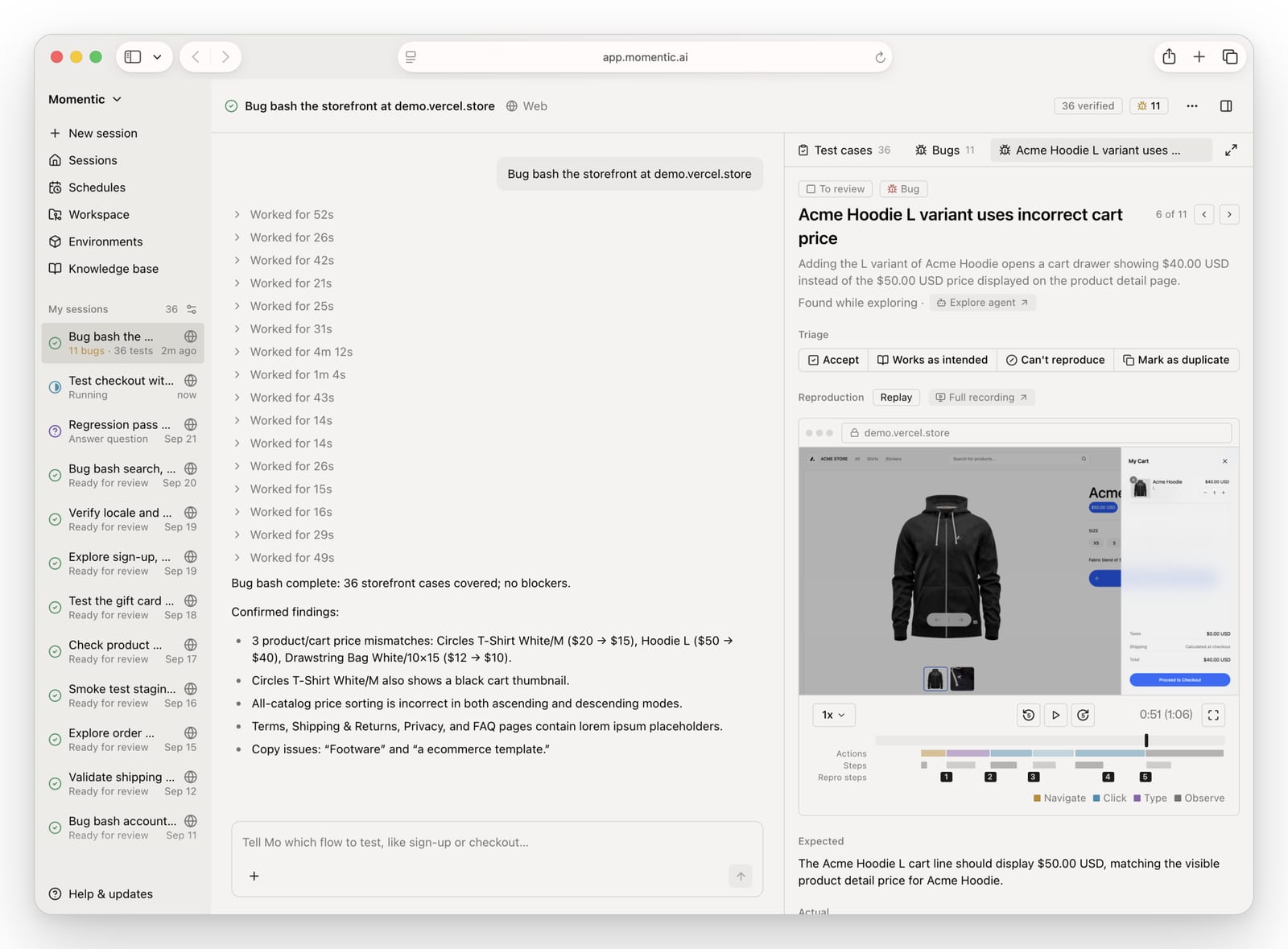
Momentic Inc. launched Mo, an AI agent that opens an app from a URL and prompt, spins up a swarm of agents to…
Anthropic launched Claude Sonnet 5.5, a mid-tier model for everyday tasks, priced at $2 per million input toke…

NEAR, the token of the NEAR Protocol, has more than doubled in value over the past two weeks, helped by surgin…

Michael Burry wrote in a Substack chat that Trump's team knows the AI buildout is 'the only thing keeping this…