
WeaveScope is a new observability platform for Elixir agents that traces model calls, tool calls, and agent execution in a single timeline.
Developers can instrument an agent with one dependency and see what happened at each step—inputs, outputs, latency, and cost—making it easier to debug failures and optimize performance.
The free tier supports up to 100K events per month.
What happened
WeaveScope, a tracing and monitoring platform for Elixir-based AI agents, entered early access. The tool lets developers inspect model calls, tool calls, and spans across agent runs, and tracks throughput, latency, errors, token usage, and cost. It requires only one Elixir dependency (BeamWeaver) to instrument an agent.
Why it matters
AI agents in production often fail or run slowly in ways that are hard to debug. WeaveScope connects the entire execution timeline—from failed steps to their inputs, outputs, latency, and cost—in one place, helping teams identify what went wrong and how to fix it without switching between separate tools.
What to watch
WeaveScope offers a free tier with up to 100K accepted events per month (no credit card required) and paid tiers starting at €29/month for 1M events. Alerting is coming next. The product is available as a Hex package (beam_weaver ~> 0.1.15).
WeaveScope is an observability platform for Elixir-based AI agents that entered early access as a tool for tracing and monitoring agent execution. The core problem it solves is debugging: when an agent fails, runs slowly, or consumes unexpectedly high token usage, developers need to understand what happened at each step—which model was called, which tool was invoked, what the inputs and outputs were, how long each step took, and how much it cost.
The platform provides two main features: Tracing and Monitoring. Tracing connects model calls, tool calls, and spans across an agent run in a single timeline, allowing developers to jump from a failed step to its inputs, outputs, latency, and cost. Monitoring tracks operational signals—throughput, latency, errors, token usage, and cost—as agents run, giving teams a shared view across their work. A third feature, Alerts, is marked "coming soon" and will notify teams before agent failures escalate.
Setup is minimal: developers add the BeamWeaver dependency (version ~> 0.1.15, available on Hex) to their Elixir project, configure one endpoint, and the tool exports instrumented agent runs, model calls, and tool calls in the background. Pricing is tiered: the free tier includes 100K accepted events per month (where one trace can contain multiple events), 100 MB/hour data throughput, 14-day retention, 1 project, and 2 users, with no credit card required. The Pro tier costs €29/month and includes 1M events, 2.5 GB/hour throughput, 30-day retention, unlimited projects, and unlimited users. The Scale tier costs €99/month for 10M events, 5 GB/hour throughput, 90-day retention, and the same unlimited projects and users. An Enterprise tier with custom limits is available by request. Overage beyond the plan limit on paid tiers costs €10 per 1M accepted events.
WeaveScope addresses a practical pain point for teams running AI agents in production: observability. Traditional monitoring tools often separate concerns—error tracking, performance metrics, cost analysis—into disconnected dashboards, making it difficult to trace a single agent failure from its symptom back to its root cause. By unifying tracing (model and tool calls) with operational signals (throughput, latency, errors, token usage, cost) in one timeline, WeaveScope lets developers jump directly from a failed step to the data that explains it.
The platform's design reflects real agent workflows: agents are inherently sequential (one tool call depends on another, one model call depends on prior outputs), so a linear trace view maps naturally to how they run. The free tier (100K events per month, 14-day retention) is pitched as enough for early experimentation, while the paid tiers scale to large-scale deployments. The one-dependency setup (BeamWeaver on Hex) and background instrumentation reduce friction for adoption in existing Elixir codebases.
Alerting is listed as "coming soon," suggesting the team sees monitoring (the reactive view of what happened) as a necessary first step before moving to proactive alerts (preventing failures before they spread).
AI-summarized, only the topics you pick — one digest a day via Email, Slack, or Discord.
Free · takes 30 seconds · unsubscribe anytime
Ask AI anything about this article. Q&As are published on this page for other readers too.
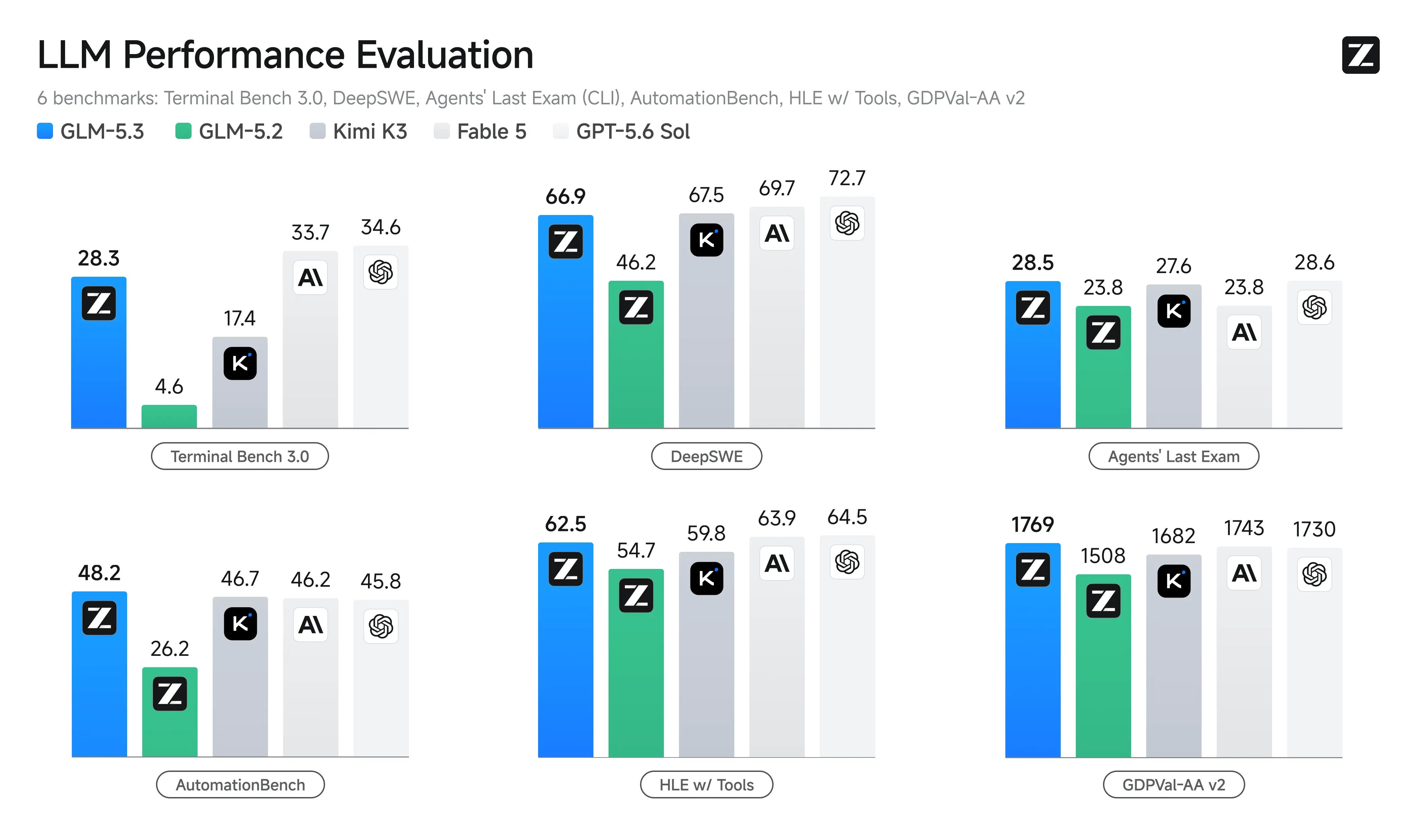
Z.ai announced GLM-5.3, a model with ~750B parameters that has surpassed Moonshot AI's Kimi K3 and matched or…
Anthropic will offer a watermark detection API allowing third-party developers to identify text created by Cla…

A developer released Dictata v0.1.0, a Windows application that transcribes speech locally using Whisper (an A…
Osaurus, an MIT-licensed application, launched version 0.22.22 today

An essay compares large language model (LLM) training to baking bread, specifically cold-proofed focaccia

A GitHub repository has released a modular Python framework implementing classical AI algorithms—including sea…
The AI news that matters, in one minute each morning.
Sign up free