What happened
OpenAI published a September 21 blog, "Building standards for the next phase of AI," proposing US-led international standards for frontier AI. It said fully autonomous RSI is not occurring yet and should not be pursued until safely achievable.
Why it matters
OpenAI argues that losing caution could make supervising research processes humans cannot understand difficult, risking loss of real control over AI development, and it names the July Hugging Face breach as a sign of such risk.
What to watch
The plan leans on existing AI safety institute networks in countries such as Japan, the UK, Canada, France, Germany, South Korea, Singapore, India, Australia and Kenya; adoption is left to each government's judgment.
WHO IT HITSGovernment policymakers and standards bodies weighing AI rules, plus frontier AI developers and open-weight model creators, would be affected by a US-led standards push that OpenAI says should not favor any company, country or business model.
Summaries like this, in your inbox every morning.
OpenAI's blog post frames the standards question around a specific gap: AI is increasingly doing the work of building next-generation AI, so RSI could advance even with humans in the loop, yet fully autonomous RSI is not happening now. The company's position is that this should not be pursued until it can be done safely, and that the decision belongs to democratic judgment about benefits and risks rather than to developers alone. Its warning is concrete — without caution, overseeing research processes humans cannot understand becomes difficult, and real control over AI development could be lost. The July Hugging Face breach is presented not as a direct result of RSI but as an early sign of that kind of risk.
The proposed mechanism avoids new enforcement bodies. It would draw on AI safety institutes already established in countries including Japan, the UK, Canada, France, Germany, South Korea, Singapore, India, Australia and Kenya, and set standards through the US Commerce Department's Center for AI Standards and Innovation (CAISI) and industry groups. Crucially, the standards would not be a licensing regime, pre-release mandatory review or approval requirement; governments would decide whether to fold them into law. OpenAI also says the design should not advantage any particular company, country or business model, citing aviation and financial stability as reference fields and seeking cooperation with existing bodies such as ISO and the Frontier Model Forum.
OpenAI's argument for US leadership rests on the US AI industry's position at the technology frontier and its internationally advantageous standing in areas like finance, trade and defense. It warns that if the US does not lead now, it will watch a fragmented international framework form around it. The timing is notable: Anthropic CEO Dario Amodei published an essay on the 12th calling for pacing adjustments in development, which Altman and others have echoed, while President Trump has dismissed AI threat arguments as fabricated and shown a negative stance on regulation — suggesting the political ground for any US-led framework remains contested.
For example, today's edition would include:
AI-summarized, only the topics you pick — one digest a day via Email, LINE, or Slack.
Free · 30 seconds with Google · unsubscribe anytimeWhat is AIToday? →
Ask AI anything about this article. Q&As are published on this page for other readers too.
OpenAI said on September 21 it will take advice from AGMAI on judging and publishing AI mathematical results…
Nvidia guided for $108.0 billion in fiscal third-quarter revenue, with a footnote that it assumes no Data Cent…
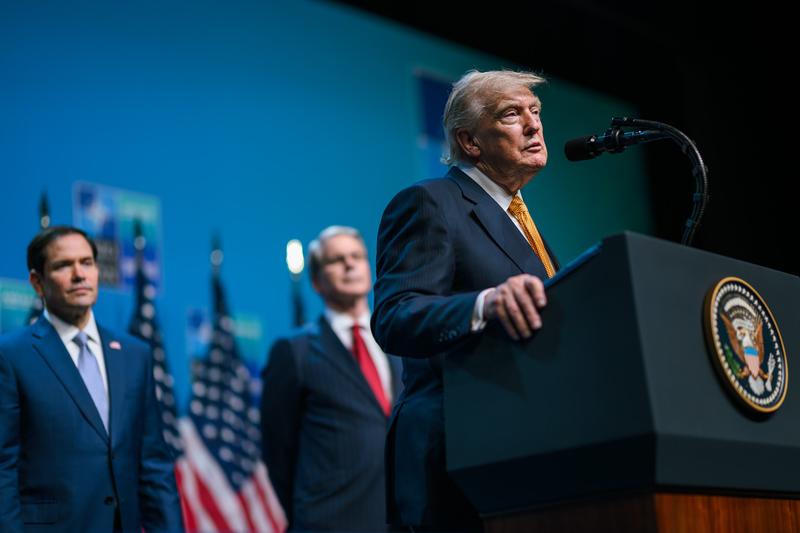
OpenAI on Monday called for the US to lead an international coalition to coordinate global AI standards, as Wa…
TypeSafe AI CEO Diogo Almeida launched Jev, a System One model built on Reinforcement Learning for Calibrated…

macOS security expert Patrick Wardle found a zero-day in Meta's Muse assistant

The United States is preparing to launch an AI-powered tool for air-traffic control, as reported by WSJ