What happened
IBM's stock fell 25% in a single trading session, erasing about $70 billion(約11兆円) in market value—the worst day in over fifty years, worse than its 1987 Black Monday losses. The decline reflects a broader shift: companies are redirecting IT budgets away from enterprise software and services toward hardware and infrastructure, betting they won't be locked into expensive AI model usage as agentic systems scale.
Why it matters
As AI agents proliferate across businesses, the fundamental economics of how companies operate are shifting. Existing enterprise software giants that built their moat on proprietary solutions are watching that advantage erode as digital labor becomes abundant and can be replaced by cheaper alternatives. This isn't just a tech problem—it signals that human labor is being repriced in real time, and the roles workers perform are evolving faster than most organizations are prepared for.
What to watch
The disruption at IBM may be a harbinger for other legacy enterprise software vendors. The hosts expect accelerating change in coming months and years as companies experiment with agentic alternatives to existing human positions and processes. On October 15 in Indianapolis, the Midwest AI Summit will bring together practitioners to discuss agents, security, and architecture in a practical engineering context.
Summaries like this, in your inbox every morning.
IBM's historic 25% stock collapse reflects a tectonic shift in how enterprises allocate capital—a shift that Chris Benson, discussing a potential book project on the "post-agentic world," has been tracking carefully. The decline is not a single-company failure but a symptom of a wider economic recalibration: as AI agents scale across business operations, companies are betting that the expensive, proprietary enterprise software that once insulated vendors like IBM will become obsolete or at least less sticky. Instead of paying recurring licensing fees to legacy platforms, enterprises are front-loading capital into infrastructure—buying hardware, securing compute, and building internal capacity—to avoid future lock-in to pricey agentic AI models.
What makes this moment distinct is its speed. The hosts emphasize that the rate of change is accelerating exponentially, not incrementally. Companies are no longer debating whether agents will reshape their workforce; they're deploying thousands or tens of thousands of them and watching the economics of labor repricing unfold in real time. This isn't a gradual phasing-out of human roles; it's a wholesale reimagining of what jobs mean, what productivity looks like, and what value human workers contribute. The old moats—proprietary software, irreplaceable domain expertise, entrenched vendor relationships—are eroding faster than incumbents can adapt.
For example, today's edition would include:
AI-summarized, only the topics you pick — one digest a day via Email, Slack, or Discord.
Free · 30 seconds with Google · unsubscribe anytimeWhat is AIToday? →
Ask AI anything about this article. Q&As are published on this page for other readers too.
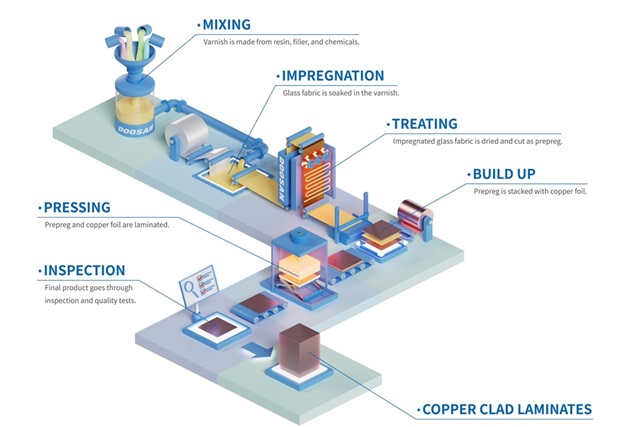
Doosan committed KRW968 billion to expand high-end copper-clad laminate (CCL) production in South Korea and Ch…
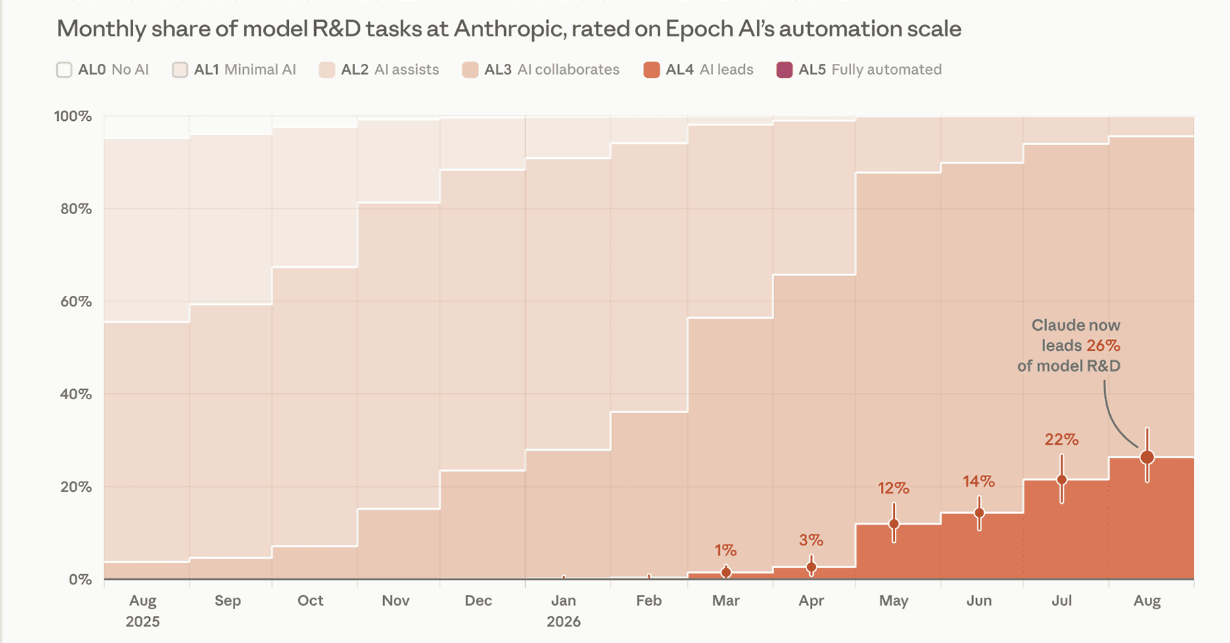
Anthropic Institute said that as of August, 26% of its AI research and development work was almost entirely do…
Abel more than tripled Berkshire's Alphabet stake in the first quarter and added another $17 billion in the se…

At Dreamforce, Salesforce and Nvidia unveiled Koa, a domain-specific reasoning model for Salesforce's Agentfor…

Kai-Fu Lee says most CEOs want AI transformation but are 'mostly doing it wrong', and that they must personall…

Atlassian CEO Mike Cannon-Brookes said the most AI-native customers are expanding fastest, and that customers…