What happened
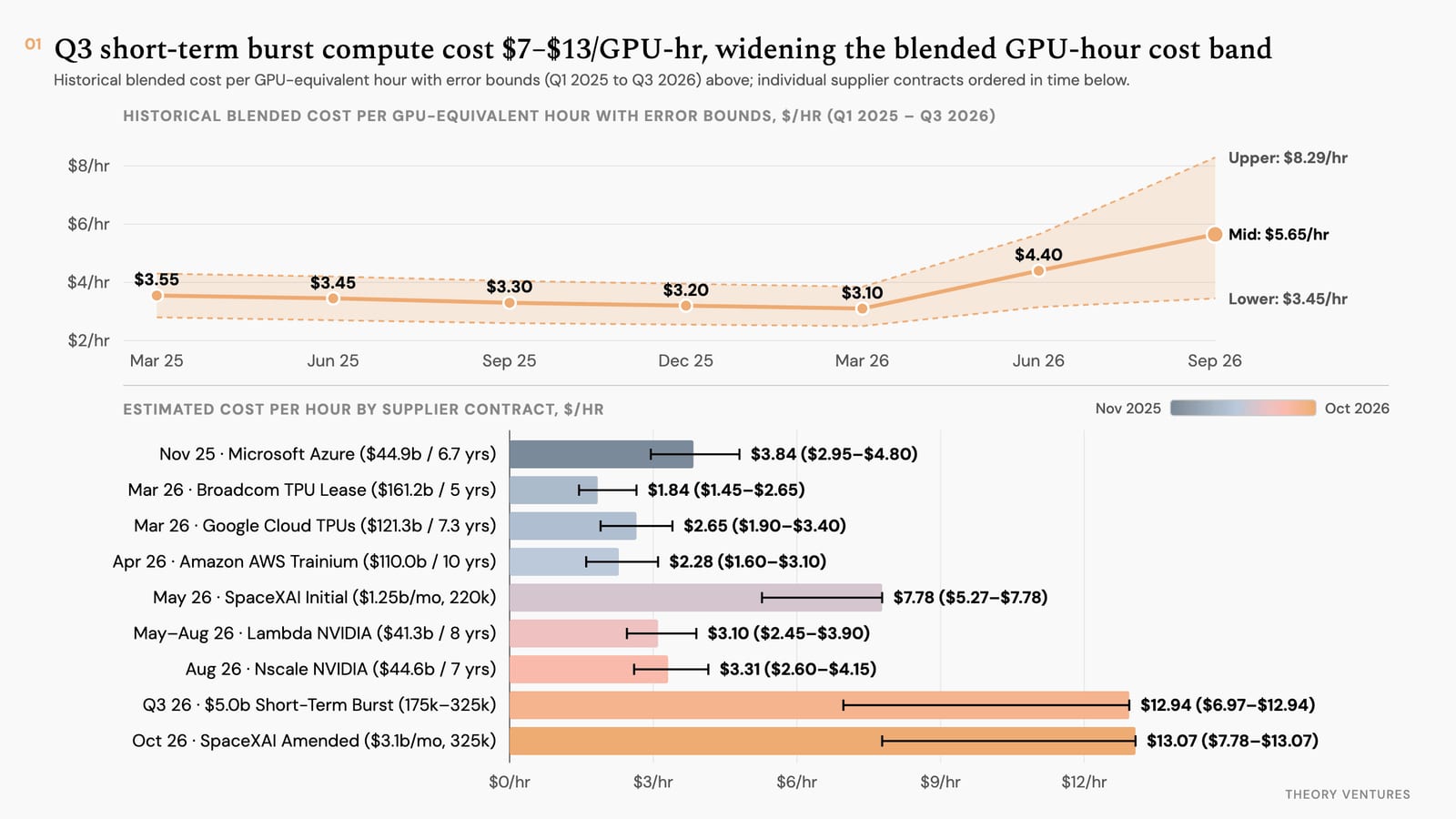
Short-term GPU rental prices rose from $3 to $12 to $13 per hour, pushing Anthropic's blended cost per GPU-equivalent hour from $3.10 to $5.65, per its updated S-1/A12.
Why it matters
A doubling of GPU cost must be met by a doubling of model efficiency, a doubling of customer prices, or a mix of both to preserve margins — and raising token prices risks losing share in the model price war.
Summaries like this, every morning.
The cost pressure stems from a structural gap between what AI labs want and what the market can supply. Labs like Anthropic are trying to rent as many accelerators as possible on multi-year contracts that fix prices around $2 to $4 per hour. Only when that long-term capacity is exhausted must they turn to the short-term burst market, where prices have surged to $13 per hour on short-term contracts.
This is a unit-economics problem with limited levers: a doubling of GPU cost must be met by a doubling of model efficiency, a doubling of price to the customer, or a combination of the two. The price lever is constrained by a price war across frontier and mid-tier models, which makes raising token prices perilous because any lab that hikes rates cedes share. That leaves efficiency and contract structure as the main tools.
On the supply side, 40% to 50% of data center projects are delayed, billions of dollars of GPUs sit idle in warehouses waiting for power, and transformer and turbine lead times are measured in years. The forward-looking argument is that the 2026 race to find GPUs at any price gives way in 2027 to a contest over duration matching — aligning the length of customer commitments with the length of compute leases.
Pick your industry and the AI tools you use, and get news related to your work every day.
Free · 30 seconds with Google · unsubscribe anytimeWhat is AIToday? →
Ask AI anything about this article. The AI reads this article, earlier AIToday articles, and Wikipedia, and cites its sources. Q&As are published on this page for other readers too.
Casap announced a $56 million Series B led by Base10 Partners, with Experian and Synchrony as strategic invest…

Kindai University will give 4,000 Paperpal licenses to full-time faculty and doctoral students at all campuses…

HIX AI's connector update on 11月4日 links Microsoft 365 (Outlook Mail, Outlook Calendar, OneDrive), Google Work…

Xentron and Holon System began a partnership linking Xentron's physical AI data platform NEXUS with Holon's ma…
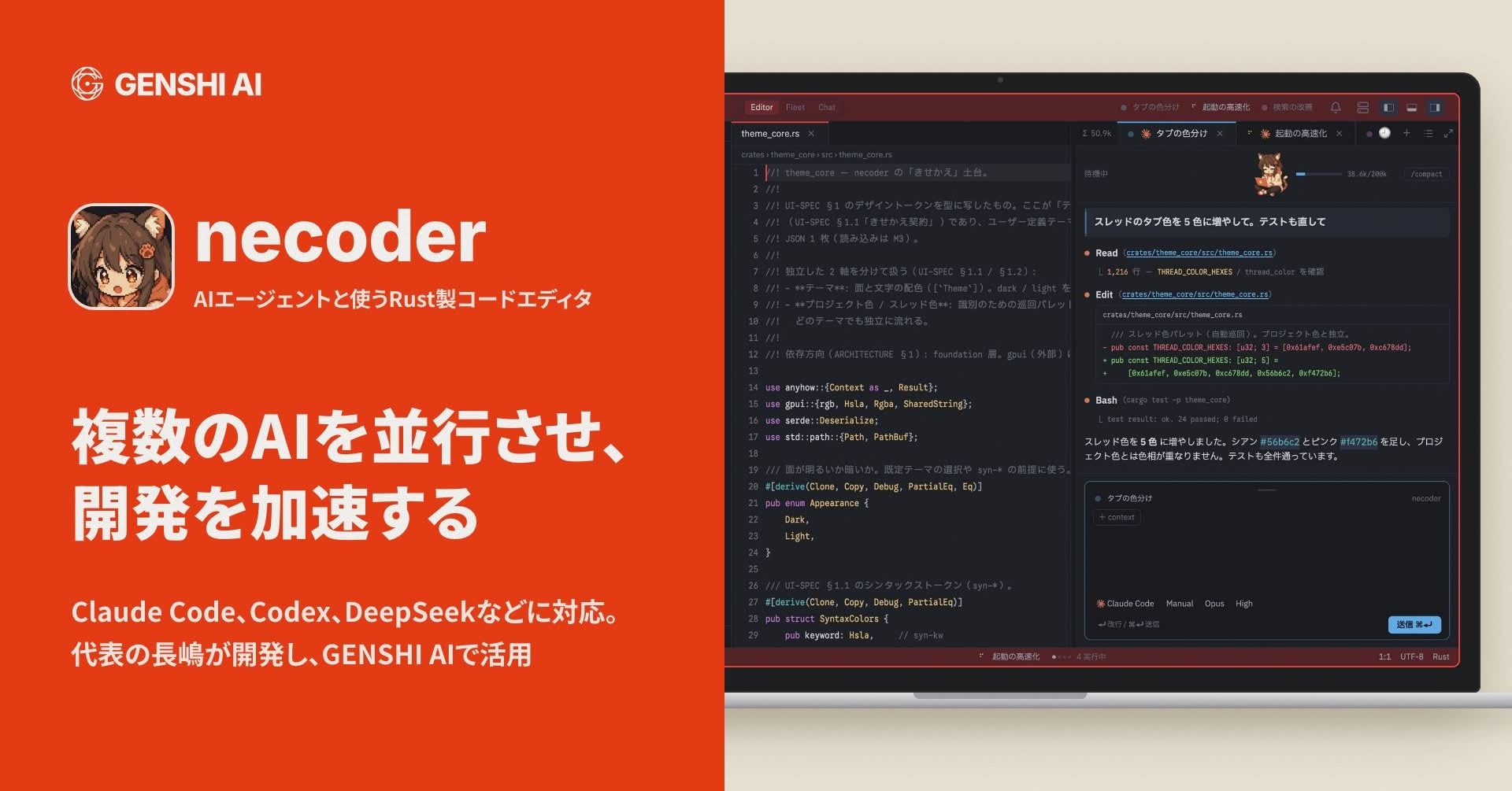
GENSHI AI said it adopted necoder in-house — a free, AGPL-3.0 Rust editor that Daichi Nagashima began building…
Darfon Electronics is consolidating its production capacity in China and Southeast Asia and shifting some reso…