
What happened
Running the paper's game-identification prompts in LM Studio, Qwen 3.8 27B correctly named Pac-Man (72% confidence), Pong (75%) and Breakout (88%) from weights alone, but failed on Freeway.
Why it matters
A 17GB model on a laptop reproducing the paper's no-tools weight-reading feat suggests the skill is not confined to frontier systems, though one blogger's trial is not a benchmark.
Summaries like this, every morning.
The Sparks of Weight-Space Programming paper, by Rikiya Takehi, Jayden Teoh, Alex Zhang and Omar Khattab, bundled two claims: that frontier models can read raw weights without tools, and that with code they can edit other models to improve them. Simon Willison separates the two and tests only the first, using the paper's own exp1_which_game prompts, which differ only in the weights they contain.
His local trial with Qwen 3.8 27B is a single blogger's run, not a controlled benchmark, and it missed Freeway, the most obscure of the four Atari 2600 titles. Still, the fact that a 17GB model loaded in LM Studio with a long context window could name three games from floating point numbers alone, in 46m 12s to 1h 4m 54s per prompt, is the kind of replication that invites others to try.
Willison is careful about the wider narrative. He notes Matthew Honnibal's criticism that the paper conflates weight-reading with code-assisted updates, and Sean Goedecke's read that the Qwen3.5-0.8B fix follows steps a human researcher would take. His conclusion is that the paper is cool but does not justify declaring the age of source code over.
Pick your industry and the AI tools you use, and get news related to your work every day.
Free · 30 seconds with Google · unsubscribe anytimeWhat is AIToday? →
Ask AI anything about this article. The AI reads this article, earlier AIToday articles, and Wikipedia, and cites its sources. Q&As are published on this page for other readers too.
Casap announced a $56 million Series B led by Base10 Partners, with Experian and Synchrony as strategic invest…

Kindai University will give 4,000 Paperpal licenses to full-time faculty and doctoral students at all campuses…

HIX AI's connector update on 11月4日 links Microsoft 365 (Outlook Mail, Outlook Calendar, OneDrive), Google Work…

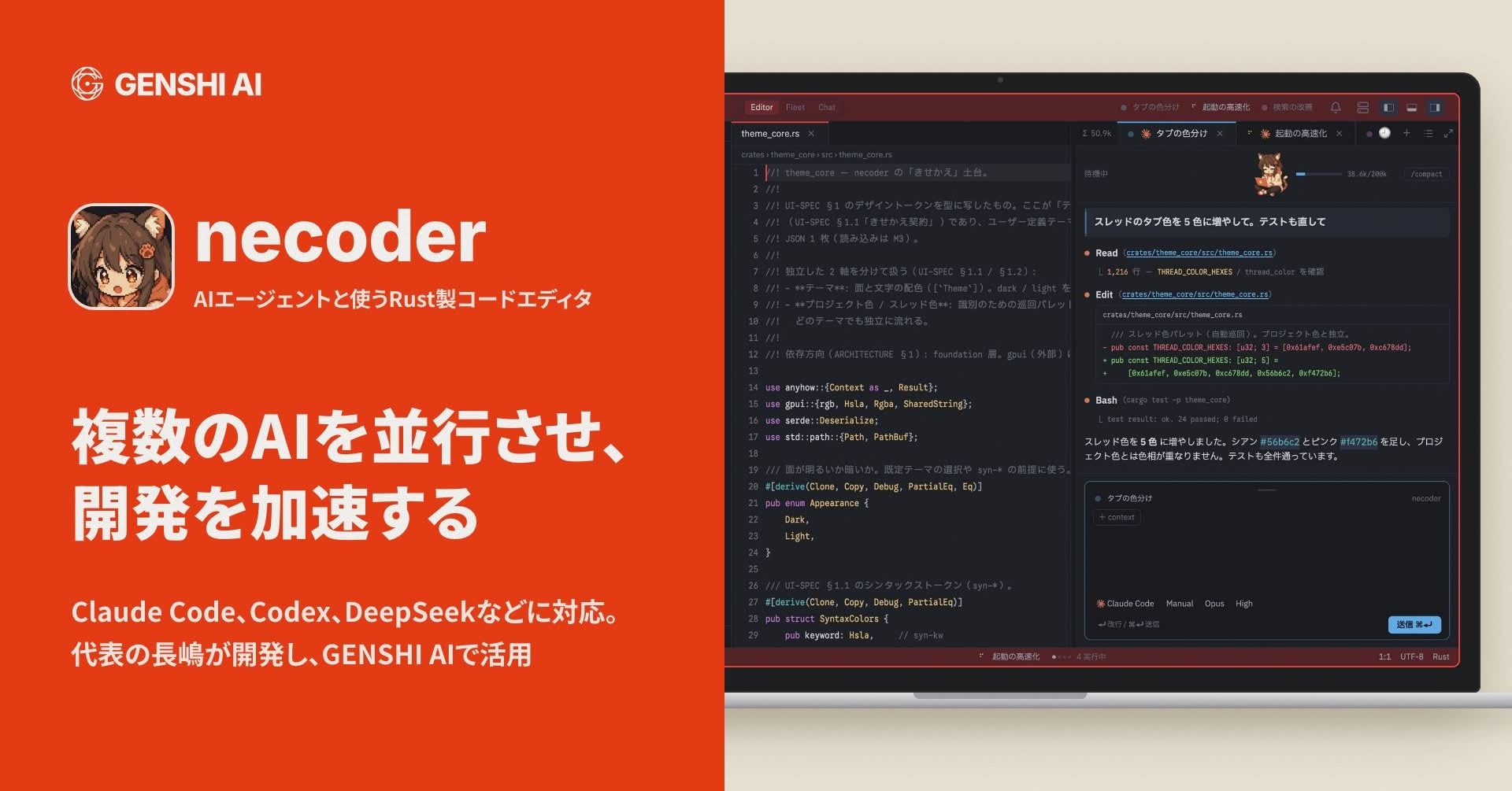
GENSHI AI said it adopted necoder in-house — a free, AGPL-3.0 Rust editor that Daichi Nagashima began building…
Nicholas Carlini matched Stockfish 17, ported to a 200MHz Pentium Pro, against 1996's Crafty 11.13 on a modern…

Xin Liu and co-authors surveyed 291 open-weight LLM repositories and found 20 of 38 untied gated and hybrid ch…