What happened
Anthropic told API customers it will watermark Claude Mythos 5, Claude Opus 4.7, Claude Opus 4.6, and Claude Sonnet 4.6, but on Claude Opus 4.6 and Claude Sonnet 4.6 the mark applies only at default sampling settings.
Why it matters
On those two older models, a minor tweak to temperature, top_p, or top_k is enough to dodge the watermark, so developers who rely on it for compliance must keep these settings at their defaults.
WHO IT HITSAPI developers and compliance teams using Claude Opus 4.6 or Claude Sonnet 4.6 need to keep sampling settings at their defaults if they rely on the watermark for compliance; those who change them may lose the mark.
Summaries like this, every morning.
Anthropic is retrofitting older models with watermarks in stages, pointing to the EU AI Act's December deadline as the reason. Every model released after Aug. 2, 2026, shipped with the watermark on day one, while older models are getting it now. Because the watermark is embedded at the model level, it works on every platform that hosts these models, including Amazon Web Services, Google Cloud, and Microsoft Foundry.
The technical approach is a variant of Google DeepMind's SynthID text method, which tweaks the randomness behind word selection to produce a statistically detectable pattern. OpenAI launched its own watermarking system textGrain in October 2026, but it only activates by default for ChatGPT and Codex users in the EU; API customers worldwide can flip it on or off, and it ships disabled. Google DeepMind open-sourced SynthID for text and built it into the Gemini models.
Whether watermarking leaves text quality untouched is disputed. Blogger John Gruber argues that no two synonyms mean exactly the same thing, so picking words by a watermark key instead of semantic fit inevitably degrades precision. The legal trade outlet Artificial Lawyer raises a separate concern for law firms, where clients who've banned AI use could discover the mark, and multiple watermarks layered inside one document could create complications.
Pick your industry and the AI tools you use, and get news related to your work every day.
Free · 30 seconds with Google · unsubscribe anytimeWhat is AIToday? →
Ask AI anything about this article. The AI reads this article, earlier AIToday articles, and Wikipedia, and cites its sources. Q&As are published on this page for other readers too.
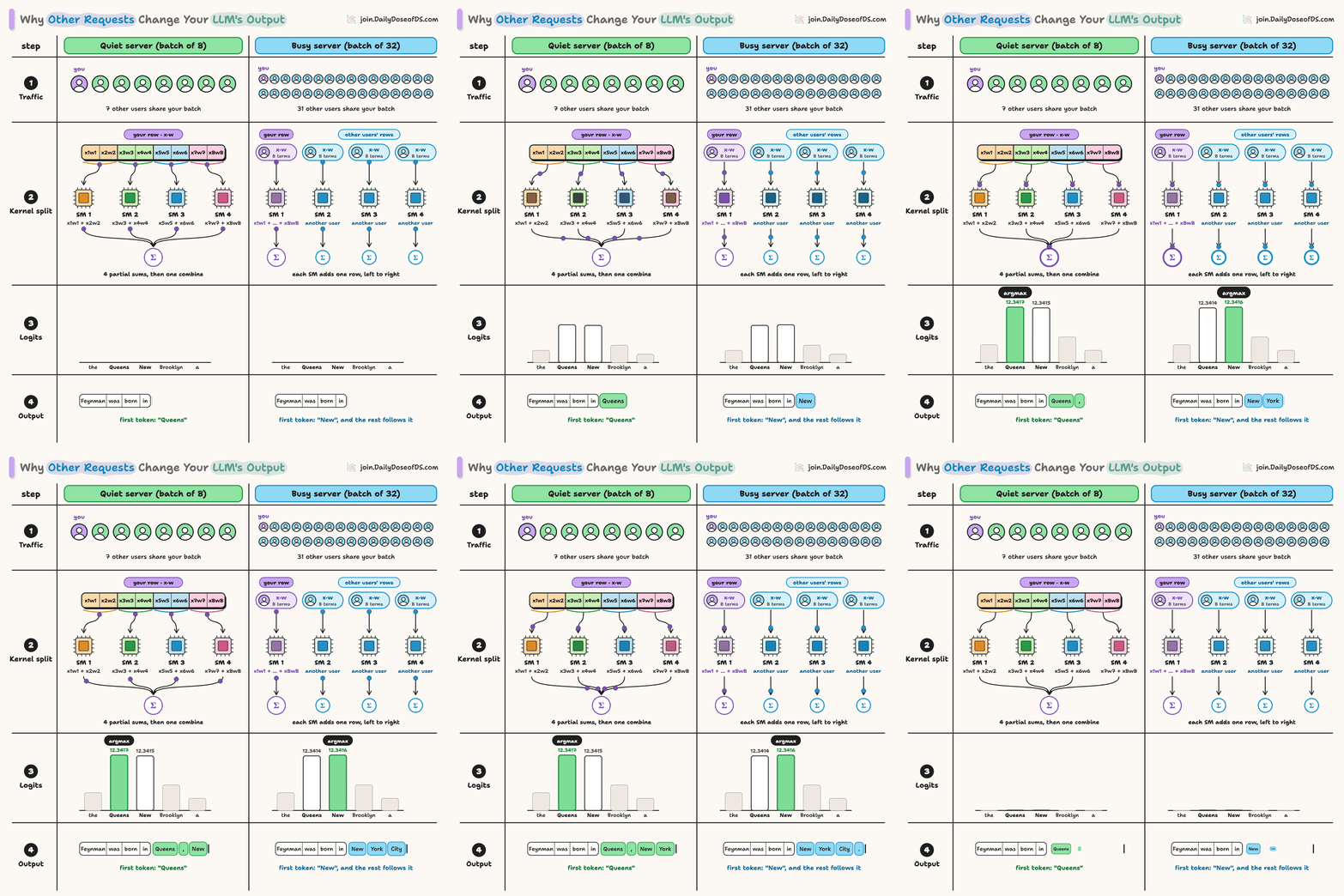
Thinking Machines Lab ran 1,000 completions of "Tell me about Richard Feynman" from Qwen3-235B at temperature…
A walkthrough wires the open-source Hindsight memory system (vectorize-io, MIT license) into a plain Claude AP…
Phorion found a backdoor in official Claude Code extension version 2.1.313 on Cursor's marketplace; Ars Techni…

Given a roughly 8,400-character Japanese article and told to summarize it in 3–5 bullet points, gemma4:e4b res…

The book documents a working kit for scheduled Claude Code runs — a starter, task instructions, a STATE.md kep…

OpenAI told Trusted Access members that from November 29, Daybreak Blue session data will be used for training…