What happened
The AI Cybersecurity and Resilience Summit will feature a Dell Technologies-led flagship program Oct. 27, followed by InfoScale and Infinidat Ltd. perspectives Oct. 28, with broadcasts reaching North America, EMEA and APJ audiences Oct. 28–29.
Why it matters
AI projects that cannot verify and defend outcomes stay trapped in low-stakes use cases, so the summit's focus on cyber-resilient IT and data foundations could shape whether enterprises move AI into production systems.
What to watch
The test is whether Dell's secure-detect-recover approach and its 2,700-plus on-premises cyber recovery vault deployments translate into faster recovery for production AI, with Infinidat's 2.5 petabytes in four seconds as one benchmark to compare.
WHO IT HITSEnterprise IT, security and data-protection teams running AI in production are the ones who will need to act on the summit's premise, because the agenda ties recovery speed and trusted data directly to whether AI can scale beyond pilots. Storage and backup administrators also face the same question, as Infinidat's argument that storage must be part of a comprehensive cybersecurity strategy suggests.
Summaries like this, in your inbox every morning.
The summit arrives as the conversation around enterprise AI has shifted from raw model capability to whether the systems underneath can be trusted. The article frames this as a structural problem: as AI systems draw from sensitive corporate data, interact with applications and act with limited human intervention, security controls, data protection and recovery can no longer be treated as separate disciplines. That is the backdrop for a Dell Technologies-led flagship program on Oct. 27, followed by InfoScale and Infinidat Ltd. on Oct. 28.
The body ties together several threads that point in the same direction. Scott Hebner of theCUBE Research argues that AI projects fail first on trust, not capability, and that autonomy remains trapped in low-stakes use cases until enterprises can verify and defend outcomes. Christophe Bertrand calls cyber resiliency a gating condition rather than a supporting layer. Dell's Steve Kenniston describes AI factories as introducing new attack surfaces across model inference, training data, identity, applications and the underlying infrastructure, and Dell's answer is security-by-design from the supply chain through the chip to the delivered device. Dell's PowerProtect portfolio has been broadened toward cyber resilience management, with AI-assisted recovery guidance, enhanced anomaly detection across PowerStore snapshots and managed detection and response for PowerScale.
Recovery emerges as the practical center of gravity. Rob Emsley describes the data layer as the crown jewel and says over 2,700 customers have deployed on-premises cyber recovery vaults, where the goal is to keep a minimal viable company. InfoScale's Joseph D'Angelo argues the attack surface and fallout are increasing exponentially, so response and posture must change accordingly, while Infinidat's Eric Herzog points to next-generation data protection on both primary and backup storage, with a demonstration recovering 2.5 petabytes of primary storage in four seconds. Congruity360's Mark Ward adds a data-hygiene angle, saying eliminating 60% to 70% of the data reduces AI compute and storage needs. Whether this agenda changes enterprise practice beyond the broadcast likely hinges on how many of these recovery and resilience capabilities reach production systems, and for the security and data teams watching, that adoption question may matter more than any single product announcement.
Pick your industry and the AI tools you use, and get news related to your work every day.
Free · 30 seconds with Google · unsubscribe anytimeWhat is AIToday? →
Ask AI anything about this article. The AI reads this article, earlier AIToday articles, and Wikipedia, and cites its sources. Q&As are published on this page for other readers too.
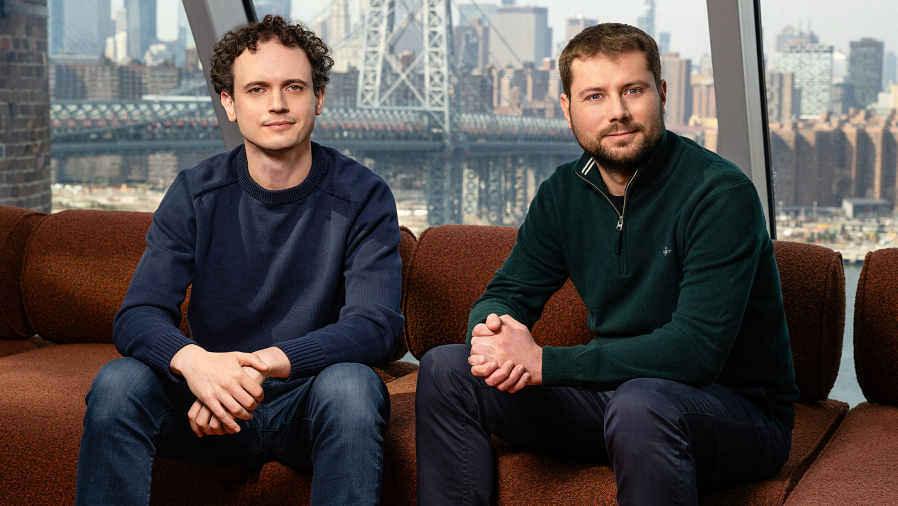
Reflection AI launched Beam, a 501 billion-parameter open-source LLM
Schneider Electric agreed to acquire software company PTC in an all-cash deal that values PTC's equity at arou…
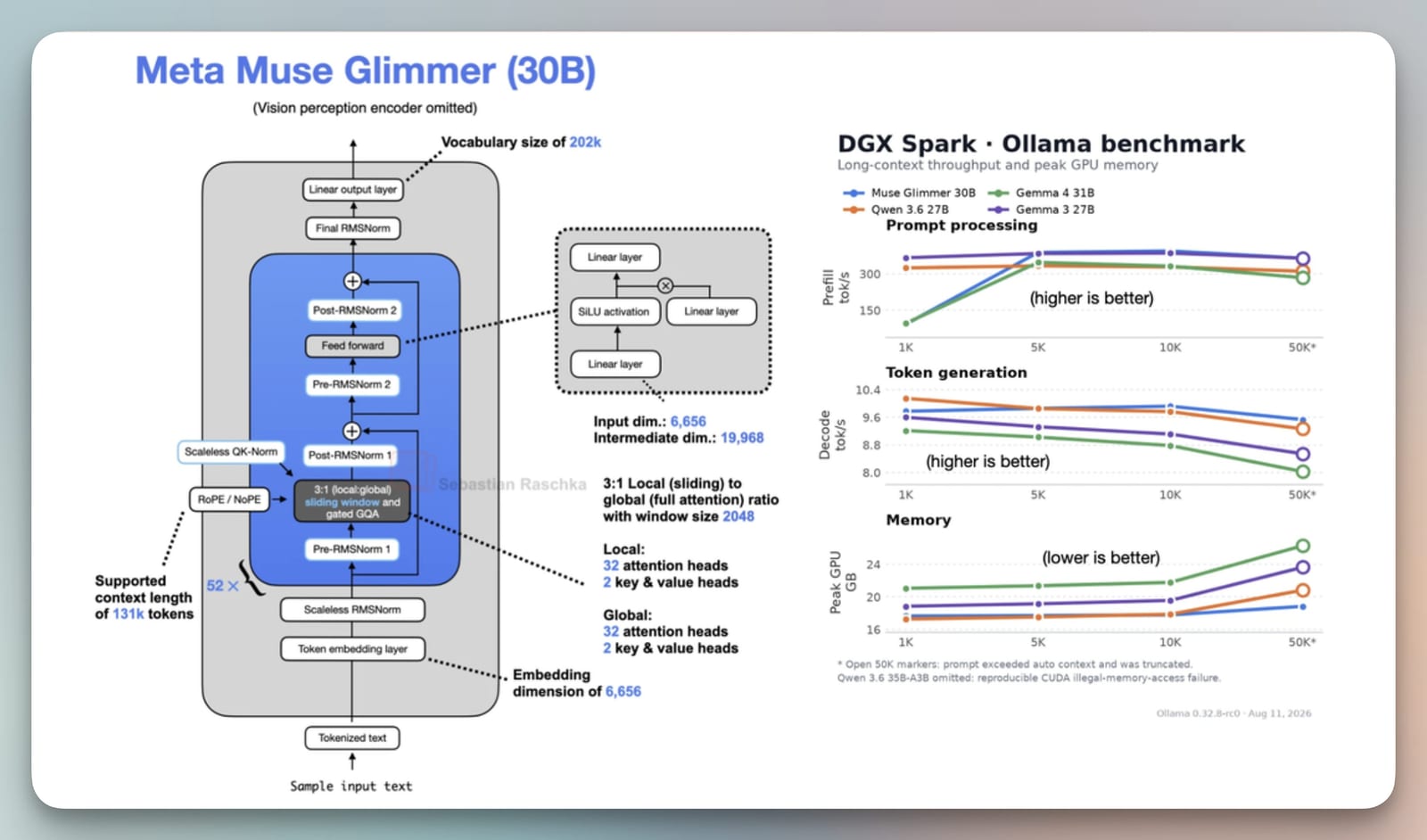
A step-by-step guide fine-tunes Muse Glimmer, Meta's 30B vision model, locally for equation-to-LaTeX conversio…
OpenAI announced always-on agent Dots on September 30; SpaceXAI's Grok Bot and Meta Muse are pushing the same…
Anthropic launched Claude Sonnet 5.5 on September 28, priced at $2 per million input tokens and $10 output, ha…

Z.ai's GLM 5.3, a 753B-parameter mixture-of-experts model, is now on Amazon Bedrock for eligible enterprise cu…