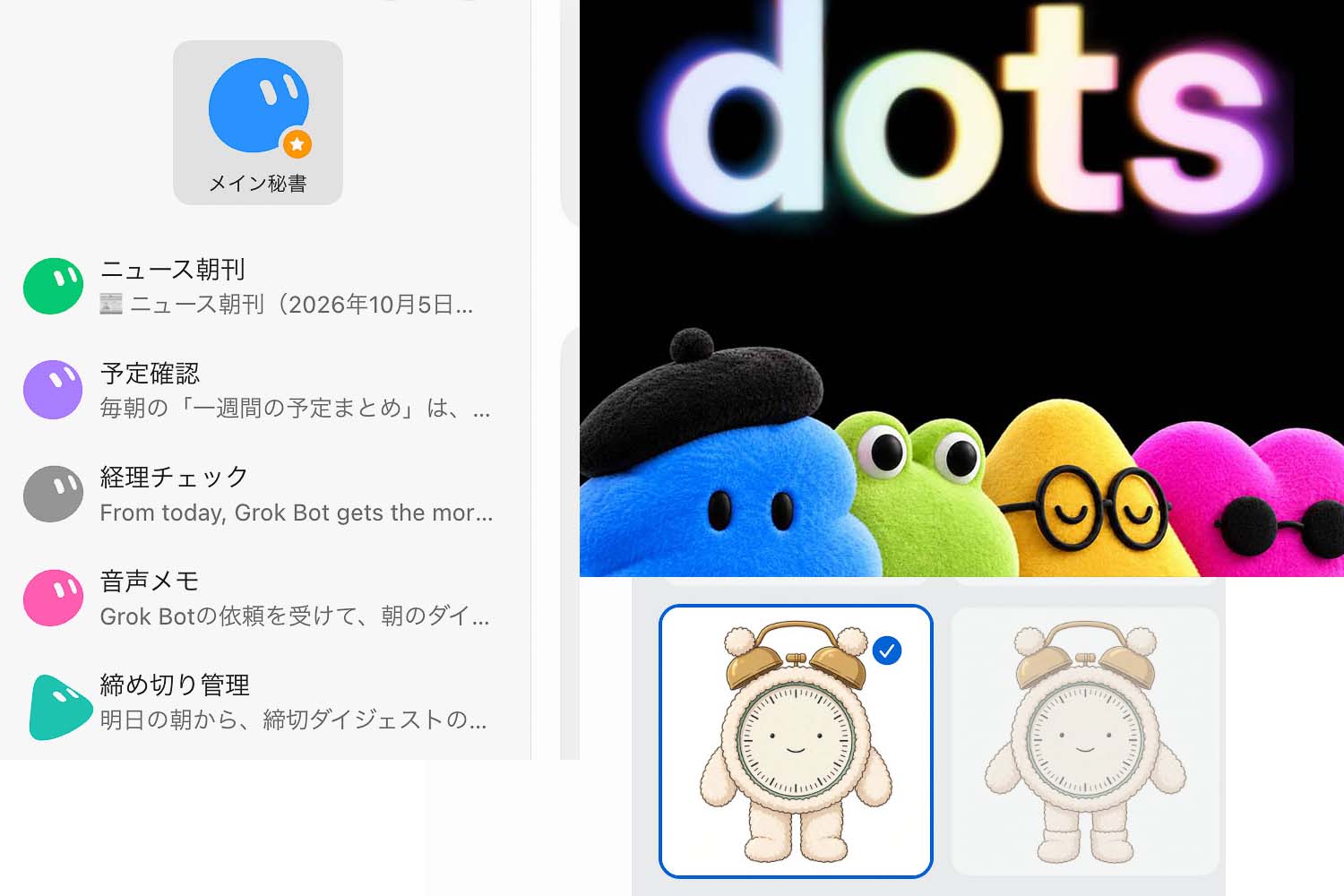
What happened
OpenAI announced always-on agent Dots on September 30; SpaceXAI's Grok Bot and Meta Muse are pushing the same 24/7 agent idea, with Muse passing 5 million US downloads.
Why it matters
These agents read mail, calendars and files so they act like a secretary, which the author says has already become hard to live without in just weeks.
What to watch
Cost is the limiter — Dots needs ChatGPT Pro at over $100 a month, and Grok Bot needs Cursor Pro at $20 or SuperGrok at $30.
WHO IT HITSBusiness users who already hand email, calendars and documents to cloud AI will feel the difference first, including managers at small and mid-sized firms weighing tools like TANKA and Microsoft's Autopilot.
Summaries like this, in your inbox every morning.
This wave did not appear out of nowhere. The author frames it as the payoff of a shift that began late last year and early this year, when OpenClaw showed that an agent could connect to mail and messengers, accumulate notes about its user, and run continuously. The current services are, in that sense, doing what OpenClaw already did — the difference is that setup and management are now minimal, with the processing moved onto cloud infrastructure rather than the user's own PC. That is why what once demanded a Mac mini or Mac Studio and real technical knowledge can now be used from a phone.
The competitive field is also wider than the three headline names. Manus is rolling out Cue as part of its Manus 2.0 update, giving it its own phone number and email address so it can contact others on its own. TANKA, which recently launched its full service in Japan, targets teams and small and mid-sized companies by remembering internal communication and prompting decisions. Microsoft is packaging the same idea for large companies as Autopilot, and the author expects other enterprise software vendors to follow the same route.
What the outcome hinges on is partly cost and partly trust. Always-on agents need enough compute to maintain reasoning and analysis, which pushed early users toward local AI to escape cloud bills. Handing over mail, calendars and files also raises the risk of an AI mishandling data rather than spying — Muse has already drawn complaints in the US about information users did not intend to share. Meta's Secure VM and its plan to hide contents even from Meta, along with Apple's stricter full disk access controls, suggest the market is moving toward clearer limits, though whether that is enough to win over cautious users is likely to be the test.
Pick your industry and the AI tools you use, and get news related to your work every day.
Free · 30 seconds with Google · unsubscribe anytimeWhat is AIToday? →
Ask AI anything about this article. The AI reads this article, earlier AIToday articles, and Wikipedia, and cites its sources. Q&As are published on this page for other readers too.
Reflection AI launched Beam, a 501 billion-parameter open-source LLM

The AI Cybersecurity and Resilience Summit will feature a Dell Technologies-led flagship program Oct

Schneider Electric agreed to acquire software company PTC in an all-cash deal that values PTC's equity at arou…

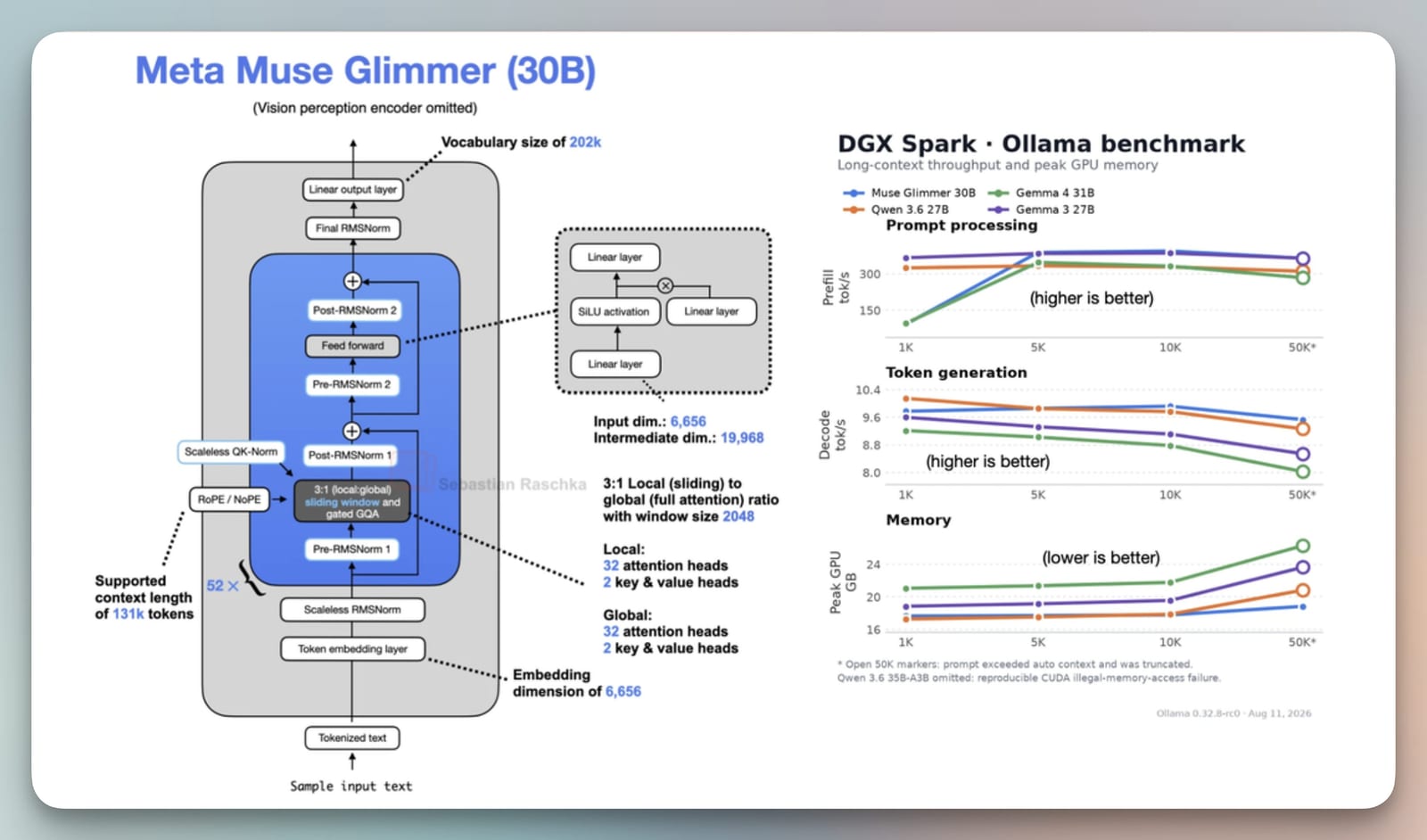
A step-by-step guide fine-tunes Muse Glimmer, Meta's 30B vision model, locally for equation-to-LaTeX conversio…
schema-guard, a tool by developer idk-arsh, checks AI-written SQL against a saved snapshot of real table and c…
A sole proprietor running AI-adoption and process-improvement work built a 'company' repository on Claude Code…