What happened
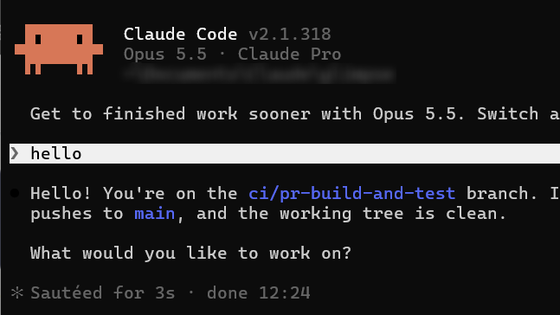
In February 2026, Judge Jed Rakoff ruled in United States v. Heppner that Bradley Heppner's Claude conversations were not attorney-client privileged because he used the tool on his own, and Anthropic's privacy policy allowed disclosure.
Why it matters
The ruling suggests that using a consumer AI account for legal work may not keep those chats confidential; other courts have ruled differently when people represent themselves, so the law is unsettled.
Summaries like this, every morning.
The Heppner ruling is one piece of a broader pattern in which courts are being asked to decide whether conversations with AI tools deserve the same protections as traditional legal communications. Judge Rakoff relied heavily on Anthropic's consumer privacy policy, which allows data collection, training on inputs and outputs, and disclosure to third parties including regulators. That undercut any reasonable expectation that the chats were confidential.
At the same time, the law is not settled. On the same day as the Heppner ruling, a Michigan magistrate in Warner v. Gilbarco ruled that a self-represented plaintiff's ChatGPT chats were protected work product, calling AI tools "tools, not persons." A Colorado court reached a similar result in Morgan v. V2X in March. Both of those cases involved people representing themselves, which is a different situation from Heppner's.
The practical lesson is that a privacy policy is a promise about what a vendor intends to do, not a promise about what a court will allow. If a copy of a conversation exists on a provider's servers, it can potentially be preserved and handed over as evidence.
Pick your industry and the AI tools you use, and get news related to your work every day.
Free · 30 seconds with Google · unsubscribe anytimeWhat is AIToday? →
Ask AI anything about this article. The AI reads this article, earlier AIToday articles, and Wikipedia, and cites its sources. Q&As are published on this page for other readers too.
OpenAI announced GPT-6 Cyber on November 5, 2026, a model built for cybersecurity research that finds vulnerab…
The column argues running an AI-written tool locally keeps your photos off remote servers, since only what the…
Japan's AI Law, in force since September 1, 2025, carries no penalties; the country instead leans on soft-law…
The Nasdaq Composite fell 5.5% on Thursday, its deepest one-day drop since "Liberation Day" in April 2025, as…

国家サイバー統括室(NCO) published a document on measures against unauthorized access that leaks personal data, grouping…

Claude Code inserted users' email addresses into the User-Agent header sent to external sites, reported on Git…