What happened
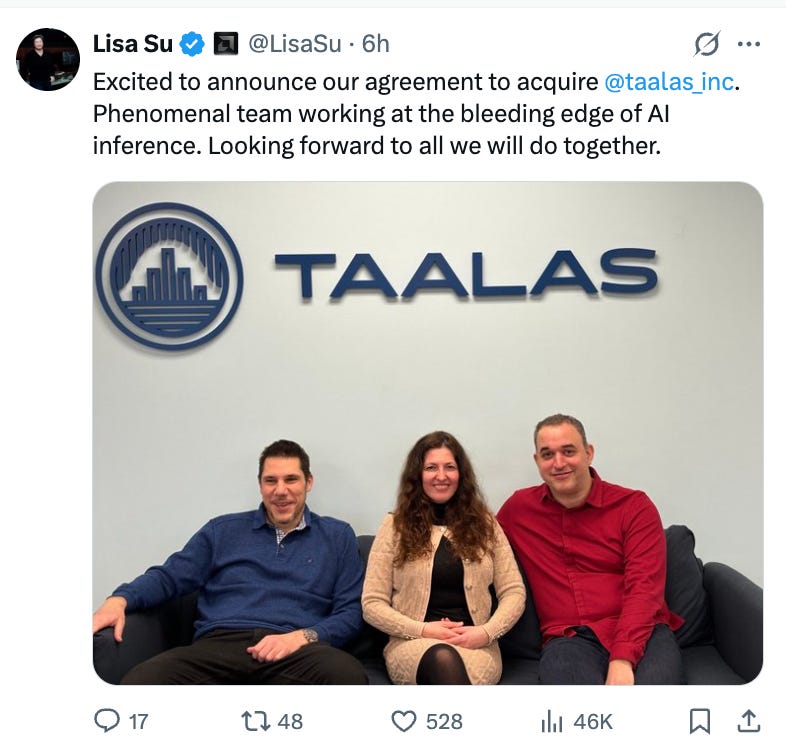
AMD has acquired Taalas Inc., a company that designs inference silicon—the hardware that runs AI models after they're trained. Taalas built its chips with the principle of designing hardware around the model rather than forcing models onto generic hardware.
Why it matters
AMD's move signals that custom silicon for AI inference is becoming a core competitive strategy. Taalas positioned itself as delivering the world's fastest and most cost-effective inference silicon, and AMD's acquisition suggests the company believes vertical integration of model-specific hardware is worth the investment—a bet that custom chips will outcompete general-purpose accelerators for inference workloads.
What to watch
The timeline and integration plan are not detailed in the announcement. AMD's ability to productize Taalas's technology and compete against inference optimization efforts from other major cloud providers will determine whether custom silicon becomes a durable advantage or a niche strategy.
Summaries like this, in your inbox every morning.
AMD's acquisition of Taalas reflects a broader industry shift toward custom silicon for AI. The article frames Taalas as having rethought AI inference from the ground up—moving away from the historical pattern of designing hardware first and then adapting software to fit it. This vertical integration strategy aligns with how other major AI players (hyperscalers and cloud vendors) are increasingly building proprietary infrastructure to control costs and performance. Taalas's pitch—world's fastest and most cost-effective inference silicon—targets a real pain point: as inference becomes the dominant cost driver for deployed AI systems, generic hardware accelerators may no longer be sufficient for competitive pricing and latency. AMD's decision to acquire rather than partner suggests the company sees custom silicon as a core strategic asset, not a peripheral optimization. The acquisition also places AMD directly in competition with internal silicon efforts at major cloud providers and chip makers who have begun designing inference-specific accelerators.
For example, today's edition would include:
AI-summarized, only the topics you pick: one digest a day via Email, LINE, or Slack.
Free · 30 seconds with Google · unsubscribe anytimeWhat is AIToday? →
Ask AI anything about this article. The AI reads this article, earlier AIToday articles, and Wikipedia, and cites its sources. Q&As are published on this page for other readers too.
NEAR, the token of the NEAR Protocol, has more than doubled in value over the past two weeks, helped by surgin…
Michael Burry wrote in a Substack chat that Trump's team knows the AI buildout is 'the only thing keeping this…

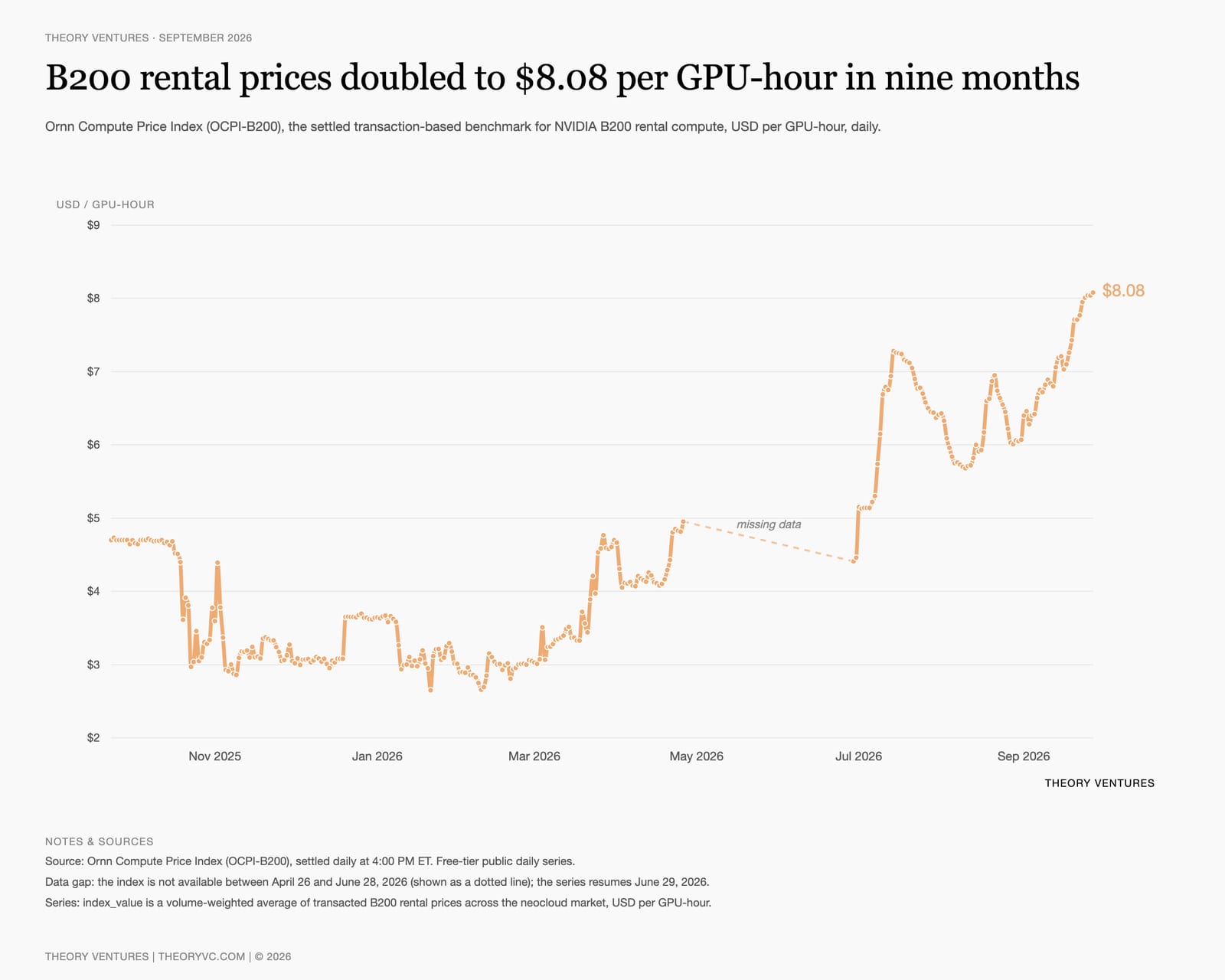
GPU rental prices doubled in six months, from $4.40 to $8.08 per GPU-hour, even as Claude Opus 5.5 costs 40% l…
The University of Florida found only 10-15% of its data was semantically defined; using NaviGator AI and Snowf…

In a Nikkei Money discussion, private investor Okeido said he sets his investing goal years out and basically…
Meta launched the Meta Enterprise Platform on Monday and hired MongoDB CEO Chirantan "CJ" Desai to lead it