What happened
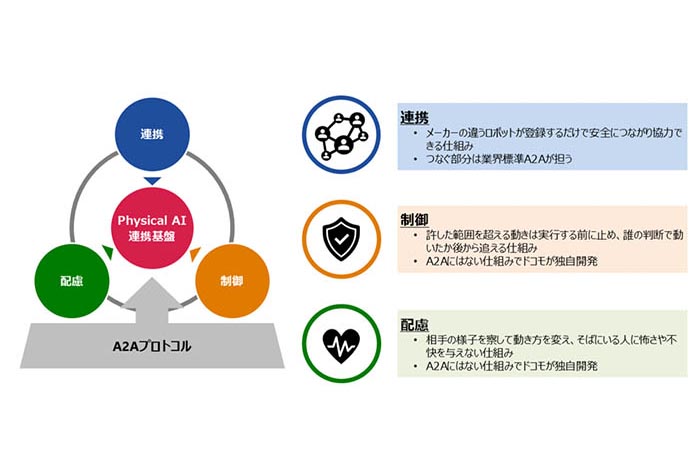
NTT Docomo developed "Physical AI連携基盤," which unifies linking AI agents to robots, controlling permitted actions, and situation-aware behavior. It uses the A2A protocol, with permission control and action logging built in-house.
Why it matters
Permissions are checked against user attributes such as age and per-setting rules, so disallowed actions (serving alcohol to minors, allergen dishes) are blocked before reaching the robot — a safety layer for home and restaurant use, it appears.
WHO IT HITSRestaurant operators and robot makers targeting food-service deployment are the clearest near-term audience, since the body cites serving robots that avoid alcohol for minors and allergen dishes; home users also stand to benefit from the safety controls.
Summaries like this, every morning.
The platform rests on three functions Docomo bundles into one base: linking AI agents to robots, controlling whether an action is allowed, and generating considerate behavior for the surroundings. The body stresses that the whole chain from a user's instruction to the robot's motion is managed and traceable, and that the platform keeps attribute data internally, sending the robot only motion instructions.
A2A, a standard protocol for agent-to-agent communication, provides the connection layer, while permission control, action logging and context-aware behavior were built in-house. That split suggests Docomo aims to sit between personal agents and many robot makers rather than build robots itself, a reading consistent with its stated plans for joint research with robot manufacturers and proof-of-concept work with businesses.
Pick your industry and the AI tools you use, and get news related to your work every day.
Free · 30 seconds with Google · unsubscribe anytimeWhat is AIToday? →
Ask AI anything about this article. The AI reads this article, earlier AIToday articles, and Wikipedia, and cites its sources. Q&As are published on this page for other readers too.
FlashLabs started offering Orca Connect for OrcaRouter, which adds local runtimes such as Ollama, vLLM and LM…

Anthropic's prospectus discloses SpaceX compute agreements of up to $120.5 billion through 2029, with monthly…

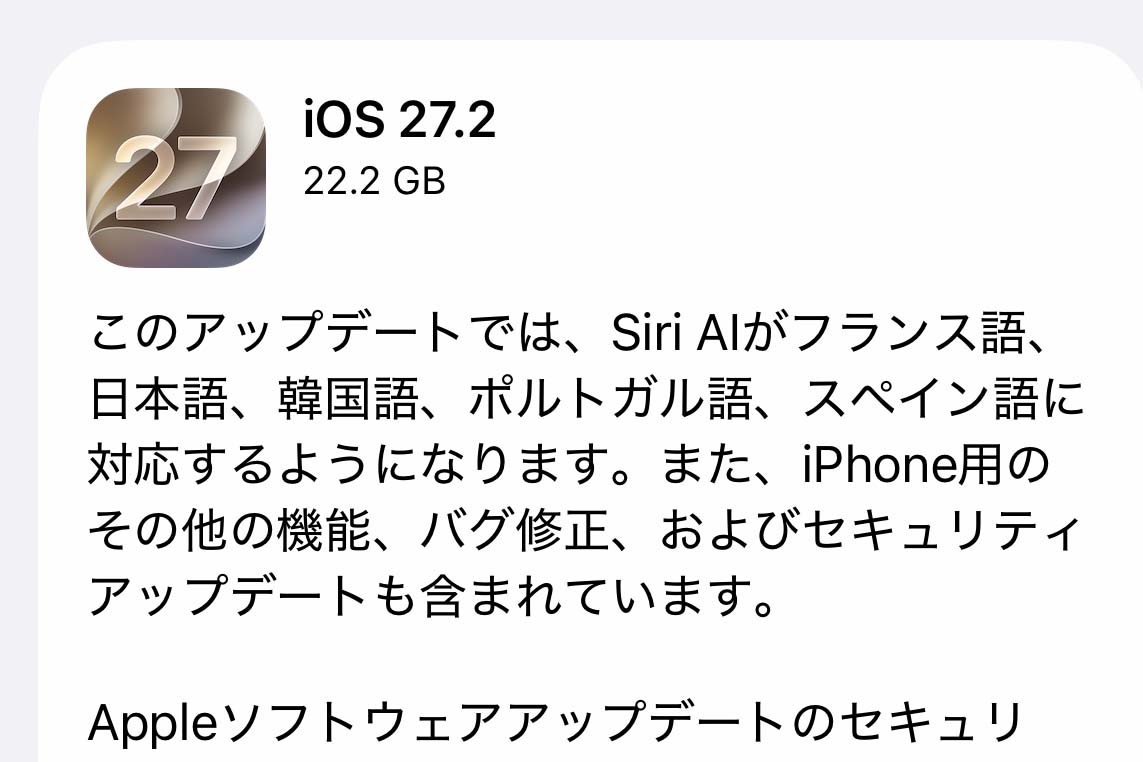
Apple released iOS 27.2, bringing Siri AI to iPhone 16 and later plus iPhone 15 Pro and Pro Max, with support…
Folkbench published a guide, reworked for Japanese readers on Zenn, laying out four checks for AI relays used…
chrome-use, an Apache-2.0 CLI and MCP server, connects agents such as Claude Code, Codex and Cursor to your ev…

On the morning of 10/27, the author's automated Threads posting stopped twice with "cannot confirm the Threads…