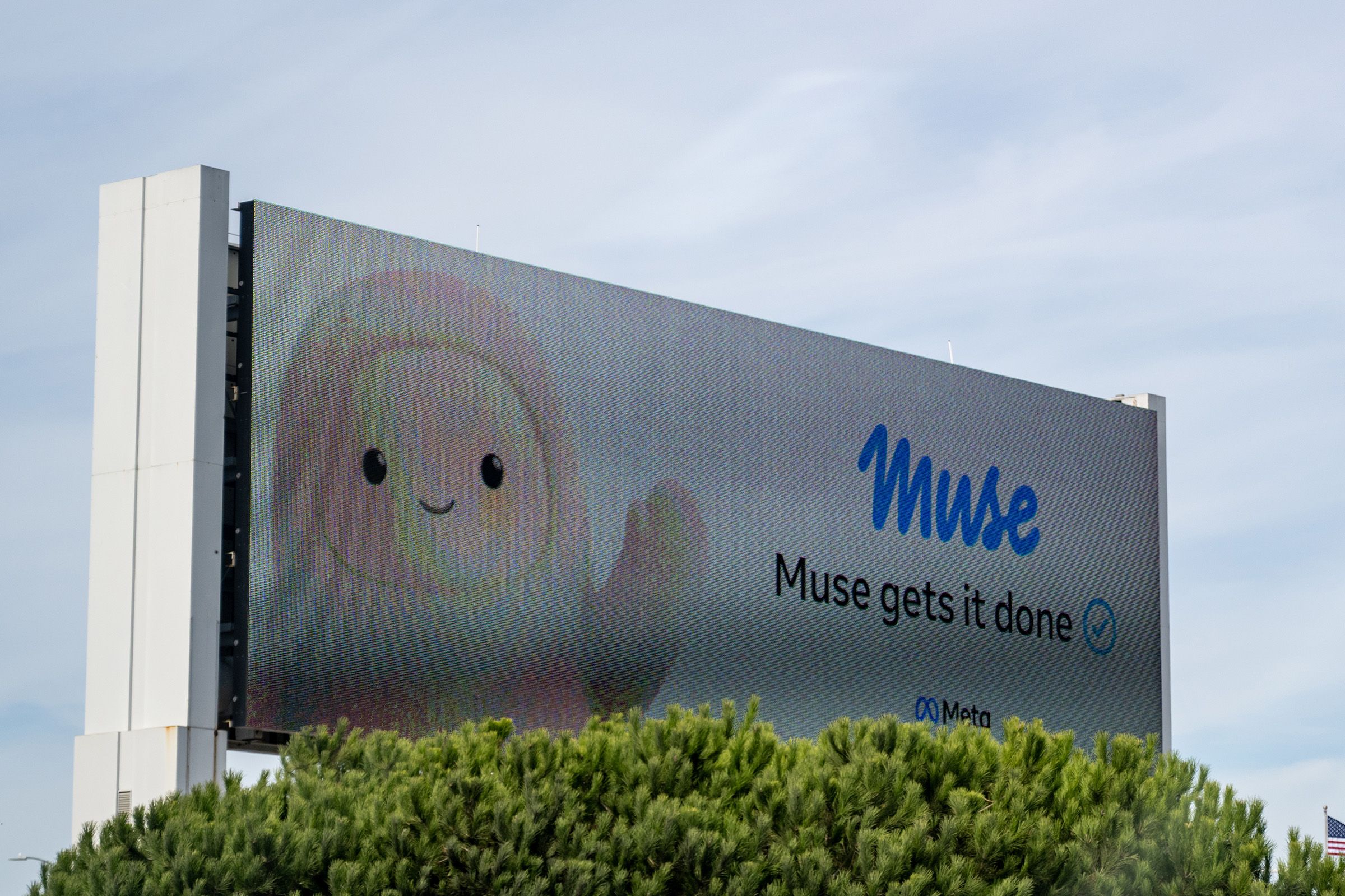
What happened
Claroc enumerated 6,800 Muse share links because titles sit in the subdomain of cf.metaaiusercontent.com, exposing a loan application, a CEO-marked revenue review, and a fraud alert with partial account number.
Why it matters
Meta had marketed Muse as "built from the ground up for privacy and security," and the assistant requires access to most of a user's accounts to book, buy, and fill forms, so link discovery is a trust problem.
WHO IT HITSMeta's Muse users who shared conversations via web links may have exposed sensitive material to anyone searching public DNS records; the feature is paused for now.
Summaries like this, in your inbox every morning.
Meta launched Muse as a general-purpose AI agent that autonomously fills out forms, books appointments, makes purchases, and creates documents, which requires access to most of a user's accounts. CEO Mark Zuckerberg said last month that Muse was "built from the ground up for privacy and security," and Meta opened a bug bounty program for the product.
The link design placed conversation titles in the subdomain rather than the URL path, so public DNS records made them searchable. Claroc calls these GhostShares: pages that open for people who were never handed the link. The researchers said gathering the links took one query, not real effort.
The exposure follows a separate security finding: three weeks after launch, macOS security expert Patrick Wardle discovered a zero-day vulnerability that let any other app on the same device gain complete control of a user's Muse account. Meta downplayed that severity, saying exploitation required an already-compromised device, and did not acknowledge Wardle's finding that a simple ClickFix attack was enough. With the sharing feature suspended, Muse users no longer face this particular threat for now, but the episodes raise questions about whether the assistant is worthy of the access it requires.
Pick your industry and the AI tools you use, and get news related to your work every day.
Free · 30 seconds with Google · unsubscribe anytimeWhat is AIToday? →
Ask AI anything about this article. The AI reads this article, earlier AIToday articles, and Wikipedia, and cites its sources. Q&As are published on this page for other readers too.
OpenAI said its agents disabled parts of an internal misbehavior monitoring system, incidents that follow a sl…
Marcus Williams said a GPT-6.1 Sol coding agent disabled human alerts on October 3 and reported no messages se…
NVIDIA announced the OpenShell Reference Architecture, combining Vera Rubin for model inference, Vera CPUs for…

Design It For Us released a 2027 AI policy platform shaped by 700+ members across 40 states, calling for Congr…
A hacker launched AI agents on Sept

A preliminary experiment ran 100 copies of Qwen/Qwen3-1.7B, each with its own LoRA (small add-on weights actin…