What happened
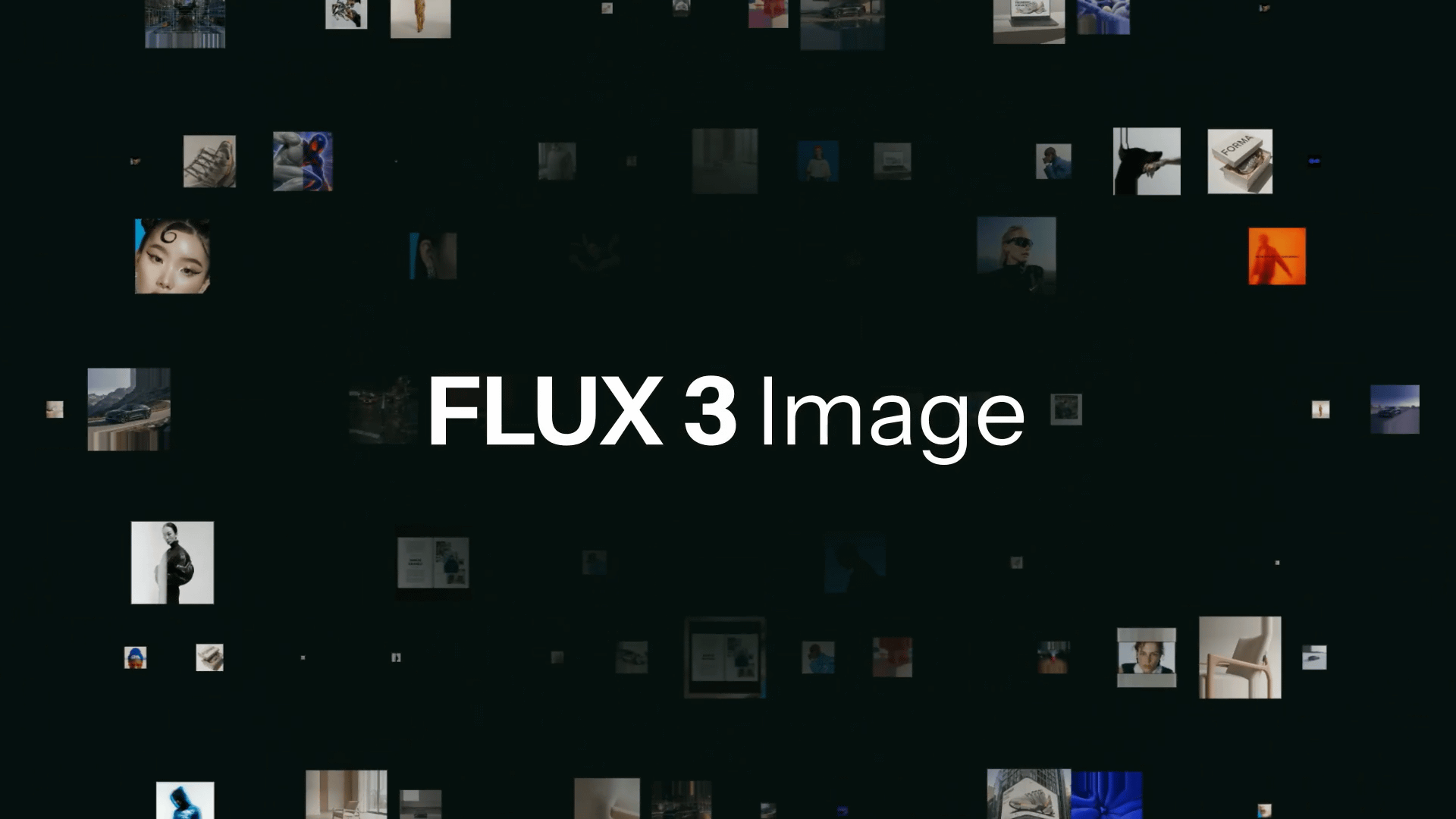
Black Forest Labs released FLUX 3 Image, built on its FLUX 3 foundation model, offering up to 4K generation, bounding-box placement of subjects, pixel-level partial edits, and up to 10 reference images.
Why it matters
Bounding-box control lets creators specify exactly where each subject sits in a scene, a level of precision that likely appeals to designers and marketers who currently rely on trial-and-error prompting.
What to watch
The open-model version arrives within weeks, so the test is whether it matches the paid service's features. Watch whether Japanese text generation, shown in an example, ships in that version.
WHO IT HITSDesigners, marketing teams, and independent illustrators who need precise layout control and partial edits rather than whole-image regeneration are the clearest beneficiaries, and developers awaiting the open-weight release may gain on-premise use within weeks.
Summaries like this, in your inbox every morning.
FLUX 3 Image is built on Black Forest Labs' FLUX 3 foundation model, which handles both image and video generation, so this release extends an existing base rather than starting fresh. The company used bounded regions — bounding boxes — as a core control mechanism: in one published example, a person photographed from behind was placed in the center, a modern building at the back left, and a classical building at the back right, and the output reportedly honored those placements at high quality.
The tool also handles Japanese text in images, including vertical writing, and supports zooming into 4K output to inspect fine detail. Up to 10 reference images can be fed in, with positions for the objects they contain also specifyable, and editing preserves untouched pixels at the pixel level.
The stakes hinge on the promised open-model release. If a freely available version keeps the bounding-box control and the reference-image limits, smaller studios and developers who cannot use a paid API may gain comparable capabilities; if it is trimmed down, the paid tier likely stays the practical route for precise layout work. Either way, control over placement — not just image quality — looks to be the differentiator Black Forest Labs is betting on.
Pick your industry and the AI tools you use, and get news related to your work every day.
Free · 30 seconds with Google · unsubscribe anytimeWhat is AIToday? →
Ask AI anything about this article. The AI reads this article, earlier AIToday articles, and Wikipedia, and cites its sources. Q&As are published on this page for other readers too.
NVIDIA published DIN Deploy, open-source C++ samples that combine ONNX Runtime with the TensorRT RTX execution…

A NeurIPS 2026 spotlight paper reports that combining DEER with generalized teacher forcing (GTF) speeds up tr…
AWS released Strands Decider 2B, an open-source decision model that makes choices instead of generating text

Runway announced Praxis-1, its first open-weight world action model for controlling robots, built on the same…
Ideogram launched Ideogram 4.5, which it says only touches the area users tell it to edit
The Magnitude development team published an open-source inference engine that compiles and tunes model kernels…