
What happened
The authors—drawing on their work modernizing TIAA's recordkeeping infrastructure over nearly two years—argue that most companies are layering AI tools onto aging IT systems, siloed data, and broken workflows instead of rebuilding their foundations. TIAA itself had to clean data, retire outdated systems, and redesign workflows before scaling AI; the payoff includes enabling plan sponsors to change investment options in days instead of weeks and raising digital engagement across TIAA's participants by 13%.
Why it matters
Only 5% of businesses report their data is AI-ready, and Gartner predicts 60% of AI projects will be abandoned through 2026 for lack of AI-ready data. AI amplifies whatever foundation it is given—good or bad—so automating a broken process just makes it fail faster. Companies treating AI as a technology bolt-on will spend years chasing pilots that never scale, while those disciplined enough to modernize their core first stand to turn the technology into measurable business impact.
What to watch
The authors identify five focus areas: modernizing the digital core before scaling agents, treating data readiness as a prerequisite (not an afterthought), redesigning end-to-end workflows, keeping humans in the loop on high-stakes decisions, and building for resilience, governance, and security. TIAA has rolled out its own generative and agentic platform, GAIT, to 85% daily adoption among employees while reserving high-trust interactions for humans augmented by AI.
Summaries like this, in your inbox every morning.
The authors frame AI transformation not as a technology deployment but as a business and operating-model rebuild. They draw on a concrete case: TIAA, a 108-year-old organization burdened with technical debt, spent nearly two years modernizing its recordkeeping infrastructure before attempting to scale AI. That work—cleaning data, retiring obsolete systems, and redesigning workflows—was unglamorous but essential; only after that groundwork could TIAA's AI tools deliver measurable results. The article's central tension is that most enterprises skip this preparatory work, instead layering AI onto existing dysfunction. The authors cite Gartner's projection that 60% of AI projects will fail through 2026 due to lack of AI-ready data, suggesting the problem is systemic. The railroad metaphor—powerful trains on aging rails—captures the constraint: the technology is not the bottleneck; the foundation is. TIAA's experience with GAIT (85% daily adoption among employees) illustrates that AI succeeds when embedded into a modernized operating model, not when deployed as a standalone tool.
Pick your industry and the AI tools you use, and get news related to your work every day.
Free · 30 seconds with Google · unsubscribe anytimeWhat is AIToday? →
Ask AI anything about this article. The AI reads this article, earlier AIToday articles, and Wikipedia, and cites its sources. Q&As are published on this page for other readers too.
Wistron and Wiwynn are showcasing next-generation AI compute and storage systems for AI factories at the 2026…

KiteRa's survey of 1,206 employees at AI-agent-using companies found 13.4% had experienced policy or legal vio…

At Oracle AI Forum on October 6, 2026, Oracle Japan's president Mitsuzawa Tomomitsu said the company is not cu…

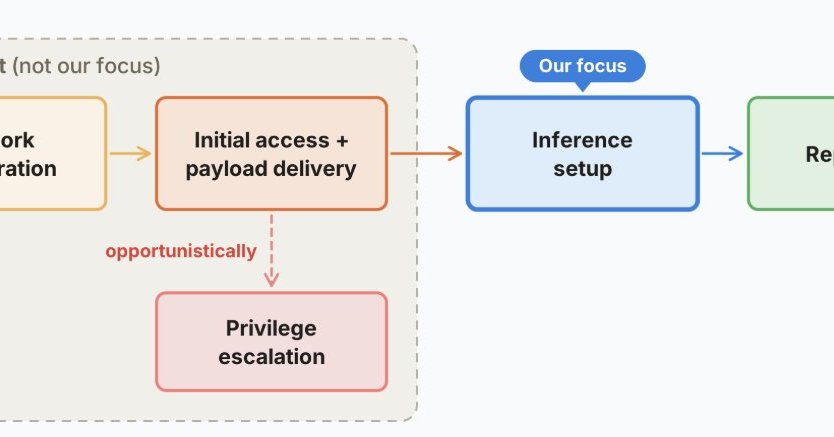
Anthropic's Frontier Red Team said models of 30B parameters or fewer could self-replicate on everyday IoT devi…
On October 8, the Financial Times reported OpenAI's annualized revenue was about $50 billion, roughly $20 bill…
At TOKEN2049 in Singapore, Nansen CEO Alex Svanevik told Fortune that by 2028, trading with agents will be the…