What happened
Superhuman, the productivity company formerly known as Grammarly, agreed in June to acquire GPTZero for undisclosed terms. GPTZero had more than 20 million registered users and $30 million in annual recurring revenue.
Why it matters
GPTZero's roughly 30 employees now lead a combined "authenticity" team inside Superhuman, folding detection into a tool the company says is used by tens of millions of writers.
What to watch
The founders' future hinges on whether detection technology can be built into Superhuman Go, an AI assistant the company says works in more than 1 million apps and websites. GPTZero's AI and hallucination detection, plagiarism checking, and writing replay have already been added to Superhuman's platform.
WHO IT HITSBusiness and academic buyers of writing-verification tools, including the Big Four accounting firms, NeurIPS and ICLR, now face a market where the leading detection vendor sits inside a larger productivity platform. The roughly 30 GPTZero employees join a broader authenticity effort at Superhuman.
Summaries like this, in your inbox every morning.
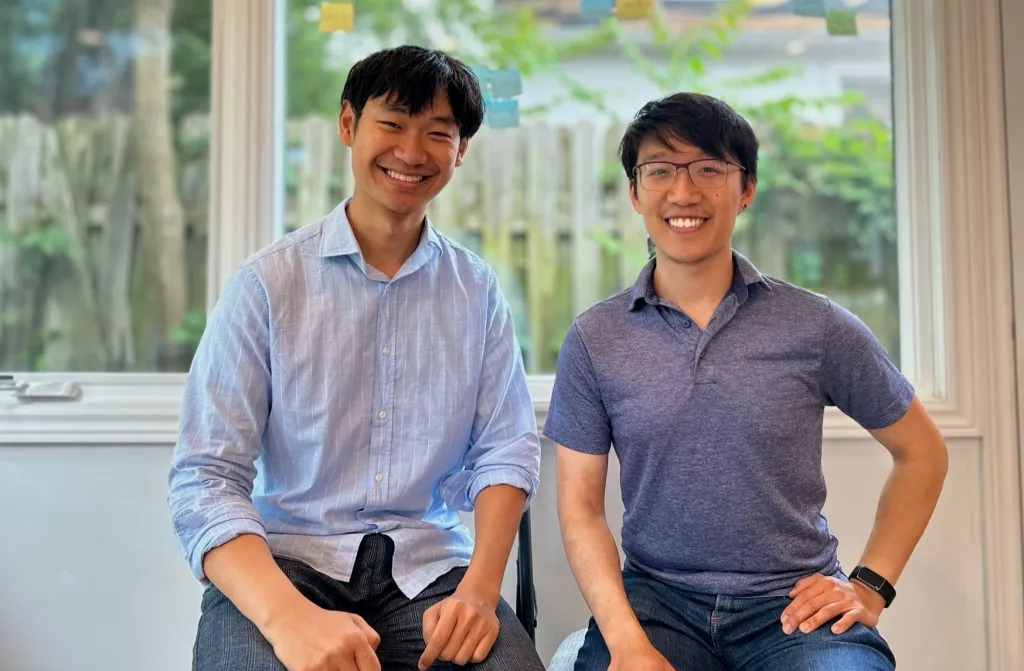
Edward Tian built GPTZero over winter break of his senior year at Princeton, in the weeks after ChatGPT went mainstream. It went up on a free Streamlit hosting page and crashed within a week as 30,000 people flocked to it. Less than four years later, the company had more than 20 million registered users and $30 million in annual recurring revenue — and in June, Superhuman, the productivity company formerly known as Grammarly, agreed to acquire it.
The path there ran through Tian's other life. He had worked with investigators at Bellingcat and on the BBC Eye Investigations team, and had accepted a fellowship with the New York Times' visual investigations team when GPTZero took off. He studied under John McPhee, Princeton's Ferris Professor of Journalism, and says he still visits him at home at least twice a year, where their conversations often turn to AI and writing. Cofounder Alex Cui had been working on online trust and integrity since 2017, when he built Open Mind, a browser extension aimed at "fake news." He later said the team failed to capitalize on its early viral moment with a bigger product.
GPTZero's detection work has already landed in institutional settings. ICLR became a client after GPTZero screened 300 submissions, and its "Chasing the Hallucinations" blog series has documented errors published by Deloitte (Australia), KPMG (International), EY (Canada), and PwC (Middle East). The latest finding: about one in five words spoken at the UN General Assembly's 81st session came from speeches GPTZero classed as AI-generated. Whether that scrutiny travels intact into a productivity suite used by tens of millions of writers — and whether Tian's stated hope to move past "Is this AI or not AI?" takes hold — is likely to depend on how the combined authenticity team positions detection inside Superhuman Go.
Pick your industry and the AI tools you use, and get news related to your work every day.
Free · 30 seconds with Google · unsubscribe anytimeWhat is AIToday? →
Ask AI anything about this article. The AI reads this article, earlier AIToday articles, and Wikipedia, and cites its sources. Q&As are published on this page for other readers too.
Meta will link Naver Map's walking-navigation feature to its Ray-Ban Meta and Oakley Meta AI glasses in 2026…

Anthropic's new study says that if robot prices decline along past trends, it will take 40 years for robots to…
Flow Engineering announced a $50 million Series B at a $750 million valuation, co-led by Antonio Gracias and G…
Ramp economist Ara Kharazian says US firms are spending less on AI even as usage rose about 50 percent from Ju…

Microsoft AI launched MAI-Transcribe-2-Streaming, which Microsoft says ranks first for accuracy on Artificial…
ELYZA said it is launching "ELYZA RSI Research", and that for LLMs of 100 billion parameters or fewer it has r…