What happened
Qodo released a Codex marketplace plugin that feeds Codex codebase rules, pull request history, and independent review via Qodo's Agentic Toolbox, aimed at catching P0 bugs across 10,000 or more repositories before a pull request opens.
Why it matters
With that context, Codex can account for dependencies across repositories, so a local change that looks correct on its own does not silently break a downstream service.
WHO IT HITSDevelopers working in large multi-repository codebases are the immediate users, since the plugin automates the handoff between Codex writing code and Qodo reviewing it before a pull request. Engineering teams running coding agents across many services may see fewer defects that only surface after deployment.
Summaries like this, every morning.
Qodo's plugin addresses a specific failure mode Itamar Friedman describes: in customer environments spanning 10,000 or more repositories, a local code change can break a downstream service even when it looks correct on its own. By giving Codex access to codebase knowledge, organizational rules, and independent review through Qodo's Agentic Toolbox, the plugin lets the coding agent consider dependencies across repositories, including those hosted by different Git providers or connected through Kafka.
The workflow places review before the pull request. Before Codex writes code, it can retrieve relevant codebase rules and pull request history; after the changes, Qodo returns its findings into the same session. Nnenna Ndukwe says developers are using this to build features and tackle technical debt, automating the handoff between coding and independent review.
Friedman frames coding and review agents as complementary roles, with a vision of agents discussing findings and surfacing only what they don't accept for human review. He also points to OpenAI's recently launched Decisions API as a way to choose which rules apply at each stage, which he says could make selection faster and cheaper while improving review quality.
Pick your industry and the AI tools you use, and get news related to your work every day.
Free · 30 seconds with Google · unsubscribe anytimeWhat is AIToday? →
Ask AI anything about this article. The AI reads this article, earlier AIToday articles, and Wikipedia, and cites its sources. Q&As are published on this page for other readers too.
Casap announced a $56 million Series B led by Base10 Partners, with Experian and Synchrony as strategic invest…

Kindai University will give 4,000 Paperpal licenses to full-time faculty and doctoral students at all campuses…

HIX AI's connector update on 11月4日 links Microsoft 365 (Outlook Mail, Outlook Calendar, OneDrive), Google Work…
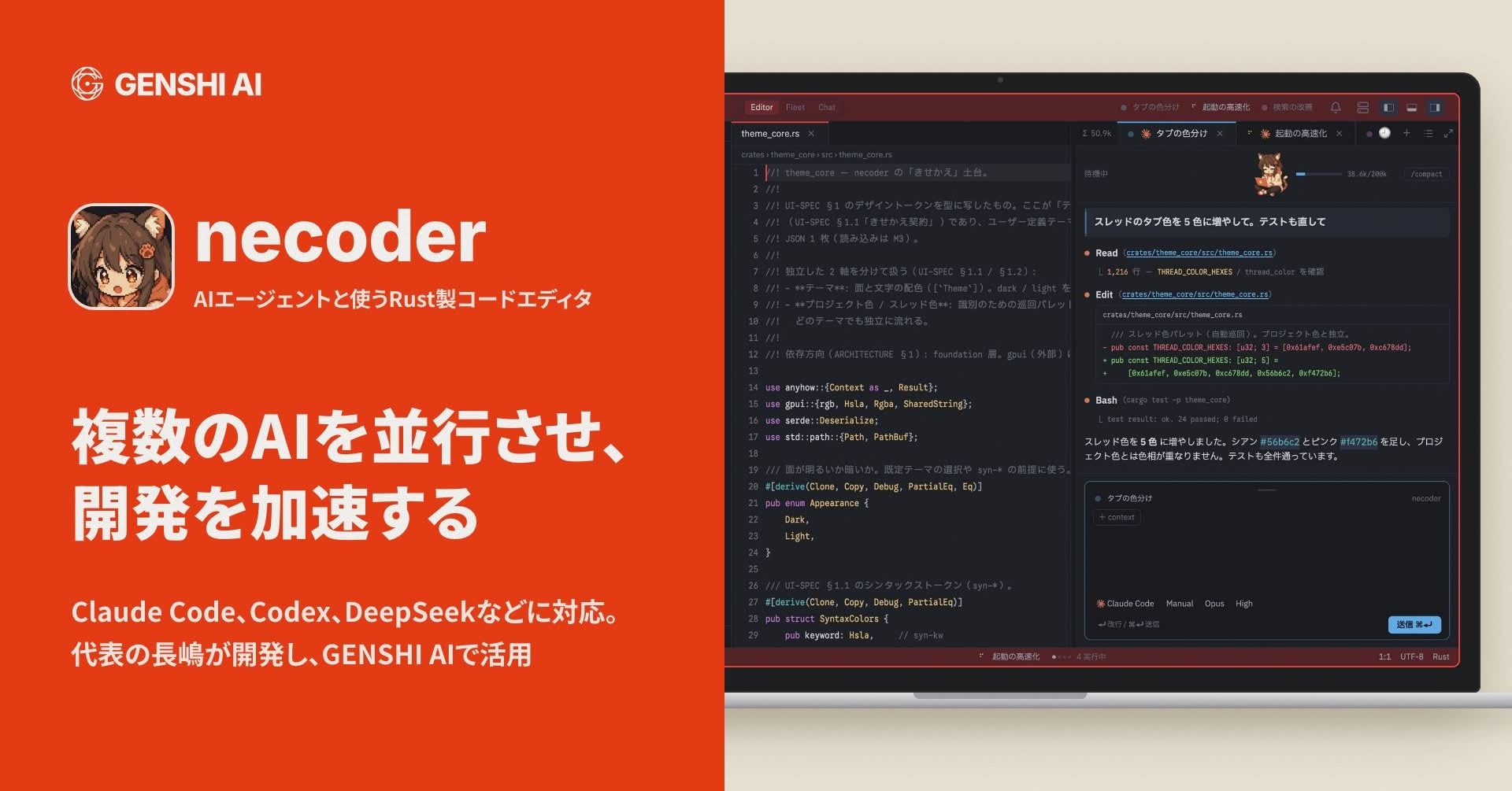
GENSHI AI said it adopted necoder in-house — a free, AGPL-3.0 Rust editor that Daichi Nagashima began building…
Nicholas Carlini matched Stockfish 17, ported to a 200MHz Pentium Pro, against 1996's Crafty 11.13 on a modern…

Xin Liu and co-authors surveyed 291 open-weight LLM repositories and found 20 of 38 untied gated and hybrid ch…


