
What happened
At ICML 2026, Apple researchers presented SupportNet and KeyNet — small neural networks trained once on a known query distribution that route or rewrite queries for maximum inner product search, hitting 95% routing recall about 1.9× faster than centroid routing (1.74 ms vs 3.36 ms) on Natural Questions.
Why it matters
The gain comes from amortization — a one-time training cost replaces repeated search work at inference, so a retrieval system can reach the same recall with less compute or higher recall for the same latency, which may matter for recommendation, search, and RAG pipelines with stable query patterns.
WHO IT HITSThis lands on teams building or operating retrieval systems for search, recommendations, and retrieval-augmented generation (RAG), where a known, stable query distribution makes a one-time training investment useful; the paper reports gains on a benchmark rather than a shipped product.
Summaries like this, every morning.
The paper starts from a mismatch that generic vector-search indexes tend to ignore: queries in RAG are short user questions, while the keys they search are long, curated passages. Most approximate methods build their index from the geometry of the keys alone, assuming queries will resemble them. Apple's team instead samples queries from the distribution it expects in production, computes the ground-truth best match once by exhaustive search, and trains small networks to reproduce that mapping — an upfront cost the paper calls amortization.
The two architectures address different bottlenecks. SupportNet replaces centroid routing inside an inverted file index, learning a support function per cluster so a query is sent based on how well its best key could match, not just its distance to a centroid. KeyNet keeps the existing index and instead transforms the query before search, which the paper shows pays off even after accounting for the preprocessing overhead.
Apple positions the choice as practical: KeyNet when inference speed is the constraint, SupportNet when a calibrated score is needed or compute is tight at small model sizes. For very large key sets, the paper suggests combining both — a SupportNet router over all clusters, then a KeyNet per cluster.
Pick your industry and the AI tools you use, and get news related to your work every day.
Free · 30 seconds with Google · unsubscribe anytimeWhat is AIToday? →
Ask AI anything about this article. The AI reads this article, earlier AIToday articles, and Wikipedia, and cites its sources. Q&As are published on this page for other readers too.
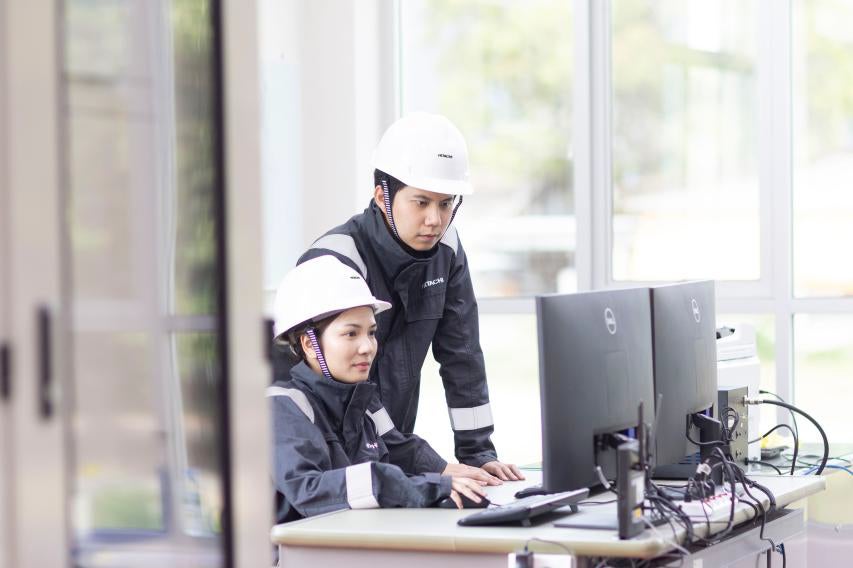
Hitachi Energy is expanding its partnership with Celonis, the process-intelligence leader, to scale AI use acr…
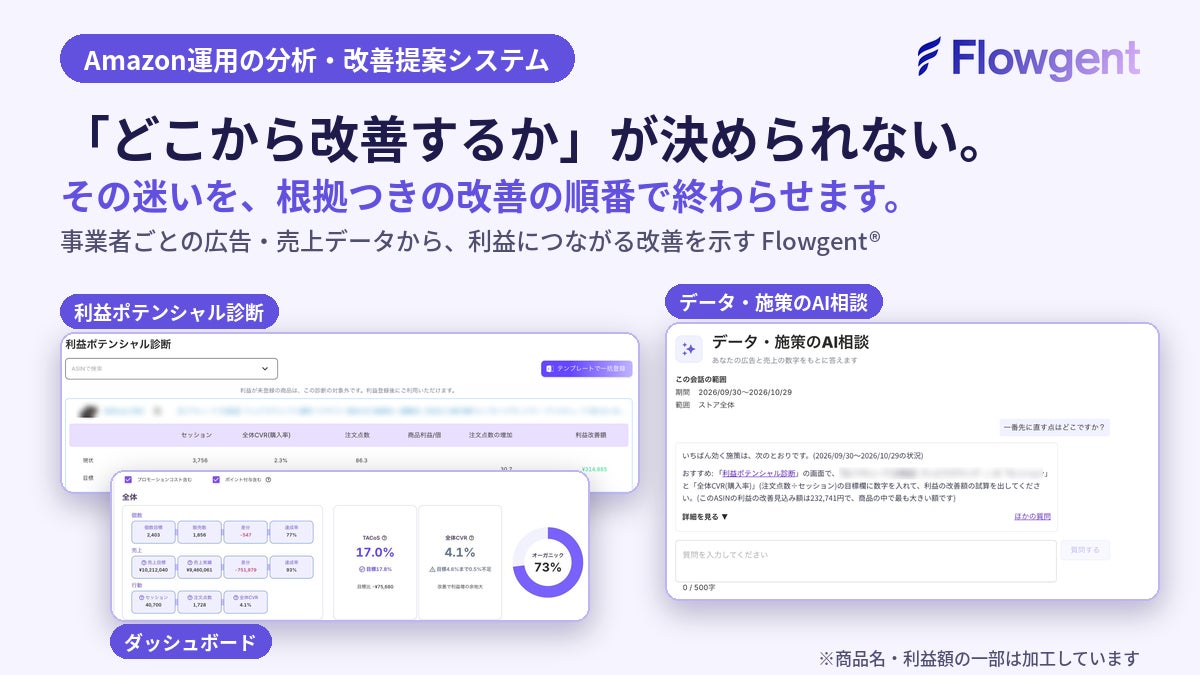
Spesia added an "AI consultation on data and measures" chat to Flowgent, its Amazon operations analysis system
In Branding Works' October 2026 survey of ChatGPT and Gemini answers, 辻・本郷税理士法人 appeared in 50% of responses…

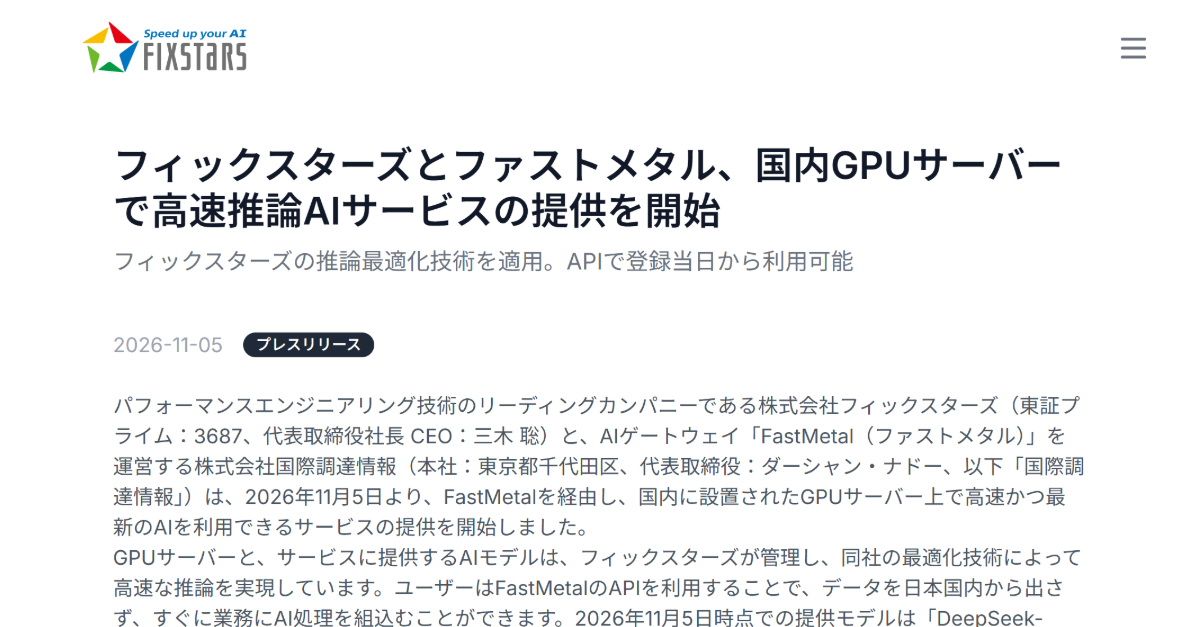
Fixstars said on Nov 5 it began offering open-weight models on GPU servers in Japan, working with Kokusai Chot…
At its Global Brand Launch on October 21, LUXEED introduced the LLounge MPV and Stormax SUV, both with AI smar…

Box announced Box for Industries, an industry-specific solution set, and began offering Box for Banking, Box f…