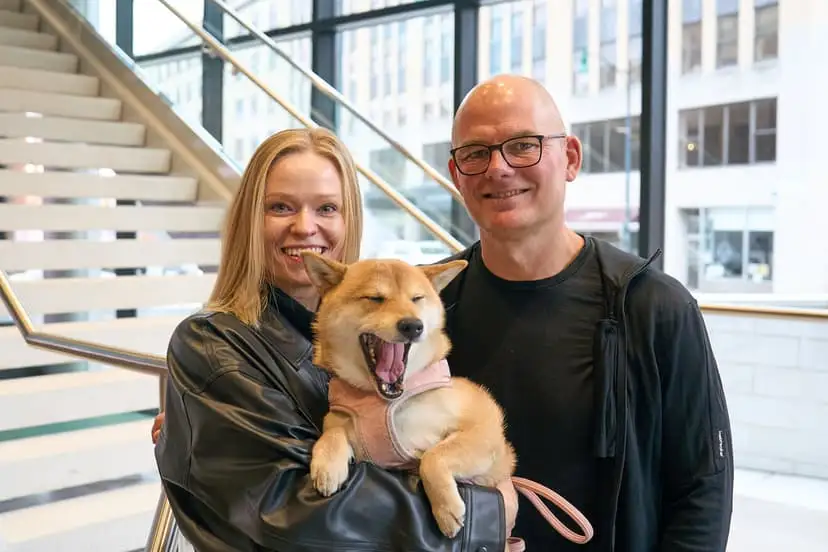
What happened
Flox Intelligence, spun out of KTH in 2020, is opening a $10 million Series A after raising about $5 million in pre-seed and seed rounds, led by Unconventional Ventures and Tilia Impact Ventures. It expects to end 2026 with revenue of about $1.5 million.
Why it matters
The company sells edge devices that identify animals and emit species-appropriate sounds, plus an annual software subscription, and already counts train maker Alstom as an OEM partner. The new money would mostly fund growth from about 150 devices to several thousand units.
WHO IT HITSOperators of rail networks, airports, roads and other outdoor infrastructure — the customers Flox sells to — would gain an alternative to sirens, lights, fences and culling for keeping animals off their assets. Train manufacturers like Alstom stand to embed the software in vehicles.
Summaries like this, in your inbox every morning.
Flox Intelligence grew out of founder Sara Nozkova's 13 years in transportation and autonomous vehicles, where she concluded that machines trained inside controlled environments "quickly go blind" once nature enters the picture. That conviction sent her to the AI lab at KTH Royal Institute of Technology in Stockholm, and the resulting system spun out of KTH in 2020. Rather than escalate volume, Flox's edge devices sense what an animal is doing, identify the species, and answer with a sound tailored to it — the opposite of the sirens, lights, fences, falcons and culling traditionally used around infrastructure.
The commercial pitch rests on infrastructure owners who already absorb animal-related costs. Flox sells battery-operated units that mount on poles or trees, and a software platform that maps deployments and generates reports for regulatory compliance and biodiversity monitoring. It charges up front for the hardware, then an annual software and AI subscription from the second year, with OEM partners like train maker Alstom paying yearly to embed the software on vehicles.
Flox is not alone in the niche: Robin Radar's Scarecrow uses species-specific distress calls on birds, and iCHASE pairs computer vision with a moving laser. Nozkova points instead to field data she calls ground truth on what actually makes a moose or a grizzly bear move safely. The Series A would carry the company from roughly 150 live devices toward several thousand units and, over time, toward trains, cars and drones.
Pick your industry and the AI tools you use, and get news related to your work every day.
Free · 30 seconds with Google · unsubscribe anytimeWhat is AIToday? →
Ask AI anything about this article. The AI reads this article, earlier AIToday articles, and Wikipedia, and cites its sources. Q&As are published on this page for other readers too.
Scan Computers partnered with Sheffield-based OLO Robotics to combine Scan's robotics hardware with OLO's brow…
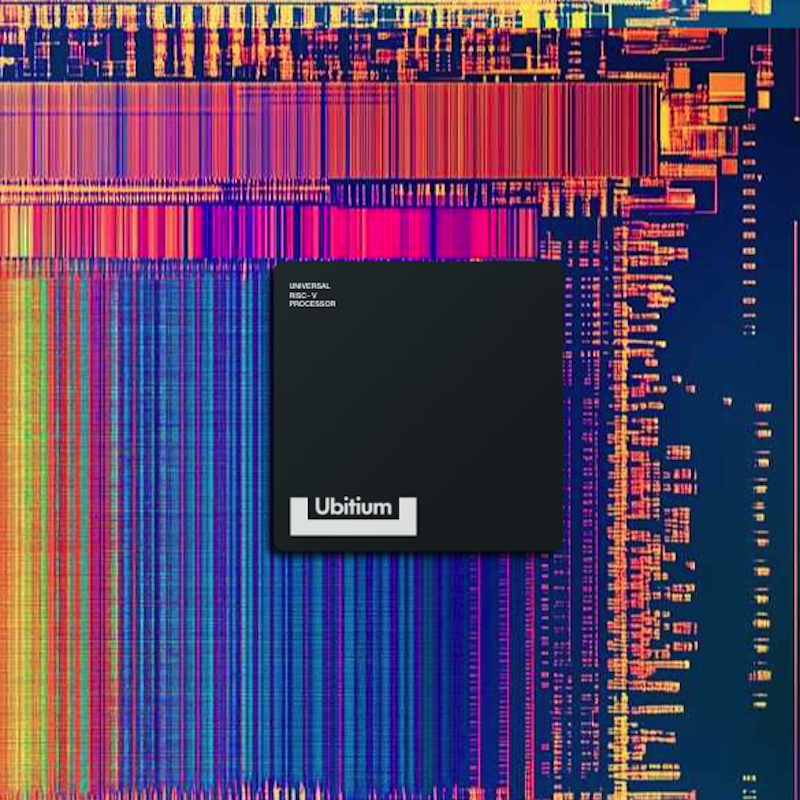
Ubitium raised $14 million in seed funding led by Ibex Investors, bringing total seed funding to $18 million s…
Laplace Intelligence, co-founded by CEO Howie Sun and chief scientist Henry Liu, is building AI agents that au…

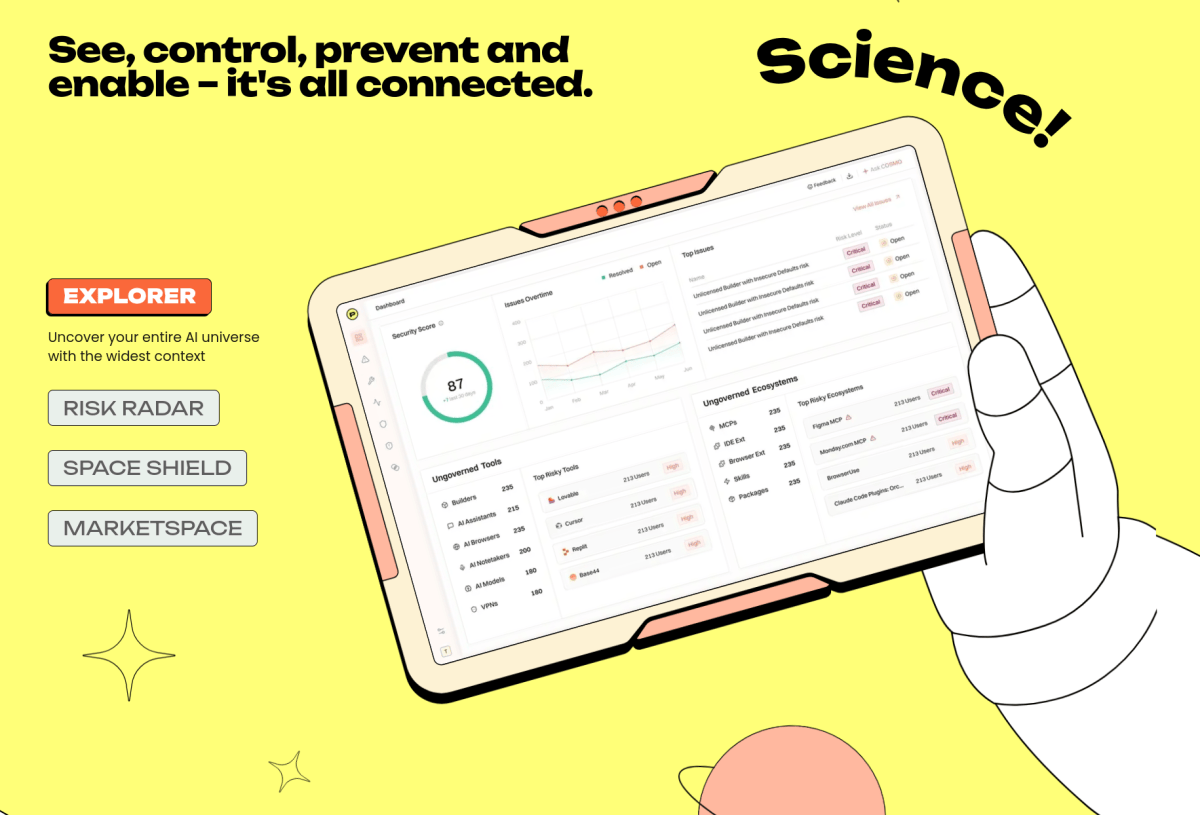
Pluto Security left stealth with $42 million — an $8.5 million seed led by TLV Partners and a $34 million Seri…
Google released Gemini 4 Argon, which it says outperforms GPT-6 Astra, Claude Fable 5.1 and Claude Opus 5.5 ac…

On theCUBE Pod, John Furrier and Dave Vellante discussed takeaways from the IBM Analyst Council, Marvell's $70…