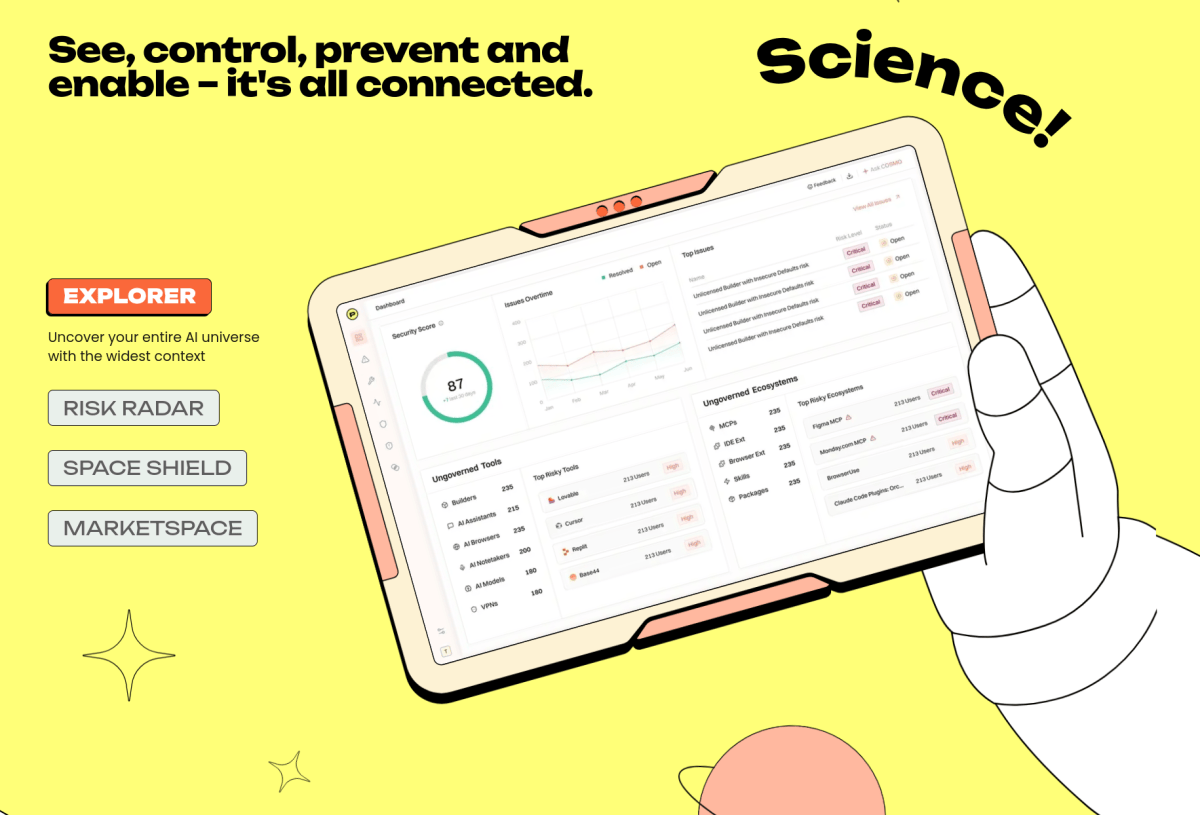
What happened
Pluto Security left stealth with $42 million — an $8.5 million seed led by TLV Partners and a $34 million Series A led by Jump Capital.
Why it matters
CEO Shahar Bahat says about 60% of detected risks sit in tools vibe-coded by non-developers, with finance teams the top source, suggesting security gaps are spreading beyond engineering.
WHO IT HITSEnterprise security teams — especially CISOs at large companies adopting AI tools — face risks surfacing in finance, marketing, and legal departments rather than only in engineering, according to Pluto's findings.
Summaries like this, in your inbox every morning.
Pluto Security's pitch rests on a specific observation from its own customer base: AI tools can appear inside a company's environment within two hours of release, and most of the risks the company detects come from apps built by non-developers. Bahat says finance departments generate the most such risks, followed by marketing and legal teams, with developers ranking fourth — a reversal of where security attention has traditionally focused. One example her company cites is a vibe-coded app built by a finance employee at a Fortune 500 company to manage customer information and churn, which was left exposed to the internet.
The startup's approach differs from applying existing security software to AI, which it argues is a square-peg-round-hole fit. Instead, Pluto monitors AI tools, their skills, extensions, and MCP servers, along with the apps and agents employees create, and connects to endpoint security and device management systems to gather prompts, commands, processes, and permissions. Bahat frames the shift as moving "from user behavior to agent behavior." Its free Plutonium platform, launched in April, offers risk checks on public AI skills, connectors, and add-ons, plus an MCP scanner and a catalog of verified components; Bahat says thousands of security professionals use it and that 70% of the sales pipeline now comes from inbound interest.
Investor appetite for this category is visible in the round's structure: an $8.5 million seed led by TLV Partners, with Armis' founders investing, followed by a $34 million Series A led by Jump Capital with Skinos, Ansa Capital, and other angels. Bahat says she has not yet found a proof-of-concept where nothing malicious turned up, and that some environments had active live attacks during testing. The company has 40 employees in the U.S. and Israel and plans to put the new capital into product development, security research, and U.S. expansion.
Pick your industry and the AI tools you use, and get news related to your work every day.
Free · 30 seconds with Google · unsubscribe anytimeWhat is AIToday? →
Ask AI anything about this article. The AI reads this article, earlier AIToday articles, and Wikipedia, and cites its sources. Q&As are published on this page for other readers too.
Ubitium raised $14 million in seed funding led by Ibex Investors, bringing total seed funding to $18 million s…
Google made Gemini 4 Argon available worldwide today through its API, the Gemini app, and Google Antigravity

In a Libération interview, the UC Berkeley professor emeritus called AI-doom warnings "science fiction," compa…

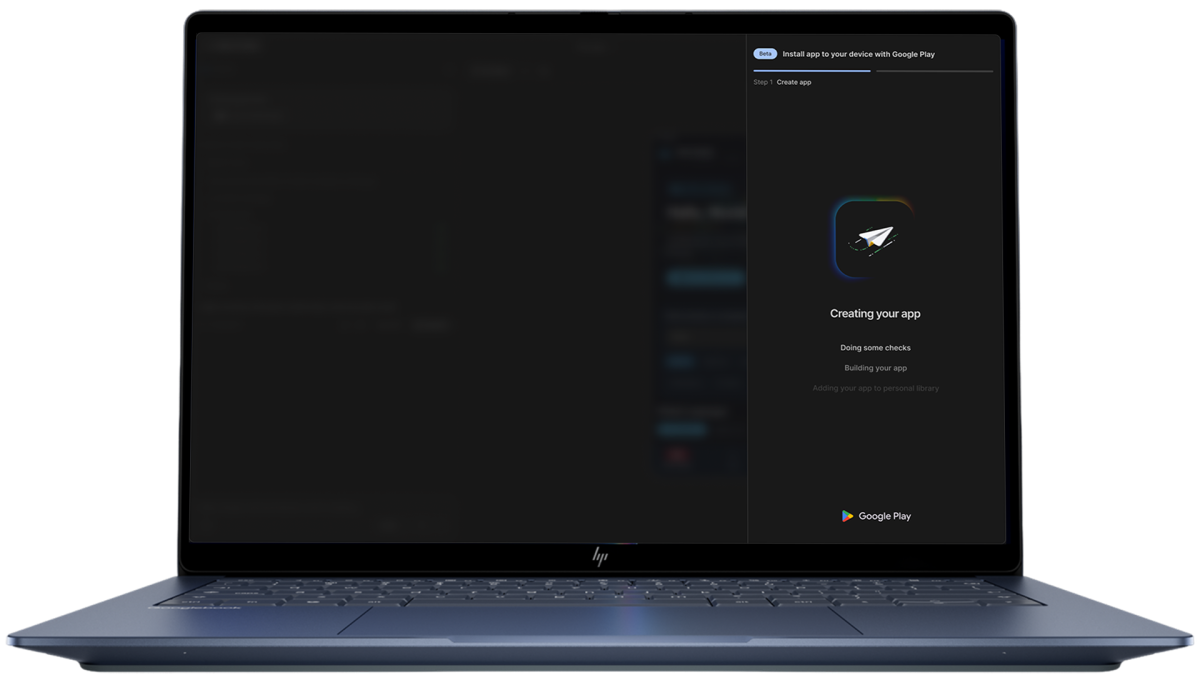
Google said Android owners can build an app with Google AI Studio and launch it privately through Google Play…
Laplace Intelligence, co-founded by CEO Howie Sun and chief scientist Henry Liu, is building AI agents that au…

Flox Intelligence, spun out of KTH in 2020, is opening a $10 million Series A after raising about $5 million i…