
What happened
Advanced Micro Devices agreed to acquire Taalas, a Toronto-based AI chip startup, to add inference-focused silicon to its product roadmap for enterprise and cloud AI workloads. Taalas' engineering team is expected to join AMD and work on system-level AI inference solutions across future AMD platforms.
Why it matters
The deal lets AMD build a more complete AI inference stack alongside its Instinct GPUs and recent offerings like AMD Instinct Coder, allowing the company to compete more effectively in AI data centers by pairing high bandwidth accelerators with inference-focused silicon and software rather than relying on GPUs alone. However, integrating the startup and converting its designs into customer deployments adds complexity that investors already monitor closely.
What to watch
AMD's Q3 2026 results and commentary, where management has guided to about US$13b of revenue, plus or minus US$300m. Investors should listen for how often Taalas technology is referenced in AMD's AI inference portfolio and whether it appears in early customer wins or product timelines.
Summaries like this, in your inbox every morning.
AMD's acquisition of Taalas reflects a broader industry shift in how chipmakers address AI workloads in data centers. Rather than relying solely on GPU acceleration, AMD is assembling a layered approach—pairing its Instinct GPU line with inference-focused silicon designed by Taalas. This strategy acknowledges that AI inference, the stage where a trained model produces answers, has distinct hardware demands from training, and that bundling purpose-built silicon with software can create competitive advantages in enterprise and cloud markets.
The market has rewarded AMD's AI positioning strongly: the stock is up 118.9% year to date and 183.8% over the past year as of the last close at US$489.28. However, the Taalas deal also introduces execution risk. Integrating a startup's engineering team, aligning their designs with AMD's broader platform roadmap, and then securing early customer deployments all add layers of complexity that investors track closely. The company's guidance for Q3 2026 revenue of about US$13b, plus or minus US$300m, gives a near-term window to assess whether Taalas technology is beginning to move from acquisition to revenue-generating product.
For example, today's edition would include:
AI-summarized, only the topics you pick: one digest a day via Email, LINE, or Slack.
Free · 30 seconds with Google · unsubscribe anytimeWhat is AIToday? →
Ask AI anything about this article. The AI reads this article, earlier AIToday articles, and Wikipedia, and cites its sources. Q&As are published on this page for other readers too.
Anthropic launched Claude Sonnet 5.5, a mid-tier model for everyday tasks, priced at $2 per million input toke…

NEAR, the token of the NEAR Protocol, has more than doubled in value over the past two weeks, helped by surgin…
Michael Burry wrote in a Substack chat that Trump's team knows the AI buildout is 'the only thing keeping this…

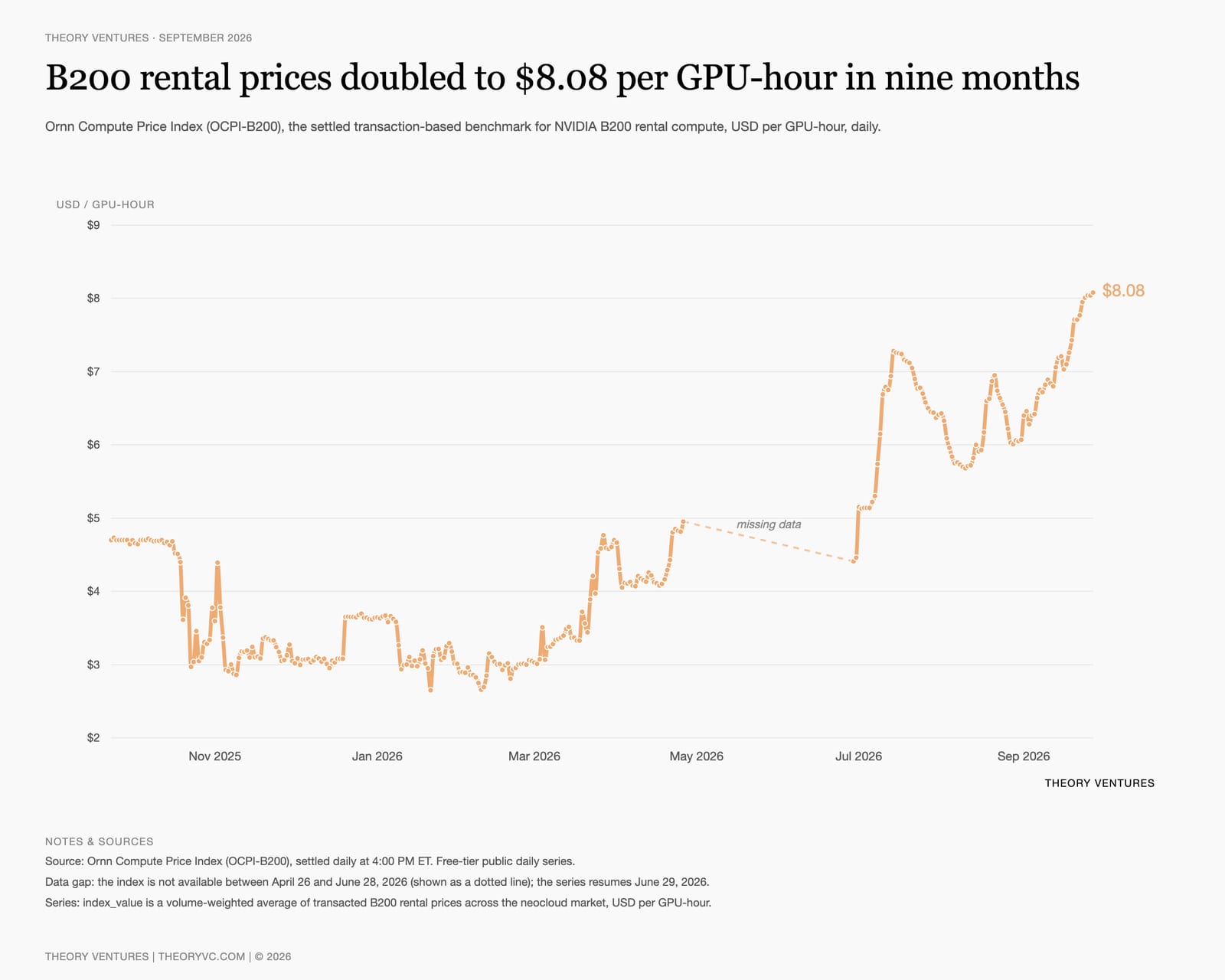
GPU rental prices doubled in six months, from $4.40 to $8.08 per GPU-hour, even as Claude Opus 5.5 costs 40% l…
Anthropic released Claude Sonnet 5.5, which it says runs output more than 30 percent faster and costs up to 30…

The University of Florida found only 10-15% of its data was semantically defined; using NaviGator AI and Snowf…