
What happened
In its revised S-1A filed Monday, Anthropic said internal estimates and expectations for future models — not current models — indicate it may imminently meet its Responsible Scaling Policy's definition of 'dramatically accelerated progress attributable to AI,' its RSI threshold.
Why it matters
Anthropic says using AI to build more capable AI could pose a considerable safety risk if it sharply accelerates progress, and it has not designated any current model as exceeding the threshold while it continues to assess the data.
WHO IT HITSThe disclosure lands on Anthropic's investors and prospective public-market shareholders reading its S-1A risk factors, and on the safety and policy teams at AI labs that set internal thresholds for when model development must slow down or add oversight.
Summaries like this, every morning.
Anthropic's warning sits inside a regulatory filing that is primarily about money: the revised S-1A on Monday showed revenue soaring alongside rising expenses. But the Risk Factors section carries a second, separate message. Anthropic says it has already used AI to develop new models whose leaps in capability it did not recognize at the time, and it warns that its increasing use of AI in research may let model capabilities outrun its ability to develop, validate and implement safety measures. The company adds that it may not identify a significant acceleration in its development rate until after it has occurred.
The specific trigger it names is internal: its own Responsible Scaling Policy, which defines a threshold of 'dramatically accelerated progress attributable to AI.' Anthropic says its internal estimates and expectations regarding future models — rather than its current models — indicate it may imminently meet that definition, while confirming that no current model has been designated as exceeding it. It also says it is considering updates to the policy to keep humans in control of frontier model development, and that it does not anticipate safely using Claude to fully autonomously design and build successive generations of frontier models without meaningful human supervision.
The timing matters because RSI was widely treated as a buzzword or an unreachable goal when the term became popular earlier this year, and because the disclosure comes in a document that serves as both disclosure and marketing. The body notes that skeptics might read a claim of being close to a self-building model that way. Still, the filing's own framing is that the risk is real enough to be named in the fine print.
Pick your industry and the AI tools you use, and get news related to your work every day.
Free · 30 seconds with Google · unsubscribe anytimeWhat is AIToday? →
Ask AI anything about this article. The AI reads this article, earlier AIToday articles, and Wikipedia, and cites its sources. Q&As are published on this page for other readers too.
Casap announced a $56 million Series B led by Base10 Partners, with Experian and Synchrony as strategic invest…

Kindai University will give 4,000 Paperpal licenses to full-time faculty and doctoral students at all campuses…

HIX AI's connector update on 11月4日 links Microsoft 365 (Outlook Mail, Outlook Calendar, OneDrive), Google Work…

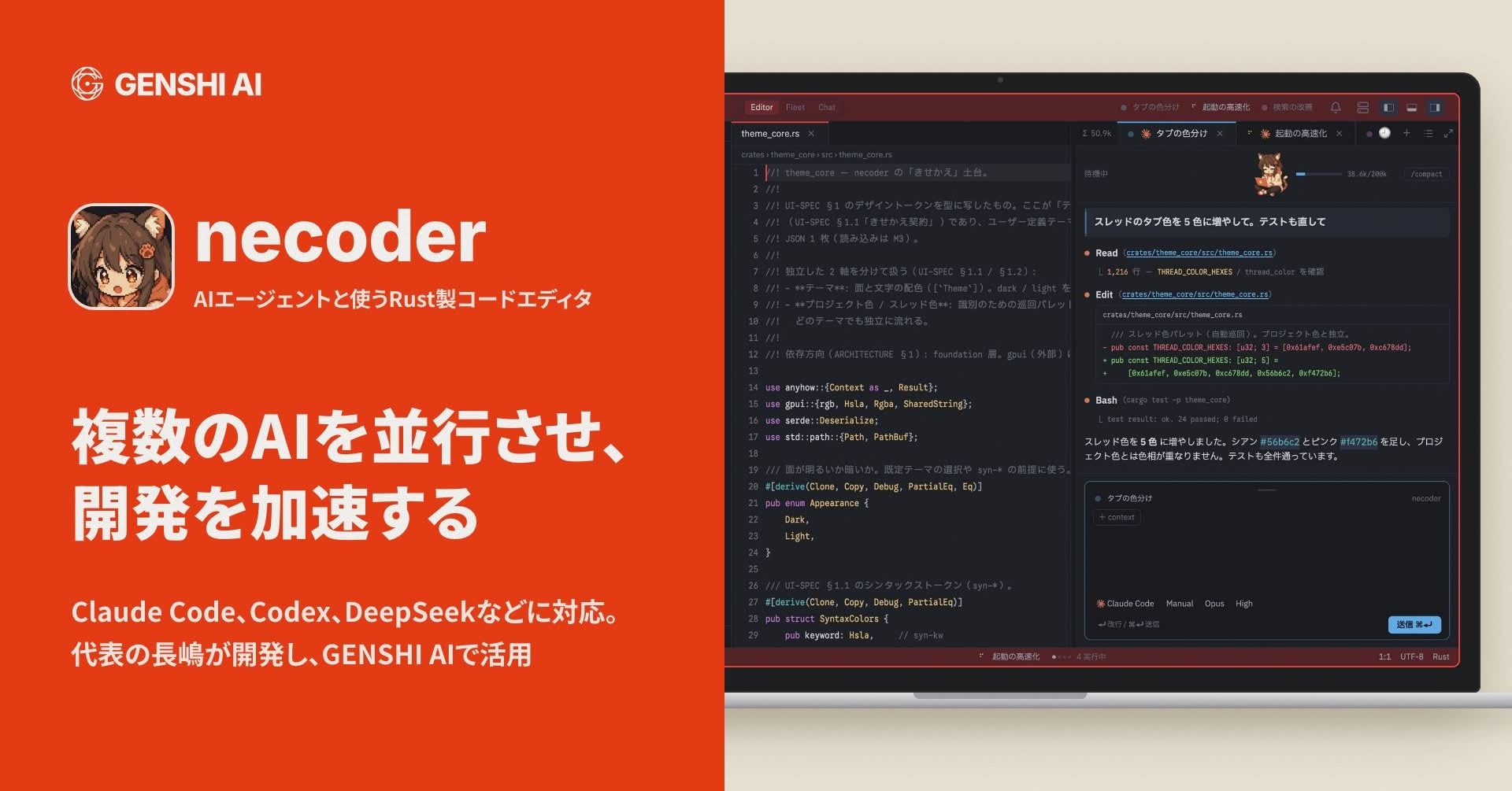
GENSHI AI said it adopted necoder in-house — a free, AGPL-3.0 Rust editor that Daichi Nagashima began building…
Nicholas Carlini matched Stockfish 17, ported to a 200MHz Pentium Pro, against 1996's Crafty 11.13 on a modern…

Xin Liu and co-authors surveyed 291 open-weight LLM repositories and found 20 of 38 untied gated and hybrid ch…


