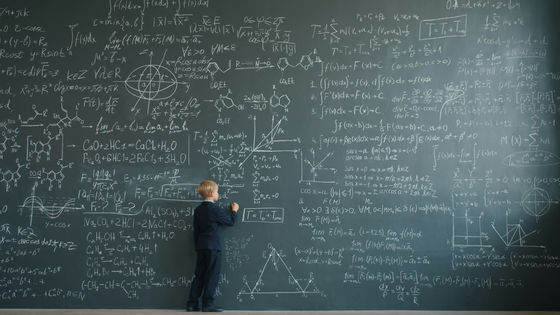
What happened
OpenAI said its models proved the local smoothing conjecture in all dimensions — resolving the Kakeya and restriction conjectures — disproved the 指数時間仮説, and gave existence proofs for 量子色力学 and a unified Standard Model extension; the math and CS proofs are on GitHub, formalized in Lean.
Why it matters
The 指数時間仮説 has underpinned conditional complexity results across hundreds of papers in fields like graph theory and computational biology, so its refutation reopens how far those problems could be sped up, though OpenAI notes more research is needed to turn that into practical algorithms.
WHO IT HITSResearchers in 調和解析, computational complexity theory and mathematical physics now have AI-generated proofs and Lean formalizations to check and build on, while the outside expert groups OpenAI enlisted take on the verification and write-up.
Summaries like this, every morning.
OpenAI's account shows the results arrived quickly and then moved through outside hands. The AI produced the local smoothing proof on October 18, 2026, and the Lean formalization ran the next day; the 指数時間仮説 disproof came in natural language on October 16 and was formalized on October 17. The physics work dates back further — a natural-language proof on the existence of Yang-Mills theory on September 9 and a 量子色力学 proof on September 18 — and release was delayed until late October because formalization had to finish, with the Yang-Mills formalization completed on October 16.
The four principles OpenAI set for outside collaboration shape how credit is handled. OpenAI says it will not seek academic credit for findings its in-house models produced, that participation is voluntary and unpaid, and that members speak only for themselves. In practice, the groups OpenAI convened are tasked with understanding and explaining outputs rather than making the first discovery, which is why the write-up and verification roles sit with named outside researchers.
The three release paths diverge in openness, and OpenAI presents that divergence as unresolved rather than settled. Mathematics output is public for researchers to gather around; the CS group published both natural-language proofs and Lean formalizations on GitHub right away; the physics group decided to withhold AI-generated output and write its own paper. On the 指数時間仮説, OpenAI's own framing is that refuting it reopens how much faster these problems could be solved but that finding such algorithms and connecting theoretical progress to practical gains requires much more research.
Pick your industry and the AI tools you use, and get news related to your work every day.
Free · 30 seconds with Google · unsubscribe anytimeWhat is AIToday? →
Ask AI anything about this article. The AI reads this article, earlier AIToday articles, and Wikipedia, and cites its sources. Q&As are published on this page for other readers too.
FlashLabs started offering Orca Connect for OrcaRouter, which adds local runtimes such as Ollama, vLLM and LM…

Anthropic's prospectus discloses SpaceX compute agreements of up to $120.5 billion through 2029, with monthly…

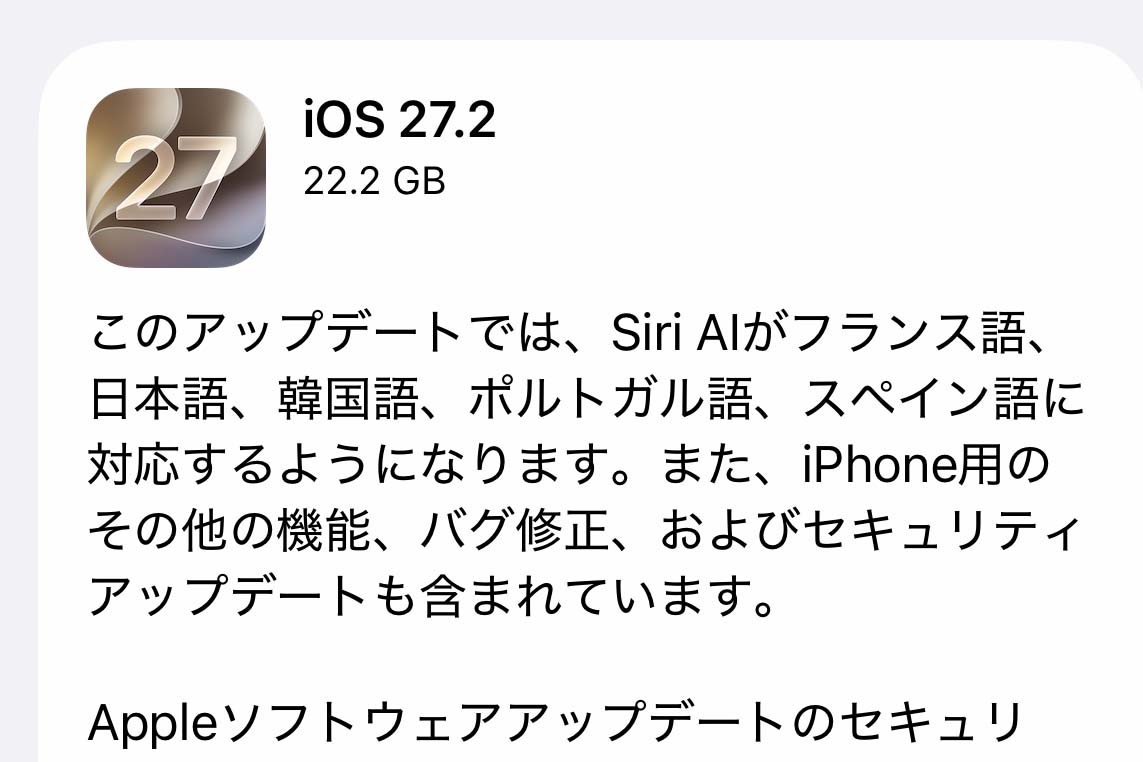
Apple released iOS 27.2, bringing Siri AI to iPhone 16 and later plus iPhone 15 Pro and Pro Max, with support…
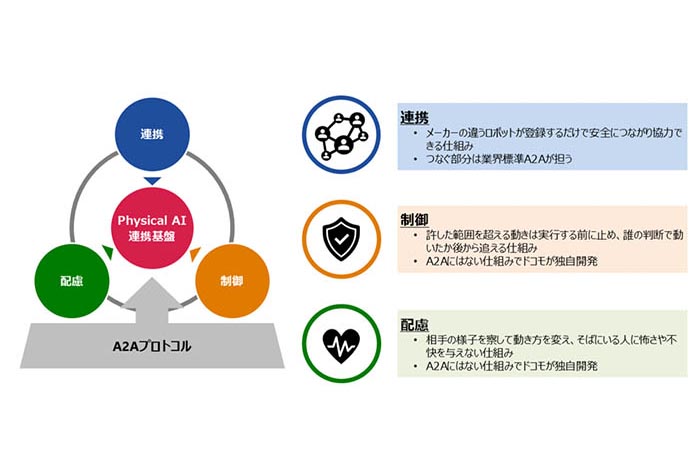
NTT Docomo developed "Physical AI連携基盤," which unifies linking AI agents to robots, controlling permitted actio…
Folkbench published a guide, reworked for Japanese readers on Zenn, laying out four checks for AI relays used…
chrome-use, an Apache-2.0 CLI and MCP server, connects agents such as Claude Code, Codex and Cursor to your ev…