What happened
schema-guard, a tool by developer idk-arsh, checks AI-written SQL against a saved snapshot of real table and column names. In tests with Claude Haiku 4.5 and Sonnet 5, 0 of 24 files worked without it; 48 of 48 ran with it.
Why it matters
The snapshot stopped both models from inventing names that do not exist. Every one of the 48 files ran, so the wrong answers that remained were logic errors, not wrong names.
What to watch
The results come from a small, synthetic world with only 3 runs per cell, so the numbers hinge on a setup the author designed. Watch whether the snapshot readers for Snowflake and BigQuery get run against live accounts.
WHO IT HITSData and analytics engineers who let AI coding agents write SQL against a warehouse will see fewer failed runs and fewer broken dashboards from wrong column names. The team still needs one person with warehouse access to take the snapshot.
Summaries like this, in your inbox every morning.
The problem schema-guard targets is not that coding agents write bad SQL syntax, but that they write against a schema they assume is real. As the author puts it, an agent bases its query on a README, an old query, or a naming convention, and the failure shows up later in CI, in a dashboard, or at 2am. Snowflake's own developer blog ran a post on this in September 2026, which suggests the vendor sees the same pattern among its users.
The tool's approach is to keep a snapshot of the actual tables and columns, names and types only, inside the repo, and to check the agent's SQL against that snapshot before it runs. The snapshot is taken once by someone with warehouse access, so the agent itself never needs that access. The author reports a Databricks reader run live on a Free Edition workspace on 2026-10-04, returning 9 tables and 277 columns in under 30 seconds on a cold warehouse.
The author is openly cautious about the evidence. The test world is small and synthetic, the stale README was designed in, and there are only 3 runs per cell; two grader references were even added after reading runs. A one-line rule in a project file gets a similar result if the agent follows it, while the hook does not depend on that. Whether this holds in a real warehouse with years of schema drift is the open question, and the readers for Snowflake and BigQuery have not yet been run against live accounts.
Pick your industry and the AI tools you use, and get news related to your work every day.
Free · 30 seconds with Google · unsubscribe anytimeWhat is AIToday? →
Ask AI anything about this article. The AI reads this article, earlier AIToday articles, and Wikipedia, and cites its sources. Q&As are published on this page for other readers too.
Reflection AI launched Beam, a 501 billion-parameter open-source LLM

A step-by-step guide fine-tunes Muse Glimmer, Meta's 30B vision model, locally for equation-to-LaTeX conversio…
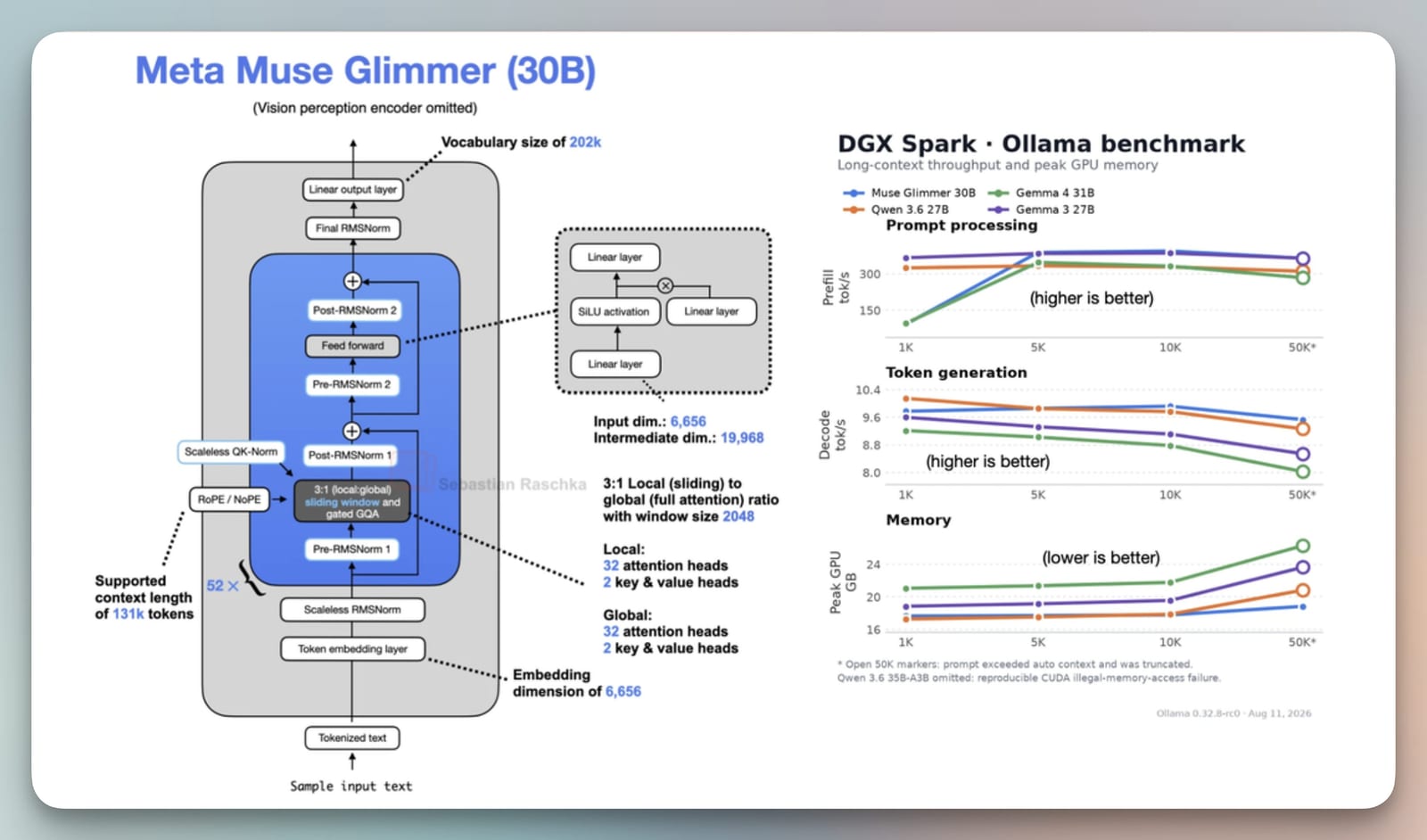
OpenAI announced always-on agent Dots on September 30; SpaceXAI's Grok Bot and Meta Muse are pushing the same…
A sole proprietor running AI-adoption and process-improvement work built a 'company' repository on Claude Code…

A Zenn author published "Anchored Bond(相互人質プロトコル)," a Python design using the google-genai SDK in which a rege…
Anthropic launched Claude Sonnet 5.5 on September 28, priced at $2 per million input tokens and $10 output, ha…

