
What happened
Amazon researchers introduced Self-Distilled Reasoning (SDR), a technique that uses a base model's own reasoning traces to improve supervised fine-tuning on datasets that lack chain-of-thought reasoning data. The method augments training data with the model's generated reasoning steps, then fine-tunes with reasoning enabled, requiring no human annotation or separate teacher model.
Why it matters
When fine-tuning domain-specific models without reasoning traces, standard training causes catastrophic forgetting—math performance dropped from 70% to 6% in tests. SDR recovers this: math performance returned to near 70% while improving target task performance by over 6.5% on average, outperforming the common workaround of model merging. For businesses customizing Amazon Nova 2 models on proprietary data, this means reasoning capability is preserved alongside domain gains.
What to watch
SDR was validated across five benchmarks—ToolACE (tool-calling), CoCoHD (structured extraction), GovReport (summarization), Invoice-OCR (document understanding), and CaptionGen (video captioning)—showing the technique works across diverse tasks. The approach requires no separate intervention after training, unlike model merging, making it practical for production customization workflows.
Summaries like this, in your inbox every morning.
The core challenge SDR addresses is the "reasoning suppression problem": when fine-tuning models on datasets containing only input-output pairs (no reasoning steps), the training loss is calculated on both reasoning and output tokens together. Because training data has no supervision signal for generating intermediate reasoning steps, the loss function penalizes reasoning tokens that don't directly produce the final output, training the model to skip its reasoning mechanisms entirely—a form of shortcut learning. This causes catastrophic forgetting of general capabilities; the body shows math performance collapsing from 70% to 6% in vanilla supervised fine-tuning.
Amazon's prior recommendation was model merging: weighted interpolation between the fine-tuned model and the base model to recover reasoning and general performance. However, this introduces a trade-off: restoring general performance often sacrifices gains on the target task. SDR sidesteps this by augmenting the training data with the base model's own reasoning traces (chain-of-thought outputs), then fine-tuning with reasoning enabled. This provides what the body calls "in-training regularization"—the model learns from its own problem-solving process rather than just final outputs, maintaining proximity to the base model's policy while improving domain performance. The body frames this as self-distillation, aligning with recent research showing models can learn effectively from their own predictions.
For example, today's edition would include:
AI-summarized, only the topics you pick — one digest a day via Email, LINE, or Slack.
Free · 30 seconds with Google · unsubscribe anytimeWhat is AIToday? →
Ask AI anything about this article. Q&As are published on this page for other readers too.
Palo Alto Networks announced Unit 42 Continuous Frontier AI Defense, an annual-subscription service that pairs…

ServiceNow raised its 2026 subscription revenue midpoint, citing strong demand for its workflow platform, AI-f…

DEEPX, a South Korean AI semiconductor company, is reportedly conducting a proof of concept with a US smart gl…

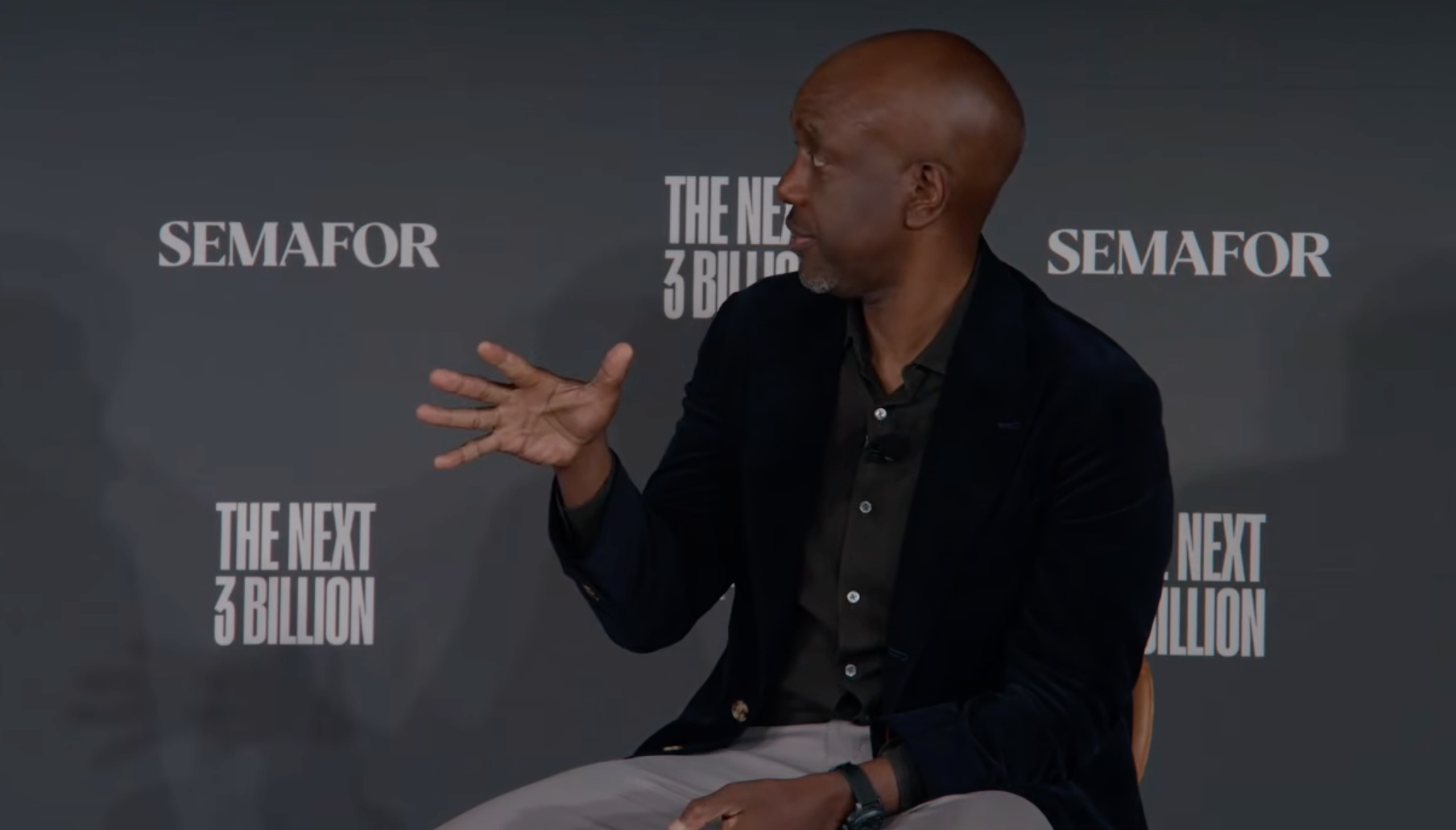
Google SVP James Manyika told Semafor's Next 3 Billion event that the Global South is "a little bit more optim…
Amazon blocked Meta's Muse assistant while Shopify allowed it, the first sign of battle lines over how AI agen…

OpenAI launched GPT-6 Sol and Luna, halving token prices from GPT-5.6 — Sol at $2 input and $10 output per mil…