What happened
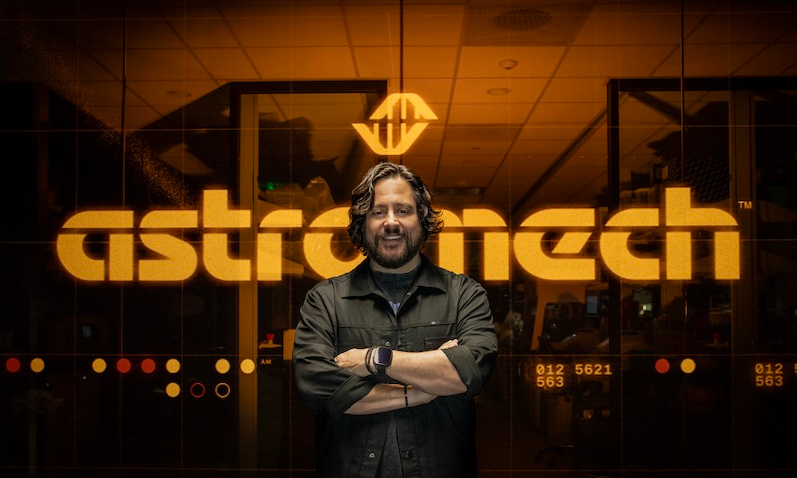
Astromech, an AI startup co-founded by Ben Lamm and geneticist George Church, raised $20 million in funding led by biotechnology investor Bob Nelsen, bringing total funding to $60 million and valuation to $3.8 billion. The company develops predictive models of biology that use genomic, evolutionary, and functional data to forecast how organisms and diseases will change over time.
Why it matters
Rather than analyzing organisms as they exist today, Astromech aims to predict future biological trajectories—including genetic bottlenecks, disease progression, drug resistance, and species responses to environmental change. The company is focusing on human longevity as a proving ground, having mapped 46 longevity-associated genes to understand aging mechanisms; this approach may eventually support precision longevity research by learning from long-lived species such as the bowhead whale, which typically lives for more than 200 years.
What to watch
Astromech plans to expand research teams, scale its comparative genomic infrastructure, and study more species to gather more evolutionary data. Once complete, the company aims to launch pilot projects with health and biosecurity partners to apply its vulnerability forecasting models to real-world challenges.
Summaries like this, in your inbox every morning.
Astromech was spun out of Colossal Biosciences Inc., a genetic engineering firm working on de-extinction of animals including the woolly mammoth and Tasmanian tiger. That heritage shaped the company's core asset: 3.8 billion years of evolutionary history as a primary training signal. The dual-engine architecture—one using deep learning to spot patterns across species, the other to reverse-engineer and forward-project biological systems—reflects a conviction that evolution itself is the richest source of data for predicting biological change.
Co-founder Church's emphasis on ancestral regulatory states rather than just proteins addresses a technical limitation in existing comparative genomics: most genetic variations affecting complex traits like morphology and longevity are regulatory, not coding. By reconstructing ancestral regulatory states, Astromech claims to recover explanatory power that protein-only comparisons miss. The focus on longevity—studying species like the Asian elephant's cancer-suppression mechanism and the bowhead whale's extreme lifespan—is framed as a near-term validation target, not a near-term product. Lamm's weather-forecasting analogy positions the startup as solving an inference problem (predict future states from historical data and current conditions) rather than a protein-design problem, which may appeal to investors and partners seeking forecasting rather than engineering.
Pick your industry and the AI tools you use, and get news related to your work every day.
Free · 30 seconds with Google · unsubscribe anytimeWhat is AIToday? →
Ask AI anything about this article. The AI reads this article, earlier AIToday articles, and Wikipedia, and cites its sources. Q&As are published on this page for other readers too.
Cisco and Nvidia are partnering on a new generation of optical networking technology designed for the explodin…
Honeyjar, a startup led by CEO Michelle Masek and CCO Nadia Jamshidi, is building AI that automates communicat…

Meta's Superintelligence Lab released Muse Wonder and Muse Wonder Full, its first frontier models; Meta's test…
Microsoft will deploy its Azure Maia AI chips at multi-gigawatt scale starting in 2027, making them the compan…

Microsoft announced Maia 300, its third-generation in-house AI chip, designed to be the "primary AI inference…

Blueprints AI is unveiling a second-generation version of its software that generates code-compliant, permit-r…