
What happened
The developer behind typingtube says 200 planning documents exist, yet searches of the 102-line instruction file, hooks, and skill definitions found 0 orders to 'write a plan.'
Why it matters
Two sub-agents handed an unbuilt request each listed 'write a plan' as their 5th step unprompted, so the plans appear to reproduce from precedent rather than from commands — the work of requesting them may no longer be needed.
What to watch
The first plan required someone to write it and was never measured with zero precedent; and one of the two agents also cited a leftover placement line, a state the article says was not tested.
WHO IT HITSDevelopers and technical leads who run AI coding agents on long-lived repositories may find that plan-writing emerges on its own once a few examples exist, letting them drop, or at least test removing, explicit 'write a plan first' prompts from their instruction files.
Summaries like this, in your inbox every morning.
The article frames the proliferation of plans as the mirror image of a rule stated in an earlier installment of the series: rules handed to an AI do not grow as you move up the hierarchy, but plans do. On typingtube, they have grown to 200, one per feature, despite the developer's explicit finding that 0 numbered procedures exist among them. The mechanism the author describes is precedent: the AI reads existing plans before starting work, matches their format, and takes the next number, so the second plan was summoned by the first rather than by a request.
The plans are not purely mechanical output. Across 73 of them, the phrases 'user confirmed,' 'user decision,' and 'user instruction' appear 538 times, and the developer says he still writes those judgments himself. What he stopped was asking for a plan, not deciding one. The distinction matters because it separates two things that are usually bundled: the request that a plan be produced, and the content of the plan.
The author flags three limits he has not measured. The very first plan needs a person, and behavior with zero precedent was never tested. One of the two sub-agents also cited a leftover placement line in the instruction file, and the effect of deleting that line is unknown. Whether this pattern holds outside a repository with a few plans already in place is, on the article's own account, an open question.
Pick your industry and the AI tools you use, and get news related to your work every day.
Free · 30 seconds with Google · unsubscribe anytimeWhat is AIToday? →
Ask AI anything about this article. The AI reads this article, earlier AIToday articles, and Wikipedia, and cites its sources. Q&As are published on this page for other readers too.
Anthropic released Claude Haiku 5.5, a small model for repetitive work, with list prices of 10 cents per milli…

TIMEWELL said on October 1, 2026 it was chosen as a Shinshu AI GEARS subsidy recipient, working with Orion Kik…

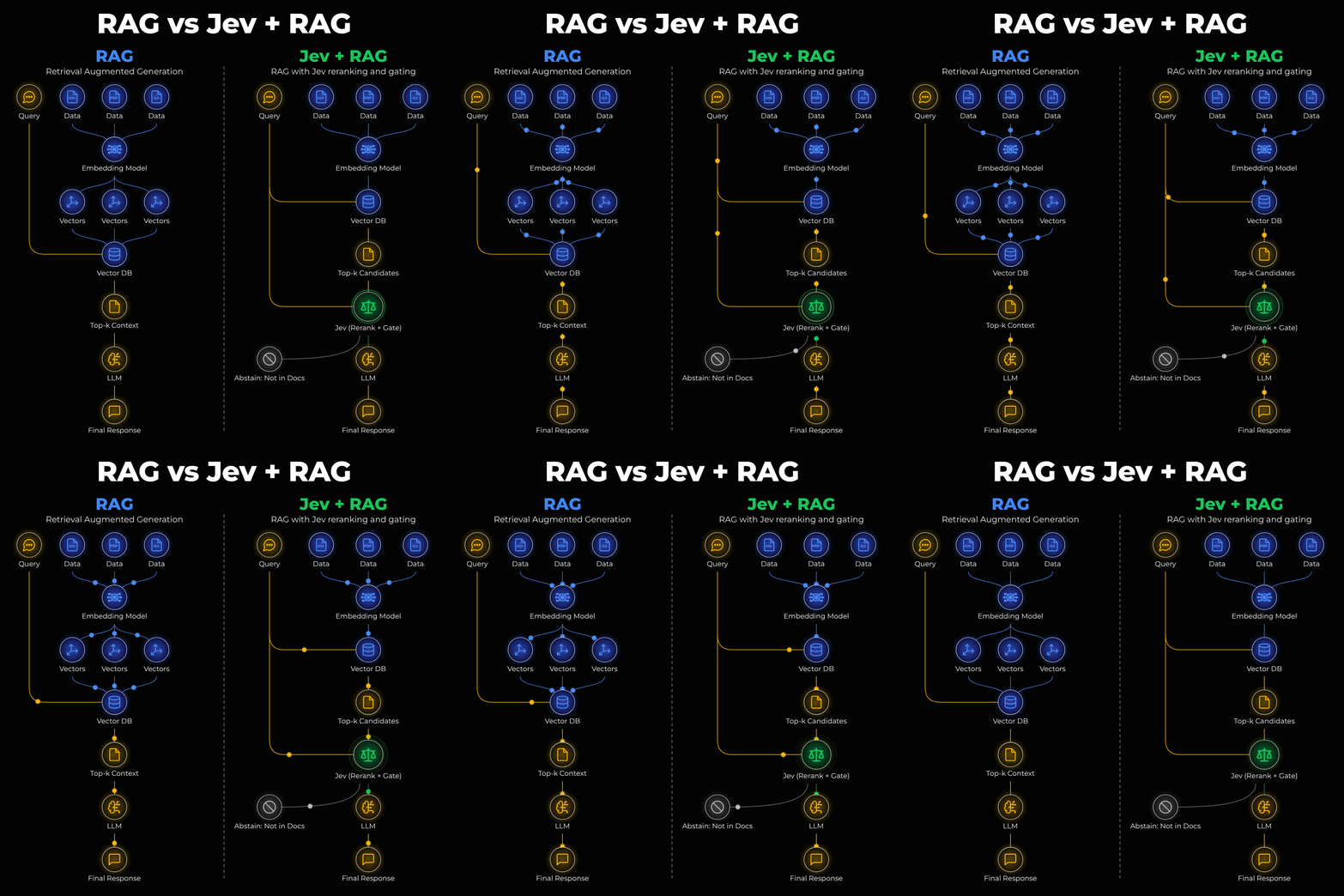
Jev + RAG keeps retrieval as is, but replaces a conventional reranker with a typed decision—"Does this passage…
Preferred Networks began offering a major update to its Japan-focused AI translation service PLaMo翻訳, claiming…

Analysts estimate China's best models are now just four months behind OpenAI and Anthropic, versus seven month…

At Sequoia AI Ascent, DeepMind CEO Demis Hassabis said AGI arrives in 2030 and described a two-step mission: b…

