What happened
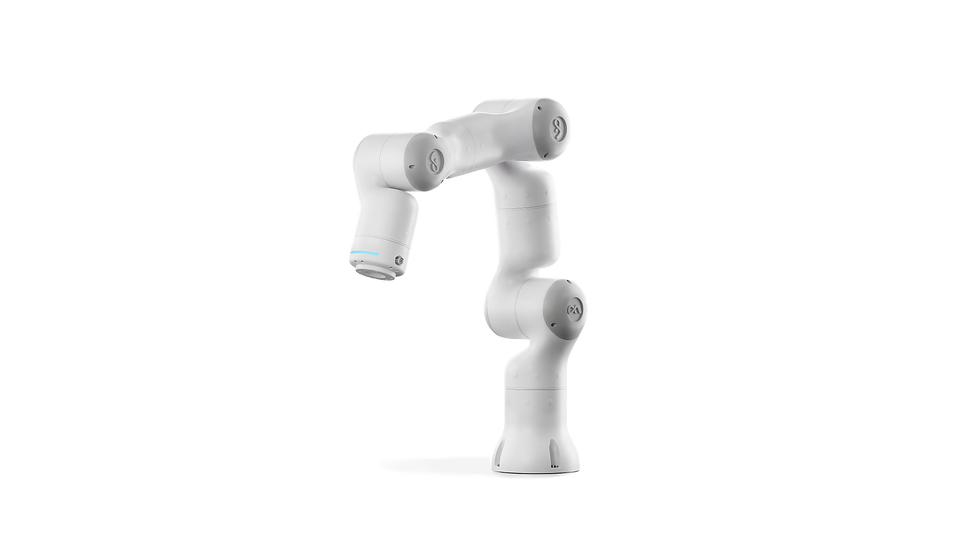
Flexiv demonstrated four force-controlled robot setups at IROS 2026, including a dual Rizon 4 teleoperation system and the Enlight robot with force sensors in all seven joints.
Why it matters
The company argues force sensing plus AI lets robots handle delicate assembly, remote operations and safe human interaction, tasks it says computer vision and position control alone cannot manage.
What to watch
Flexiv's claims hinge on whether force-controlled robots prove reliable outside the demo floor. Watch how the MICO and AICO-2 platforms are adopted for real industrial and service work.
WHO IT HITSThis lands on robotics researchers and engineers evaluating force-control platforms, and on manufacturers weighing dual-arm robots like MICO for tasks such as installing GPUs into high-density servers.
Summaries like this, in your inbox every morning.
Flexiv's appearance at IROS 2026, which finished yesterday, marked its push to position force control as the missing piece in real-world robotics. The company's CTO, Xiyang Yeh, used a Tuesday Tech Talk Stage presentation titled "Mastering Contact in Real-World Applications" to argue that ultra-sensitive touch capabilities are what allow robots to work in unstructured environments. The booth demonstrations translated that argument into hardware: a teleoperation kit with two Rizon 4 arms offering bi-directional force feedback, the Enlight robot with sensors in every joint, and a MICO system installing a GPU into a high-density server.
The range of platforms on display, from the industry-focused MICO Core to the hospitality-oriented MICO Ultra and the AICO-2 dual-arm mobile robot, suggests Flexiv is betting that the same force-control foundation can serve very different markets. Marking its inaugural IROS attendance, Enlight was presented as the centerpiece of that strategy, combining whole-body touch sensitivity with 720-degree rotation on four axes.
Whether this translates into adoption likely hinges on how these systems perform outside controlled demonstrations. For manufacturers and service operators weighing dual-arm robots, the test will be whether force-controlled assembly and close-proximity collaboration hold up in daily production, not just on the exhibition floor.
Pick your industry and the AI tools you use, and get news related to your work every day.
Free · 30 seconds with Google · unsubscribe anytimeWhat is AIToday? →
Ask AI anything about this article. The AI reads this article, earlier AIToday articles, and Wikipedia, and cites its sources. Q&As are published on this page for other readers too.
Agibot and Chimelong Group launched the first phase of an embodied AI deployment at Chimelong Spaceship Park…
On Micron's fiscal Q4 2026 earnings call, CEO Sanjay Mehrotra said humanoid robots are expected to need memory…
RobotPlusPlus closed a Series C worth "hundreds of millions of RMB (tens of millions of USD)" led by Qianggang…
Runway announced Praxis-1, its first open-weight world action model for controlling robots, built on the same…
Flytrex launched rooftop docking and predictive AI positioning at active merchant locations across the Dallas-…
Boston Dynamics released Spot 5.2, expanding Orbit fleet software with a Model Context Protocol layer that let…