What happened
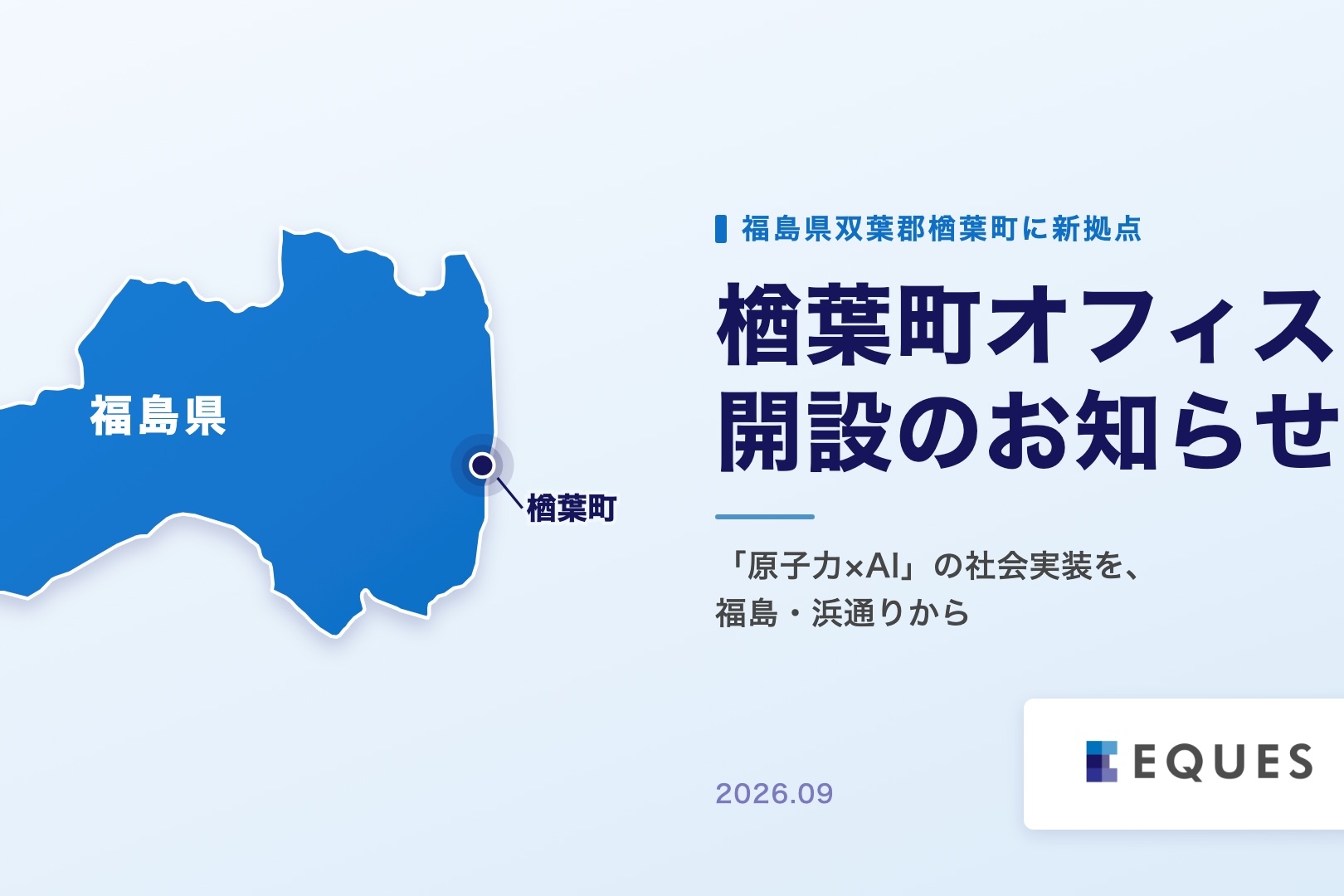
EQUES opened its Naraha Town office on September 8, and in 2026 began an 'Energy AI' business applying physical AI, explainable AI, and equipment-data analytics to nuclear and energy infrastructure.
Why it matters
The office is meant to accelerate turning AI research into on-site deployment. EQUES focuses on physical AI for nuclear work, explainable AI for regulation and safety, and predictive detection for equipment maintenance.
What to watch
EQUES aims to extend technologies honed at decommissioning sites — robotics, AI, sensing, digital twins, data analytics — to energy infrastructure, so the test is whether that expansion moves beyond nuclear plants.
WHO IT HITSNuclear plant operators and energy infrastructure maintenance teams may see EQUES's physical AI and predictive-detection tools move from research into on-site use; regulators and safety-compliance staff may be affected by its explainable-AI work for regulatory response.
Summaries like this, in your inbox every morning.
EQUES has positioned itself as a bridge between laboratory AI research and real-world industrial deployment. Its approach, described as 'accompaniment-style technology development,' is intended to solve problems together with the organizations facing them rather than handing over finished tools. The new Naraha Town office is presented as a way to accelerate that work from the Fukushima-Hamadori area, where efforts are already underway to build a cluster of new industries and technologies including decommissioning, energy, robotics, and manufacturing.
The company's Energy AI business, launched in 2026, targets energy infrastructure including the nuclear industry. EQUES says it will focus on physical AI for advancing nuclear site work and reducing labor needs, explainable AI for regulatory compliance, and predictive detection and risk minimization using equipment data. It also plans to carry technologies cultivated at decommissioning sites — robotics, AI, sensing, digital twins, and data analytics — into the broader safety and productivity of energy infrastructure.
How much this office changes the pace of deployment likely hinges on whether the skills developed at Fukushima-Hamadori sites can be packaged for wider energy infrastructure use. For nuclear operators and their maintenance and regulatory teams, the signal to watch is whether EQUES's tools move from research projects into regular on-site operations. That outcome is not guaranteed by the office opening alone, and the company's own framing suggests the shift to 'on-site implementation' is the goal rather than a completed fact.
Pick your industry and the AI tools you use, and get news related to your work every day.
Free · 30 seconds with Google · unsubscribe anytimeWhat is AIToday? →
Ask AI anything about this article. The AI reads this article, earlier AIToday articles, and Wikipedia, and cites its sources. Q&As are published on this page for other readers too.
Meta will link Naver Map's walking-navigation feature to its Ray-Ban Meta and Oakley Meta AI glasses in 2026…

Anthropic's new study says that if robot prices decline along past trends, it will take 40 years for robots to…
Flow Engineering announced a $50 million Series B at a $750 million valuation, co-led by Antonio Gracias and G…
Astribot debuted its T1 humanoid to North America at IROS 2026, held September 27 to October 1 in Pittsburgh…

Ramp economist Ara Kharazian says US firms are spending less on AI even as usage rose about 50 percent from Ju…

ELYZA said it is launching "ELYZA RSI Research", and that for LLMs of 100 billion parameters or fewer it has r…