SharonAI Holdings announced its Q2 2026 results, revealing a major expansion of AI computing capacity to 212 megawatts and a landmark $4.9 billion, six-year compute partnership with NVIDIA.
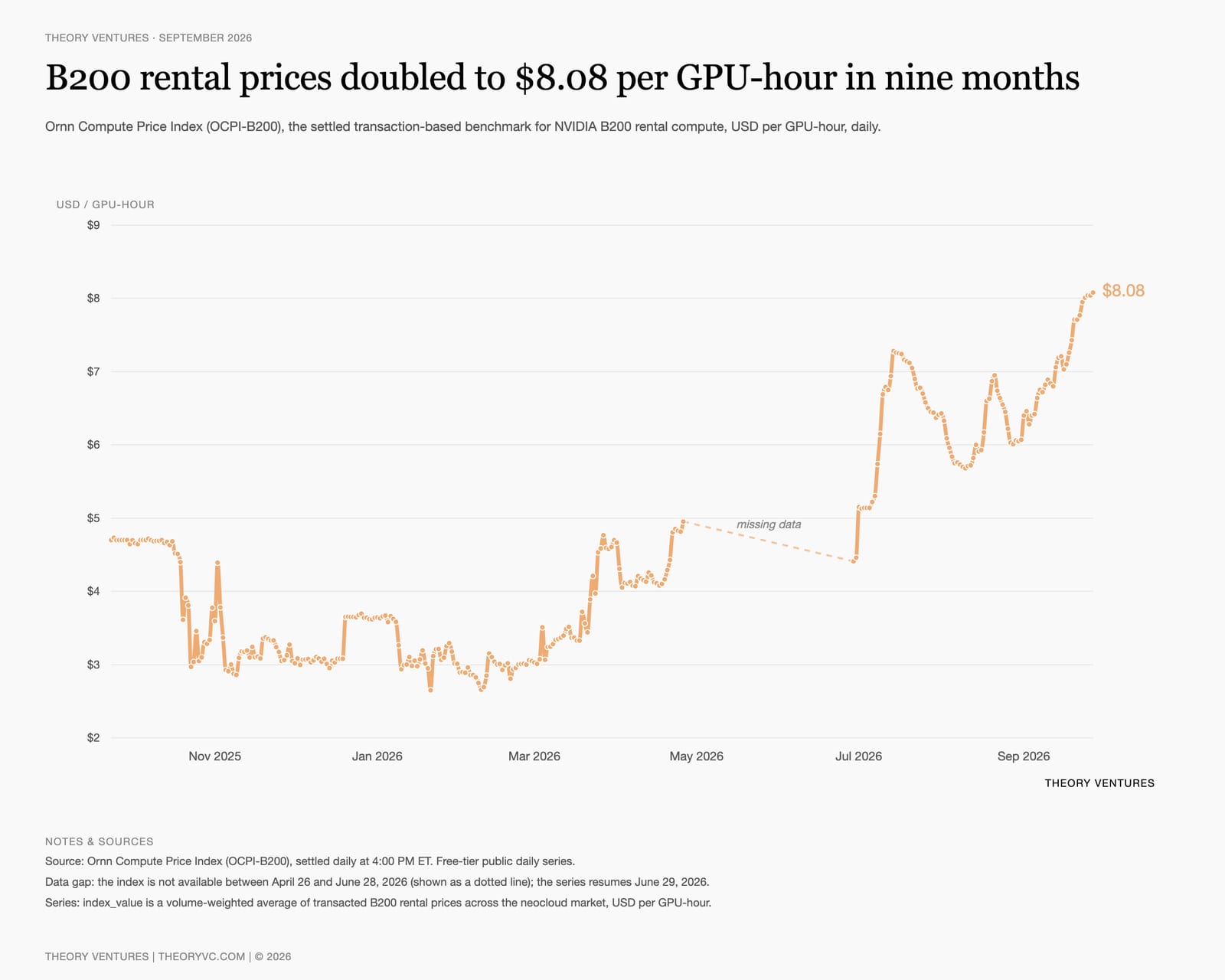
The company raised $2.2 billion since December 2025 and grew its contracted revenue book to $8.8 billion year-to-date, driven by acute GPU scarcity and record pricing above $4 per GPU hour.
While demand significantly outpaces supply, the company faces a timing lag—material revenue is not expected until Q4 2026—and depends on third-party suppliers for hardware delivery and data center deployment.
What happened
SharonAI Holdings reported Q2 2026 results showing secured AI factory capacity jumped to 212 megawatts from 132 megawatts, with 120 megawatts backed by multi-year take-or-pay agreements. The company signed a six-year strategic compute collaboration with NVIDIA valued at $4.9 billion in total contract value and raised approximately $2.2 billion in capital since December 2025, including a $1.6 billion oversubscribed financing round.
Why it matters
Contracted revenue grew to roughly $8.8 billion year-to-date as demand outpaces supply; the company has sold GPU capacity at record prices over $4 per GPU hour for NVIDIA B300 and GB300 deployments. The NVIDIA partnership provides supply certainty and a guaranteed minimum revenue stream, positioning SharonAI as a critical infrastructure player in a GPU-constrained market. However, material revenue recognition is still expected only from Q4 2026 onward, and the company faces execution risks tied to third-party hardware suppliers and data center readiness.
What to watch
The additional 80 megawatts from a new Australian partner solution is expected to come online as early as late 2026 but definitely in Q1 2027, with delivery through 2027. CEO James Manning indicated strong forward visibility into customer demand, with AI native customers already requesting capacity guarantees for 2027 and 2028; the company has not provided guidance for capacity beyond 2027.
SharonAI Holdings reported Q2 2026 earnings results on August 6, 2026, detailing significant growth in AI compute capacity and strategic partnerships. The company's secured AI factory capacity reached 212 megawatts, up from 132 megawatts, with 120 megawatts locked under multi-year take-or-pay agreements that provide revenue certainty.
A major milestone was the six-year strategic compute collaboration with NVIDIA, valued at $4.9 billion in total contract value. According to CEO James Manning, the company has already sold capacity at record prices exceeding $4 per GPU hour for both NVIDIA B300 and GB300 deployments. The market conditions driving these prices reflect extreme GPU scarcity: as Manning stated, "The market is extremely constrained for GPU access, and we are seeing strong pricing continue throughout the year due to this scarcity." SharonAI's contracted revenue book grew to roughly $8.8 billion year-to-date, demonstrating that demand consistently outpaces available supply.
Capital raises have accelerated to support this buildout. Since December 2025, SharonAI raised approximately $2.2 billion, including a $1.6 billion oversubscribed financing round. The company also expanded its partnership with Vast Data to 600 petabytes of storage, supporting growth up to 100,000 GPUs. When asked about capacity prioritization, Manning emphasized focus on reselling NVIDIA backstop capacity due to "significant demand from AI natives," noting that the NVIDIA program "has put us on the map globally." He added that customers are already requesting guarantees on future capacity for 2027 and 2028, providing "excellent forward visibility into customer demand profiles."
Despite these gains, headwinds remain. Material revenue recognition is still in early stages and is not expected until Q4 2026, creating a substantial lag between contract signings and earnings. The company depends on third-party suppliers for hardware delivery and data center readiness, introducing execution risk. Additionally, while the NVIDIA partnership provides a pricing floor, incremental revenue above the minimum is shared with NVIDIA, potentially capping upside. The additional 80 megawatts of capacity is expected from a new partner solution in Australia, with early deployment as early as late 2026 but confirmed for Q1 2027 through 2027. However, the company has not provided guidance for capacity expansion beyond 2027, leaving future growth sustainability uncertain. A CFO transition—Tim Broadford stepping down—also introduces temporary leadership instability during a critical growth phase.
AI-summarized, only the topics you pick — one digest a day via Email, Slack, or Discord.
Free · takes 30 seconds · unsubscribe anytime
Ask AI anything about this article. Q&As are published on this page for other readers too.
QumulusAI announced a GPU-as-a-Service agreement with DRW, a global trading firm, to supply a dedicated NVIDIA…

OpenAI introduced Premium Seats for ChatGPT Business, priced at $125 per user per month ($100 with annual bill…

Anthropic pledged to embed machine-readable watermarks in Claude-generated text and digitally signed provenanc…

OpenAI announced that its unreleased model Astra had produced solutions to 10 long-standing mathematics proble…

Anthropic confirmed it will add watermarks to text generated by Claude and other models to comply with the EU…

TSMC has roughly doubled its CoWoS and SoIC packaging capacity annually for several years and is now running C…

The AI news that matters, in one minute each morning.
Sign up free